Sourcing air power lines often comes down to price per unit — but fleets and distributors who have dealt with repeated air leaks, premature wear, or a batch of returns know that the real cost shows up somewhere else entirely. A component that fails early doesn't just cost its own replacement price. It costs labor, downtime, and customer trust.
Air power lines reduce fleet downtime and repair costs when they are built to hold up under real operating conditions — consistent pressure resistance, reliable connectors, durable materials, and stable batch quality. Buying on unit price alone ignores the risk profile: leaks, early wear, repeated replacement, and the labor and vehicle stoppage costs that follow. Evaluating quality before purchase is how that risk gets managed.
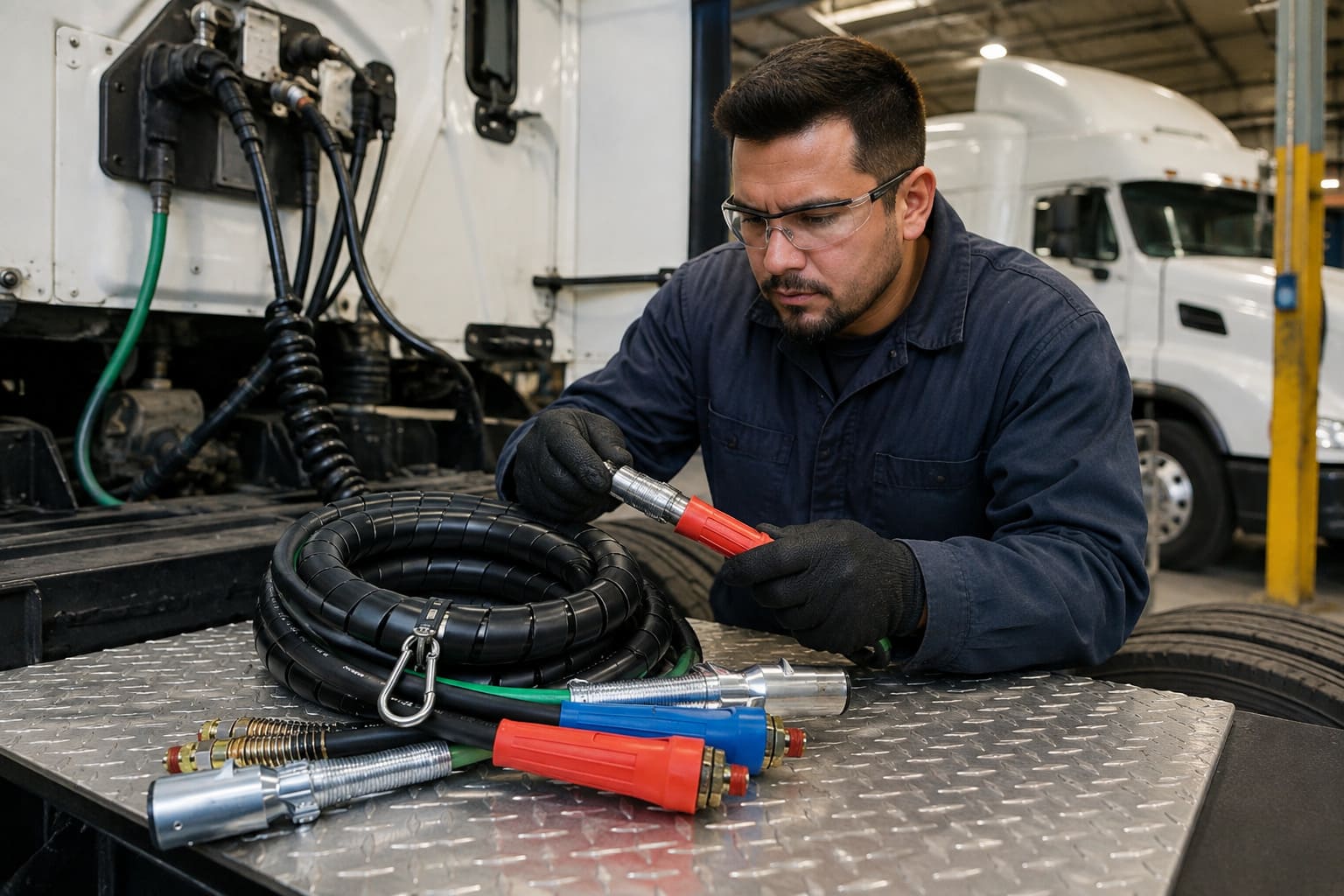
The connection between a small pneumatic component and fleet operating costs is easy to underestimate — until the failures start stacking up. The sections below break down exactly where quality gaps show up, how they translate into real costs, and what to look for when evaluating a supplier or a batch.
Are Air Power Lines Really a "Small Part" Decision?
Fleet managers and shop owners often treat air power lines as commodity purchases. The logic makes sense on the surface: the unit price is low, the part is simple, and there are many suppliers offering similar-looking products. The problem is that the consequences of failure are not proportional to the part's cost.
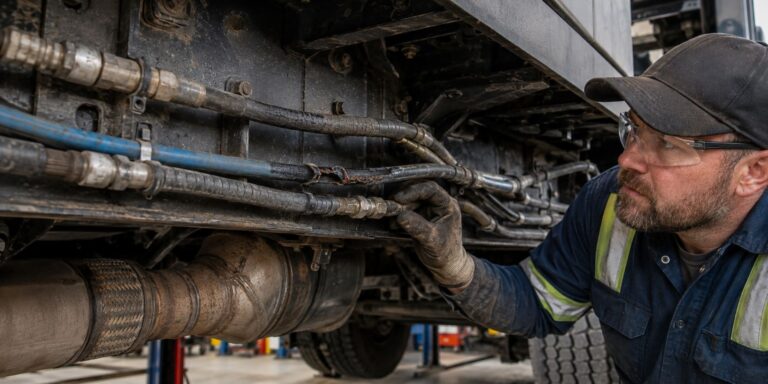
Air power lines are part of a truck's brake and pneumatic control system.1 When a line leaks, degrades, or fails under pressure, the vehicle doesn't just need a new line — it needs inspection time, possibly a shop visit, and a technician's labor hours to diagnose and correct the issue.2 For a fleet running regular routes, that means downtime.
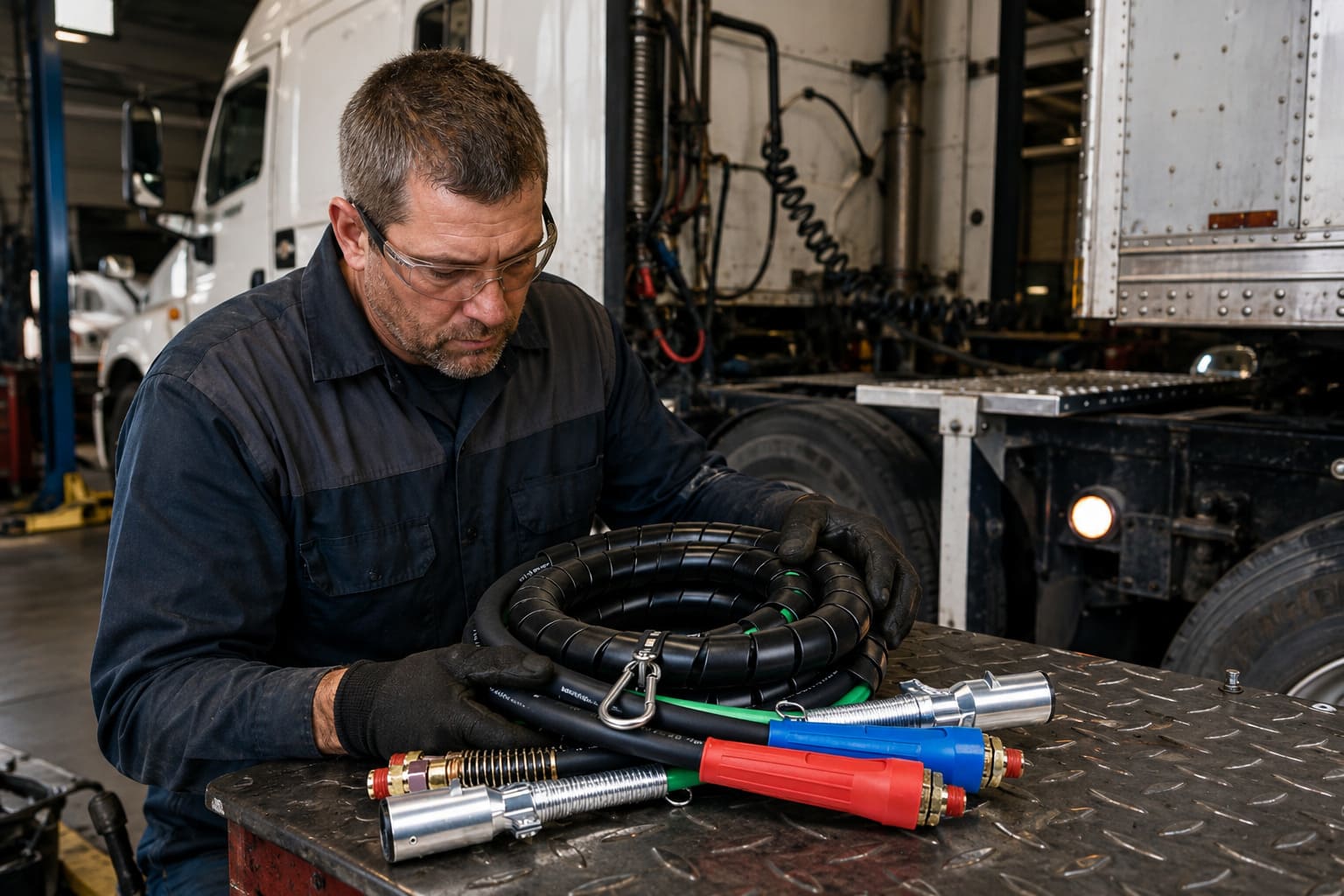
I've heard this framing come up regularly in customer conversations: a distributor or fleet buyer contacts us about air power lines and the first question is always price. That's fair — cost control matters. But the second or third question, once we get into the details, is almost always about leak rates, replacement frequency, or what happened with their last supplier.
What "Small Part, Large Consequence" Means in Practice
The value of an air power line isn't in what it costs to buy. It's in what it costs when it fails.
Here's a simple way to think about the risk math:
- Unit cost of a replacement air line: Low
- Technician labor to diagnose and replace: Moderate to high depending on shop rates
- Vehicle downtime for a commercial fleet: Significant — especially on long-haul routes
- Repeat failures from a bad batch: Multiplied across multiple vehicles or units
- Distributor handling returns and complaints: Inventory risk, reshipment costs, and lost customer confidence
When a fleet takes multiple vehicles out of service for the same air line issue, the combined cost can easily exceed what would have been saved by choosing the cheapest supplier. This is why procurement decisions for air power lines benefit from being evaluated at the system level, not just the unit level.
What Does "Quality" Actually Mean for Air Power Lines?
"High quality" is a phrase that appears on almost every product listing and supplier website. Without specifics, it means very little. Quality in air power lines is defined by a set of concrete, measurable variables — and each one connects directly to how the line performs in the field.
When evaluating air power lines, quality comes down to six measurable factors: material durability, connector reliability, air tightness, pressure resistance, temperature resistance, and batch consistency. Each variable affects how long the line holds up under real operating conditions, and each gap in any one of them is a potential failure point.
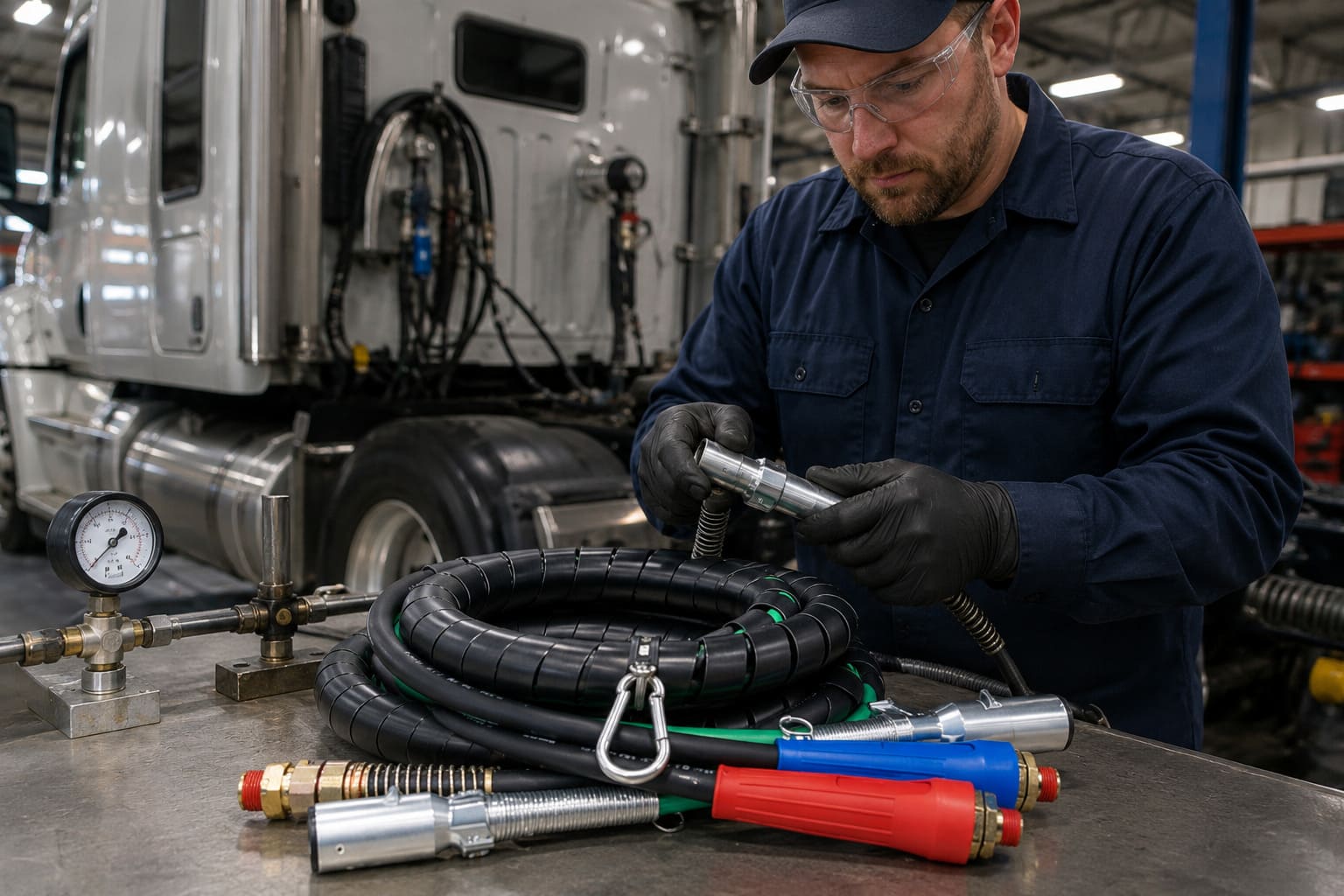
Generic claims about quality are difficult to act on. Specific variables give buyers a framework for asking the right questions before placing an order — not after a return or a complaint.
Breaking Down the Six Quality Variables
1. Material Durability
The tubing and outer jacket of an air power line face road exposure, vibration, moisture, and UV — particularly on long-haul routes.3 Materials that degrade prematurely crack, stiffen, or lose flexibility over time.4 When that happens, seal integrity fails and leaks develop.
The material specification — polymer type, wall thickness, compound additives — determines how long the line holds up under sustained operating stress. A line that looks acceptable at installation may behave very differently after six months of heavy-haul service.
2. Connector Reliability
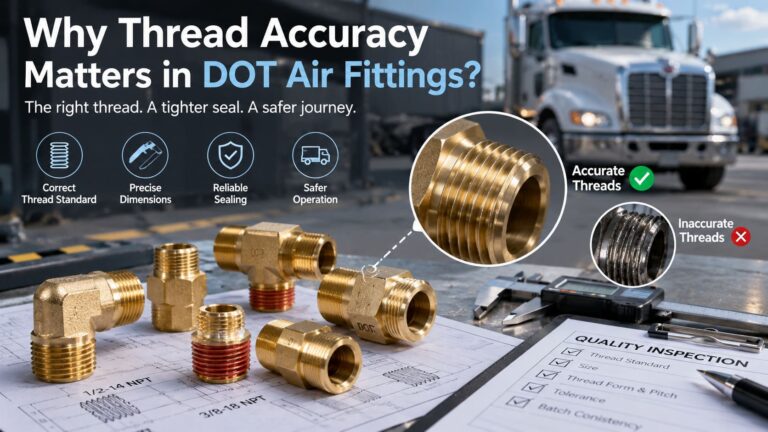
Connectors and end fittings are where leaks most commonly occur.5 Poor-fit connectors, low-grade brass, or inconsistent thread tolerances all introduce leak risk at the junction point. A line with good tubing but weak connectors is still a failure waiting to happen.
3. Air Tightness
Air tightness refers to the line's ability to hold pressure without micro-leaks at any point — tubing, connector, or transition zone. This is typically validated through pressure testing during production.6 A line that passes air-tightness testing under controlled conditions is far less likely to leak under real operating pressures.
4. Pressure Resistance
Commercial truck air systems operate under sustained pressure loads.7 A line rated for nominal pressure but not tested at working or burst pressure margins leaves a gap that failure can fill. Buyers should ask how pressure resistance is tested, not just what the rated specification is.
5. Temperature Resistance
Trucks operate in wide temperature ranges — extreme cold in northern routes, high heat in southern or desert corridors.8 A line that performs at ambient temperature but becomes brittle in cold or soft in heat is a climate-dependent failure risk. Temperature resistance data helps match the product to the actual operating environment.
6. Batch Consistency
This is the variable most buyers overlook. A sample or first shipment can look excellent. The issue is whether the tenth shipment matches the first. For distributors stocking inventory, batch inconsistency is a hidden risk: variable raw materials, inconsistent production controls, or skipped inspections can make the same SKU behave differently across orders.
| Quality Variable | Failure Mode When Inadequate | Operational Impact |
|---|---|---|
| Material durability | Cracking, stiffening, degradation | Premature replacement |
| Connector reliability | Leaks at fittings | Air loss, brake system risk |
| Air tightness | Micro-leaks along line | Pressure drop, inspection labor |
| Pressure resistance | Line failure under load | Emergency repair, downtime |
| Temperature resistance | Brittleness or softening | Climate-dependent failure |
| Batch consistency | Variable performance across orders | Returns, complaints, restocking |
How Do Operating Conditions Shape Real Risk?
Two fleets can buy the same air power line and have completely different outcomes. Operating conditions — not just product specs — determine where a quality gap becomes a real failure.
The right air power line for a fleet depends on route type, climate, load profile, tractor-trailer combination, and replacement history. A part that performs well on regional routes in mild climates may not hold up in long-haul, extreme-temperature, or high-vibration environments.
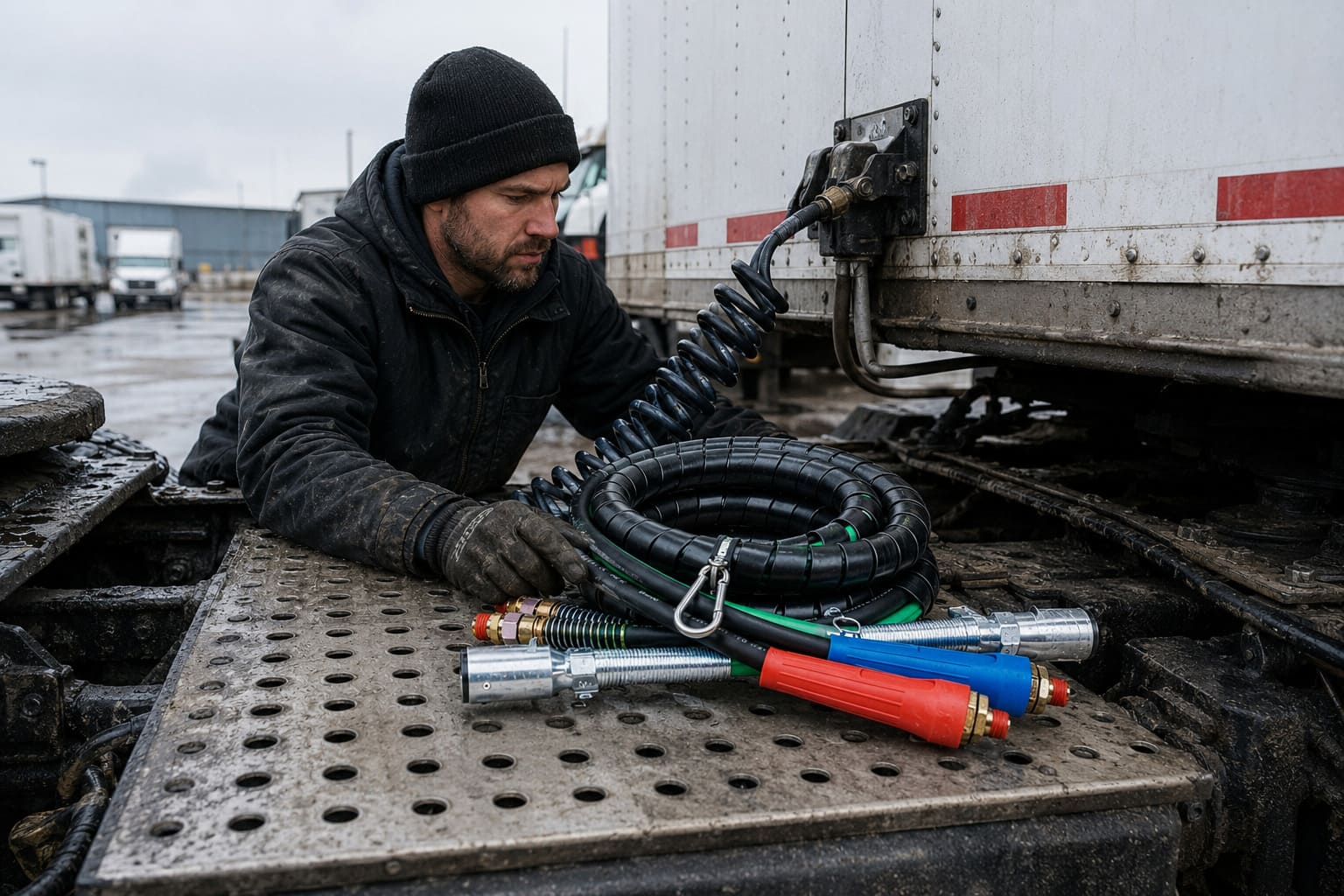
When customers describe past problems — frequent leaks, accelerated wear, unexpected failures — the first questions worth asking are about operating conditions, not just the product itself.
Matching the Product to the Application
Here are the primary operating factors that affect air power line risk:
Route type and load profile: Long-haul routes subject lines to sustained pressure, temperature cycling, and vibration over longer periods than regional or last-mile operation. Heavy-load applications add additional mechanical stress. Lines used in heavy-haul or dedicated long-distance service need to be evaluated against those demands specifically.
Climate and geographic exposure: Northern fleets operating in cold winters need lines that retain flexibility at low temperatures. Fleets running in hot, high-UV environments need materials that resist heat degradation and sun exposure. If a supplier cannot provide temperature performance data, that is a gap worth flagging.
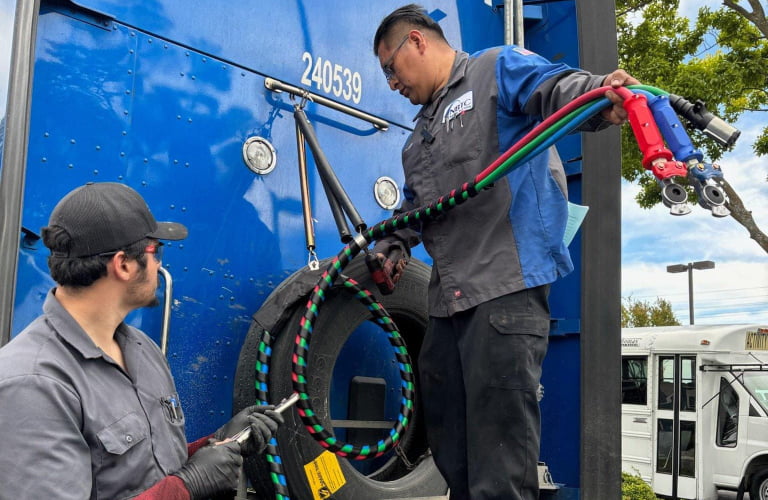
Tractor-trailer combination: The coiled section of an air power line — the spring between tractor and trailer — undergoes repeated extension and compression.9 Coil construction, recovery rate, and memory retention affect how long this section lasts before fatigue or connector stress causes failure.
Past replacement history: Buyers who track how often they replace air power lines, and where failures occur (tubing, connectors, coil section), already have the most useful input for evaluating a new supplier. A fleet replacing lines more frequently than expected should investigate whether the product meets the demands of their specific operation — not assume the part is simply a consumable.
What Should Distributors and Wholesalers Evaluate Beyond the Unit?
For distributors and wholesalers, the cost of a quality problem is not confined to one failed part. It spreads across inventory, customer relationships, and operational credibility.
For distributors, the relevant unit of risk is not a single line — it's a batch. An inconsistent batch means returns from multiple repair shops, reshipment costs, inventory write-offs, and the reputational cost of being the supplier associated with the problem.
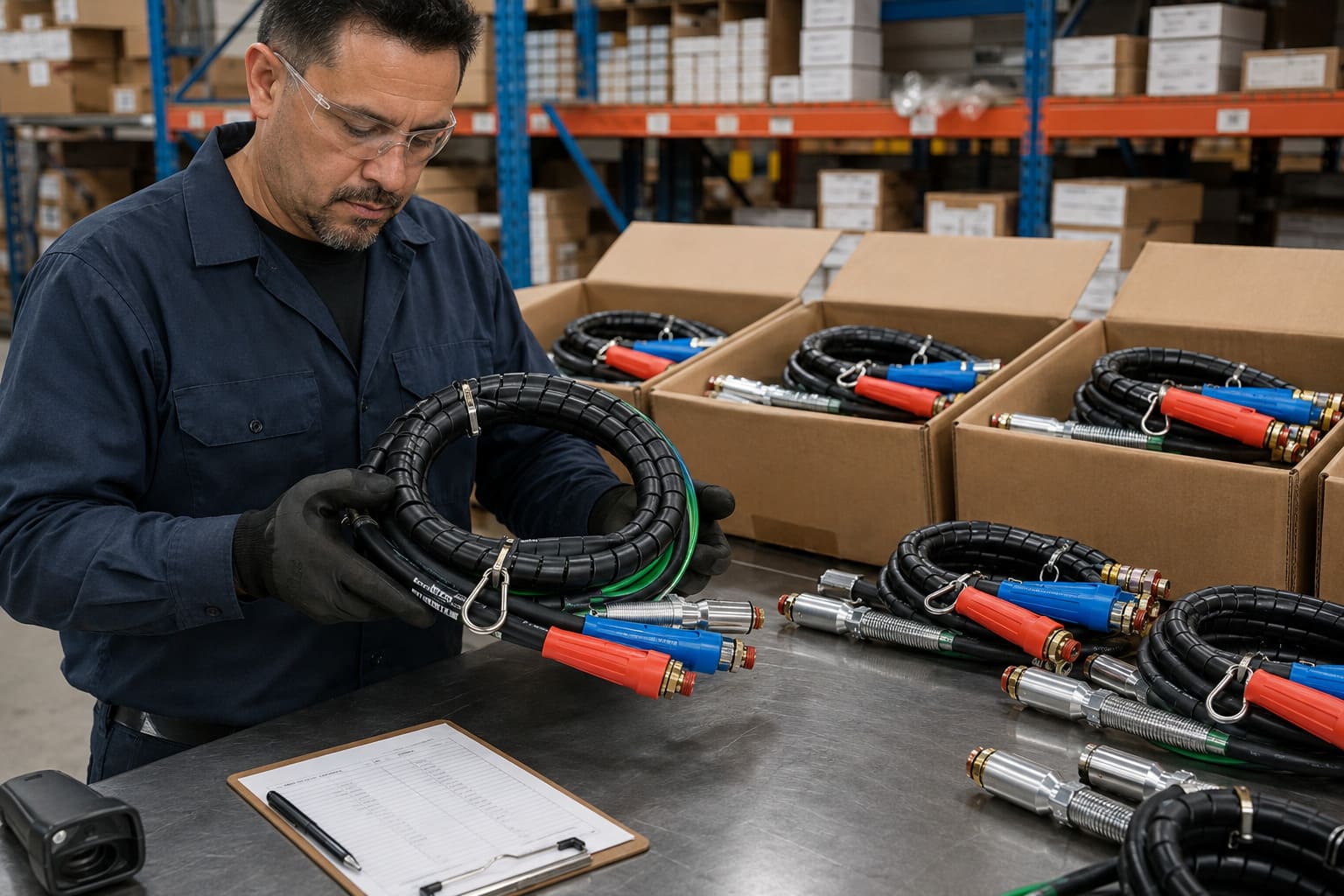
I've spoken with distributors who switched to a cheaper supplier after a successful trial order, then experienced a quality drop in the next shipment. The trial was clean; the repeat order wasn't. That gap is a batch consistency problem, and it is one of the harder risks to detect without asking direct questions about how production quality is controlled across orders.
Supplier Evaluation Points Worth Asking About
When evaluating an air power line supplier, distributors benefit from pushing past catalog specs and asking process-level questions:
- Incoming material inspection: Does the supplier verify raw material quality — copper grade, polymer compounds, rubber composition — with documented batch certificates before production begins?
- In-process quality controls: Are there documented checkpoints during production that catch defects before they reach the finished stage?
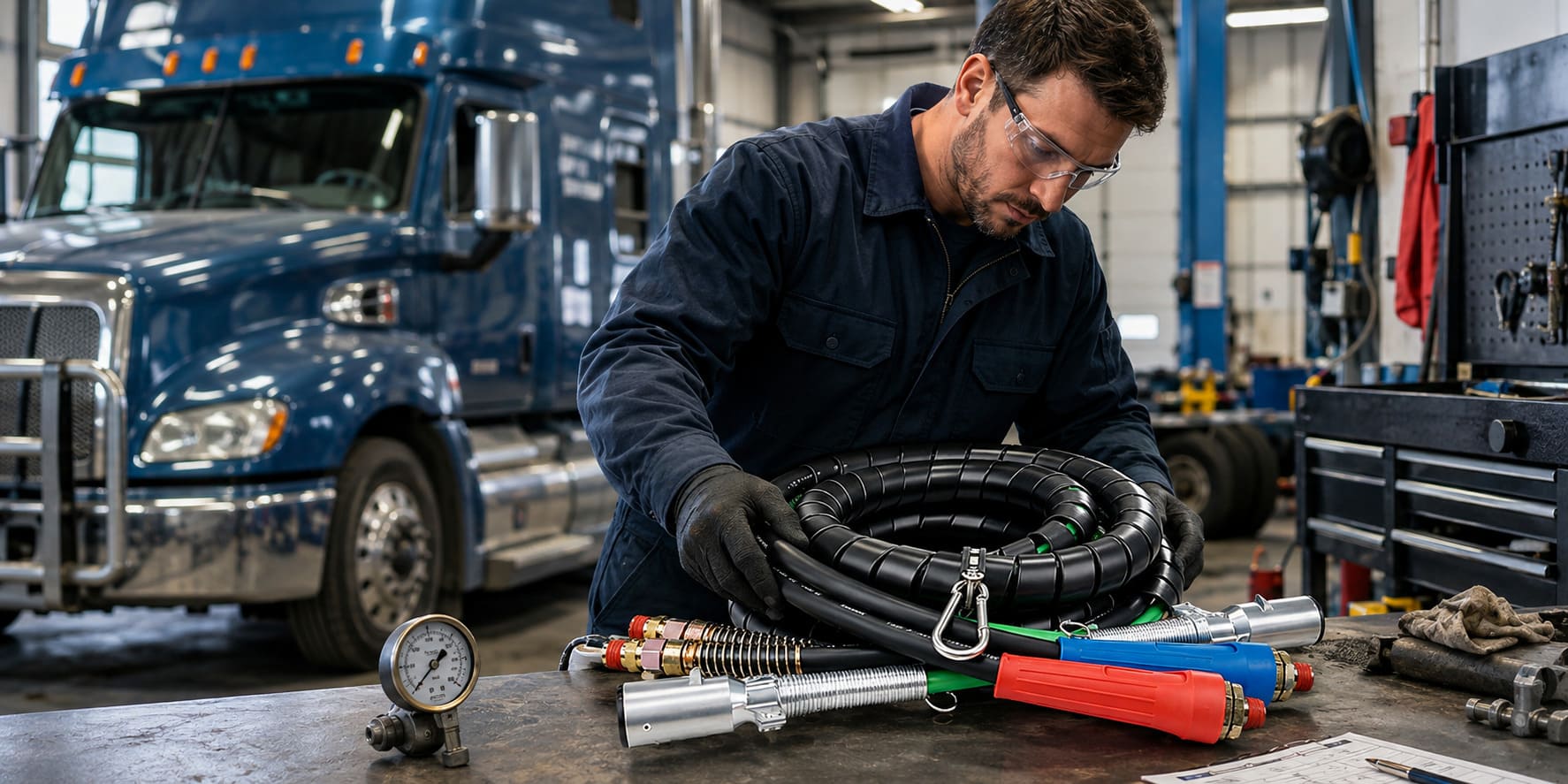
- Air-tightness and performance testing: Are lines tested during or after production for pressure hold, not just visually inspected?
- Final inspection protocol: Is there a sampling or 100% inspection process before products are packaged and shipped?
- Traceability: Can the supplier link a finished product back to its production batch, raw material lot, and inspection records? This matters when a quality issue surfaces after shipment.
None of these points require a factory visit to ask about. A supplier that can answer these questions with documentation is demonstrating a different level of operational discipline than one that answers with general assurances.
Frequently Asked Questions
Why do air power lines cause so much downtime if they're inexpensive components?
The cost of the part is low. The cost of failure is not. When an air line leaks or fails, a technician must diagnose the problem, remove and replace the line, and verify the repair. If the vehicle is in service, it's also off the road during that window. Repeated failures compound both labor and downtime costs.
How do I know if a supplier's air power lines will perform consistently across multiple orders?
Ask directly about batch traceability, incoming material inspection, and in-process quality controls. Request documentation or certificates. A first order that passes inspection doesn't guarantee batch consistency — the quality controls between orders matter more than a single shipment evaluation.
What operating conditions most increase the risk of air power line failure?
Long-haul routes, extreme temperature environments (hot or cold), heavy-load applications, and high-vibration road conditions all increase mechanical and thermal stress on air lines. Buyers in these environments should prioritize pressure resistance, temperature performance data, and connector quality over unit price.
Are air power line certifications like DOT sufficient to confirm product quality?
Certifications indicate compliance with specific standards and are worth verifying, but they define a baseline — not a performance ceiling.10 Batch consistency, material quality, and in-process controls are factors that certification alone doesn't fully address. Treat certifications as one data point, not a complete quality signal.
What should a repair shop or fleet do after experiencing repeated air line failures from a single supplier?
Document where failures occur (tubing, connectors, coil section), the operating conditions, and the timeframe. That information helps diagnose whether the issue is product quality, application mismatch, or installation. Then use those specifics to evaluate the next supplier — rather than defaulting to the cheapest available option.
Conclusion
Air power lines are a small component with an outsized impact on fleet operating costs. Choosing them on unit price alone ignores the real cost model: failed lines generate labor, downtime, repeat replacement, returns, and customer complaints — none of which appear on the original invoice.
Quality in air power lines is concrete and measurable: material durability, connector reliability, air tightness, pressure and temperature resistance, and batch consistency. Operating conditions shape which of those variables matter most for a given application. And for distributors, supplier-side process controls — inspection, traceability, documentation — are what separate a reliable partner from a recurring problem.
If you're evaluating air power line suppliers or working through a quality or sourcing issue, ROADSPOWER is open to a direct conversation. We work with distributors, repair shops, and fleets across North America and South America and are familiar with the questions worth asking before a purchase — not after a return.
"5.1.1 Brake Systems (Part 393 Subpart C) - CSA", https://csa.fmcsa.dot.gov/safetyplanner/MyFiles/SubSections.aspx?ch=22&sec=64&sub=130. A government vehicle-safety source defines air brake hoses and lines as components used to convey compressed air within commercial motor vehicle braking systems. Evidence role: definition; source type: government. Supports: Air lines or air brake hoses are used within commercial motor vehicle air brake systems to transmit compressed air for braking and related pneumatic control functions.. ↩
"5.1.1 Brake Systems (Part 393 Subpart C) - CSA", https://csa.fmcsa.dot.gov/safetyplanner/MyFiles/SubSections.aspx?ch=22&sec=64&sub=130. Commercial vehicle inspection and maintenance guidance treats air brake leakage as a safety-relevant defect requiring inspection and corrective action, supporting the claim that a failed line can generate labor beyond the replacement part itself. Evidence role: general_support; source type: government. Supports: Air brake leaks require inspection and corrective maintenance procedures that involve diagnostic time and service work.. Scope note: The source may document required inspection and repair procedures rather than quantify labor hours for every fleet. ↩
"Federal Motor Vehicle Safety Standards; Brake Hoses", https://www.federalregister.gov/documents/2004/12/20/04-27088/federal-motor-vehicle-safety-standards-brake-hoses. Materials and vehicle-component studies identify vibration, moisture, and ultraviolet exposure as environmental stressors for polymeric hoses and tubing used in transportation applications. Evidence role: general_support; source type: paper. Supports: Vehicle polymer tubing and hose materials are subject to environmental exposure, vibration, moisture, and sunlight or ultraviolet radiation during service.. Scope note: The evidence is likely contextual for polymer vehicle components generally unless the selected source specifically tests truck air power lines. ↩
"Evaluation of Changes in Polymer Material Properties Due to ...", https://pmc.ncbi.nlm.nih.gov/articles/PMC9102830/. Peer-reviewed materials research describes polymer and rubber aging mechanisms, including oxidation, thermal aging, and photo-degradation, that can produce cracking, embrittlement, and loss of flexibility over time. Evidence role: mechanism; source type: paper. Supports: Aging and environmental degradation of polymeric or rubber materials can lead to embrittlement, cracking, increased stiffness, and reduced flexibility.. Scope note: The mechanism applies broadly to polymeric and elastomeric materials and may not by itself prove the failure rate of a specific air power line product. ↩
"5.1.1 Brake Systems (Part 393 Subpart C) - CSA", https://csa.fmcsa.dot.gov/safetyplanner/MyFiles/SubSections.aspx?ch=22&sec=64&sub=130. Commercial vehicle inspection guidance directs inspectors to check air brake hoses, couplings, and fittings for leakage, supporting the relevance of connector and end-fitting areas as common inspection points for air loss. Evidence role: general_support; source type: government. Supports: Air brake inspections emphasize checking connections, couplings, fittings, and hoses for leakage, indicating these junctions are recognized leak points.. Scope note: Inspection guidance may identify likely or required inspection locations without ranking them statistically as the most common failure sites. ↩
"49 CFR 571.106 -- Standard No. 106; Brake hoses.", https://www.ecfr.gov/current/title-49/subtitle-B/chapter-V/part-571/subpart-B/section-571.106. Brake-hose safety standards specify pressure-related performance tests, including leakage or burst-resistance requirements, supporting the use of pressure testing as a method for validating air-line integrity. Evidence role: mechanism; source type: government. Supports: Regulatory or industry standards for brake hoses include pressure, leakage, or burst-strength tests used to verify hose integrity.. Scope note: A standard establishes required test methods or performance criteria; it may not document the internal production practices of every supplier. ↩
"Air Brake Systems", https://www.fmcsa.dot.gov/sites/fmcsa.dot.gov/files/docs/brake_safety_systems_02-14.pdf. Government commercial driver training materials describe air brake systems as using stored compressed air at regulated pressure ranges, supporting the claim that truck air systems operate under sustained pressure loads. Evidence role: definition; source type: government. Supports: Commercial vehicle air brake systems store and use compressed air at regulated operating pressures to actuate braking components.. ↩
"Impact of Cold Ambient Temperatures and Extreme Conditions on Electric ...", https://www.energy.gov/sites/default/files/2024-10/Impact_of_Cold_Ambient_Temperature_on_BEV_Performance_v15_TechEditFinal_12Sep2024__0.pdf. Transportation and vehicle-environment research documents that road vehicles operate across broad ambient temperature ranges, including cold-climate and high-heat conditions, providing context for temperature-resistance requirements in truck components. Evidence role: general_support; source type: research. Supports: Heavy vehicles can be exposed to substantial environmental temperature variation depending on route geography and climate.. Scope note: The source may describe vehicle operating environments generally rather than specific routes or fleets named in the article. ↩
"EASTMAN", https://downloads.regulations.gov/FMCSA-1997-2364-0008/attachment_1.pdf. Engineering or standards-based descriptions of tractor-trailer coiled air lines explain that these lines accommodate relative tractor-trailer movement through repeated extension and recoil, supporting the fatigue mechanism described in the article. Evidence role: mechanism; source type: institution. Supports: Coiled tractor-trailer air lines are designed to span the moving connection between tractor and trailer and therefore experience repeated extension, recovery, and bending during service.. Scope note: The source may support the mechanical motion generally without quantifying fatigue life for a particular coil design. ↩
"49 CFR 571.106 -- Standard No. 106; Brake hoses.", https://www.ecfr.gov/current/title-49/subtitle-B/chapter-V/part-571/subpart-B/section-571.106. Federal brake-hose regulations set defined performance requirements for compliant products, supporting the interpretation that certification demonstrates conformity to specified baseline criteria rather than comprehensive proof of superior durability or batch consistency. Evidence role: historical_context; source type: government. Supports: Federal motor vehicle safety standards specify required performance criteria for brake hoses, establishing compliance thresholds rather than guaranteeing all aspects of long-term quality or batch consistency.. Scope note: The regulation supports the baseline-compliance point but does not evaluate the comparative quality of certified products. ↩