A semi truck air line that cracks or bursts rarely fails because of one single defect. We see distributors struggle with this question when customers return parts, and the root cause is often a mix of material quality choices, installation conditions, operating stress, and simple aging. When I walk through our production floor in Ningbo and review batch inspection records, I am reminded that a hose is not just a hose—it is a system component that lives in a harsh, vibrating, high-heat environment. Understanding why air lines fail helps you buy better, stock smarter, and protect your reputation with the fleets and repair shops that depend on you.
Semi truck air lines crack or burst because multiple risk factors combine to shorten service life—material aging, compound instability, heat exposure, UV and weather damage, abrasion, vibration, improper routing, over-bending, and fitting stress all contribute.1 A properly manufactured air line tested for air tightness, pressure resistance, and tensile strength will still fail early if it is installed in the wrong position, exposed to a heat source, or selected without considering temperature range and real operating conditions.
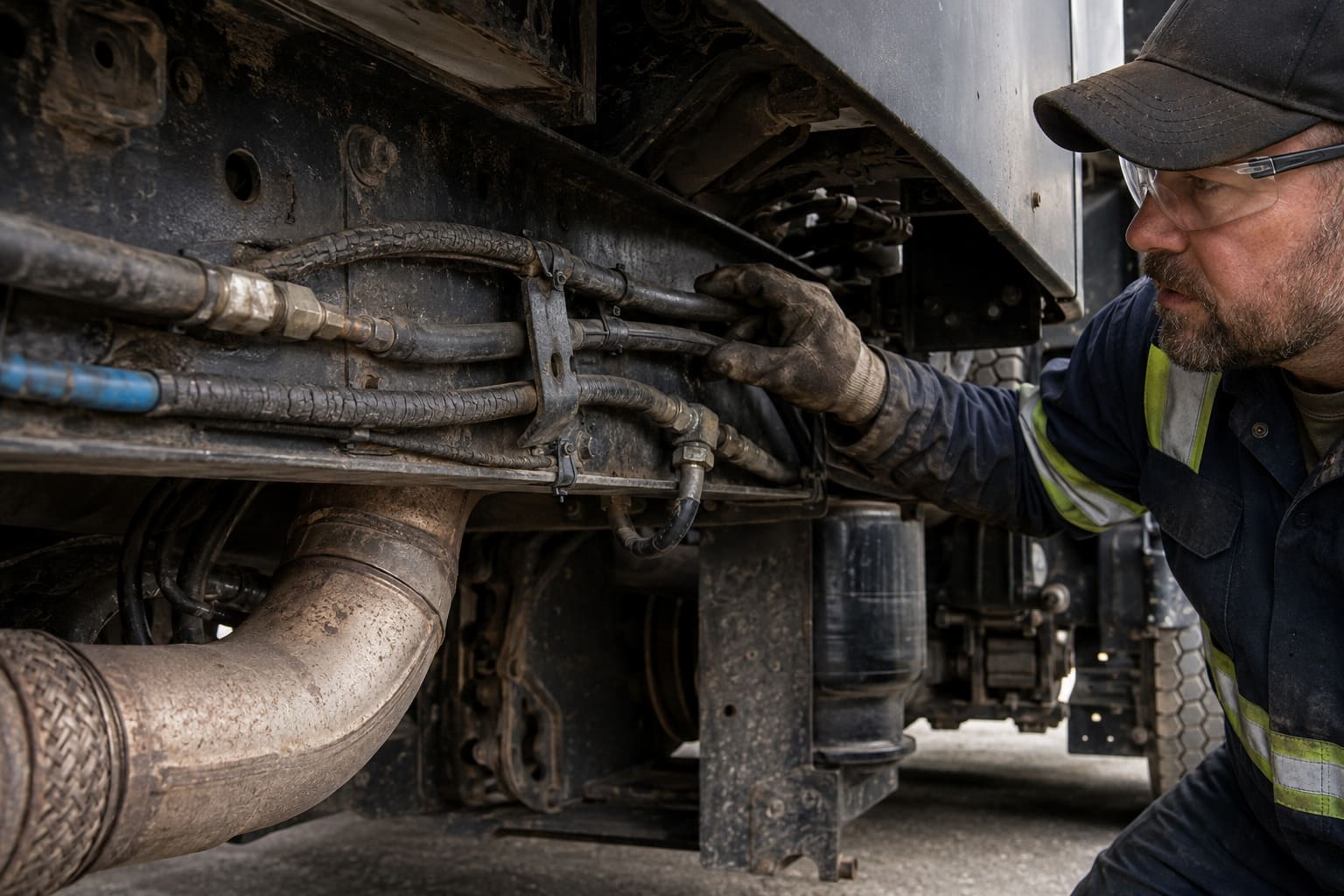
I want to take you through the real reasons air lines fail—not the oversimplified explanation, but the layered risk picture that helps you ask better questions when you evaluate suppliers and products. Let us start where every hose begins: the material itself.
Does Material Quality Really Determine How Soon an Air Line Cracks?
Material quality sets the baseline, but it does not work alone. A poorly compounded hose will age fast no matter how carefully you route it. A high-grade compound, on the other hand, can still degrade quickly if the application pushes it beyond its intended limits.
Yes, material quality directly affects cracking resistance because the rubber or synthetic compound determines how the hose handles heat, ozone, UV exposure, and repeated flexing.2 However, even a premium material will crack prematurely if it is used outside its rated temperature range, routed against sharp edges, or subjected to constant tension and vibration.
When I review our incoming material inspection data, I see the difference that compound consistency makes. We check certificates of compliance for every batch of raw copper, rubber, and metal that enters our facility. If the compound supplier changed a plasticizer ratio or used a different carbon black dispersion, the aging behavior shifts. These are the invisible variables that a distributor cannot see, but your end customer feels when a hose surface starts showing hairline cracks after one season instead of three.
What Happens Inside the Material Over Time
Rubber and synthetic compounds age through several mechanisms simultaneously:
- Thermal-oxidative aging: Heat accelerates the reaction between the polymer chains and oxygen.3 The material loses elasticity, hardens, and eventually develops surface cracks.
- Ozone attack: Even tiny ozone concentrations in the atmosphere react with unsaturated polymer bonds.4 You see the classic perpendicular cracking pattern on the hose surface.
- UV degradation: Sunlight breaks chemical bonds at the surface, causing chalking, fading, and micro-cracking that progressively deepens.5
- Plasticizer migration: Plasticizers that keep the material flexible slowly migrate out, especially under heat.6 The hose stiffens and becomes brittle.
| Aging Mechanism | Visual Symptom | Typical Timeline Factor |
|---|---|---|
| Thermal-oxidative | Hardening, deep cracks | Accelerates 2x per 10°C above rating7 |
| Ozone | Fine perpendicular surface cracks | Months to years depending on compound protection |
| UV exposure | Surface chalking, shallow crack network | 1–3 seasons of direct exposure |
| Plasticizer loss | Stiffness, loss of flexibility | Gradual over service life |
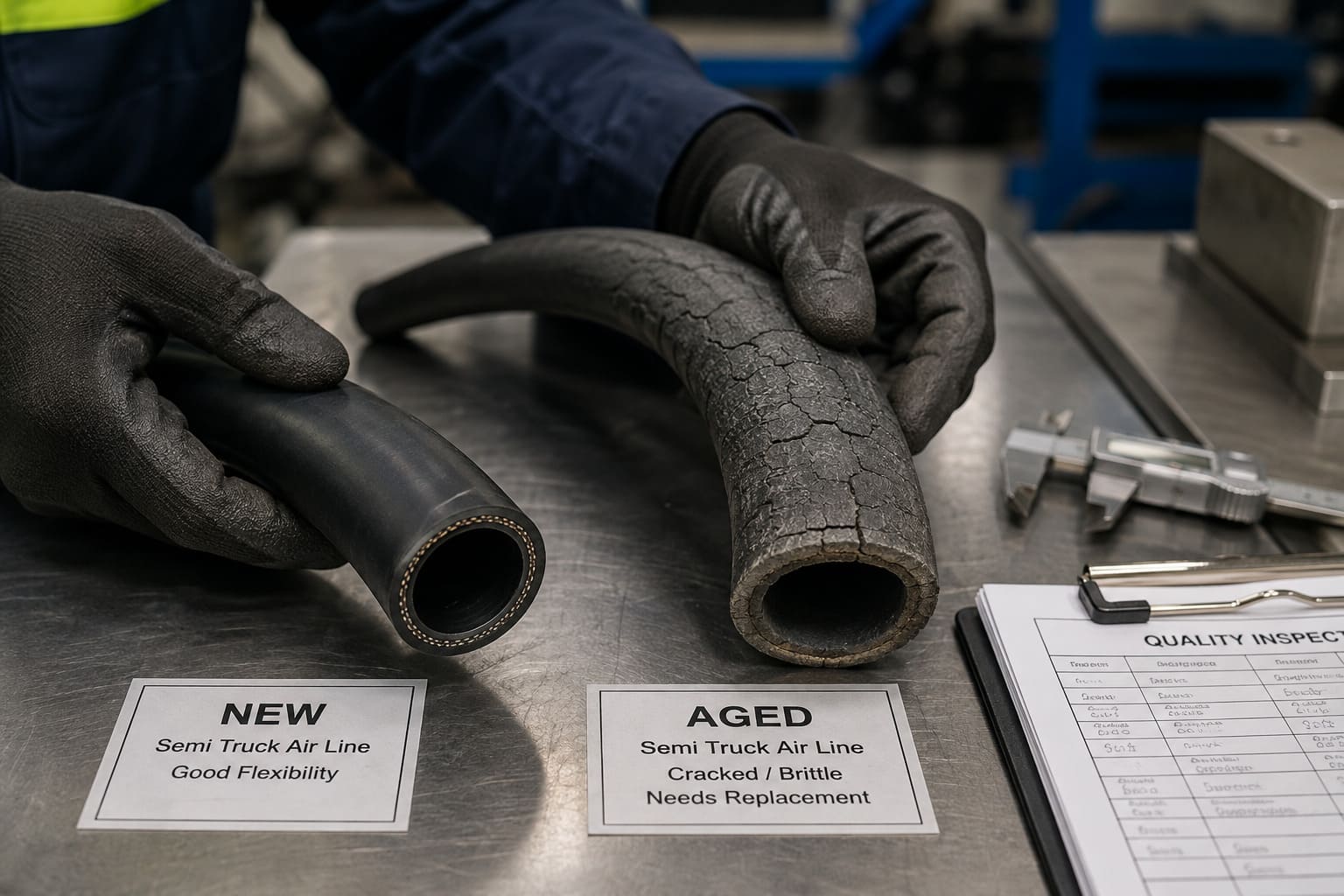
A distributor once asked me whether a lower-cost hose with the same pressure rating would perform equally. The pressure test says yes. The aging curve says no. The cheaper compound likely has less anti-ozonant and antioxidant protection, meaning the clock runs faster even if the hose sits on a shelf or idles in a yard. That is why we do not just test for burst pressure. We run temperature resistance and tensile strength checks during in-process sampling because those numbers tell us how the material holds up over time, not just at the moment of installation.
Why Is Pressure Rating Alone Not Enough When Selecting an Air Line?
This is one of the most common blind spots I see in purchasing. A buyer looks at a spec sheet, sees a 1000 PSI working pressure rating, and assumes the hose is suitable. But pressure rating is only one dimension of fitness.
Pressure rating alone is not enough because semi truck air lines must also survive temperature extremes, weather exposure, tight bending radii, constant vibration, and chemical contact—all while maintaining a reliable fitting seal.8 A hose that handles the pressure but stiffens in cold weather or softens near exhaust components creates a failure risk that no pressure number can prevent.
The Real Selection Checklist
When I talk to customers about matching air lines to applications, I ask them to think about the following factors before they even look at a pressure number:
- Temperature range: Can the hose maintain flexibility at -40°F in a Manitoba winter? Can it resist softening when routed near a turbocharger or exhaust manifold? A hose rated for 200°F continuous may fail quickly three inches from a heat source pushing 300°F.
- Bending radius: Every hose has a minimum bend radius.9 Routing a stiff hose into a tight corner creates permanent stress at the outer curve. Over time, that stress concentrates and becomes a crack initiation point.
- Abrasion resistance: A hose rubbing against a frame rail, bracket, or another hose wears its outer cover. Once the reinforcement layer is exposed, the clock ticks faster toward rupture.
- Length and routing tension: A hose that is too short pulls on its fittings. A hose that is too long sags and catches debris or rubs on surfaces. Neither is a product quality problem—both are selection and installation issues.
- Fitting compatibility: Mismatched fitting materials or crimp dimensions create galvanic corrosion risks or weak seal points that can let go under vibration.
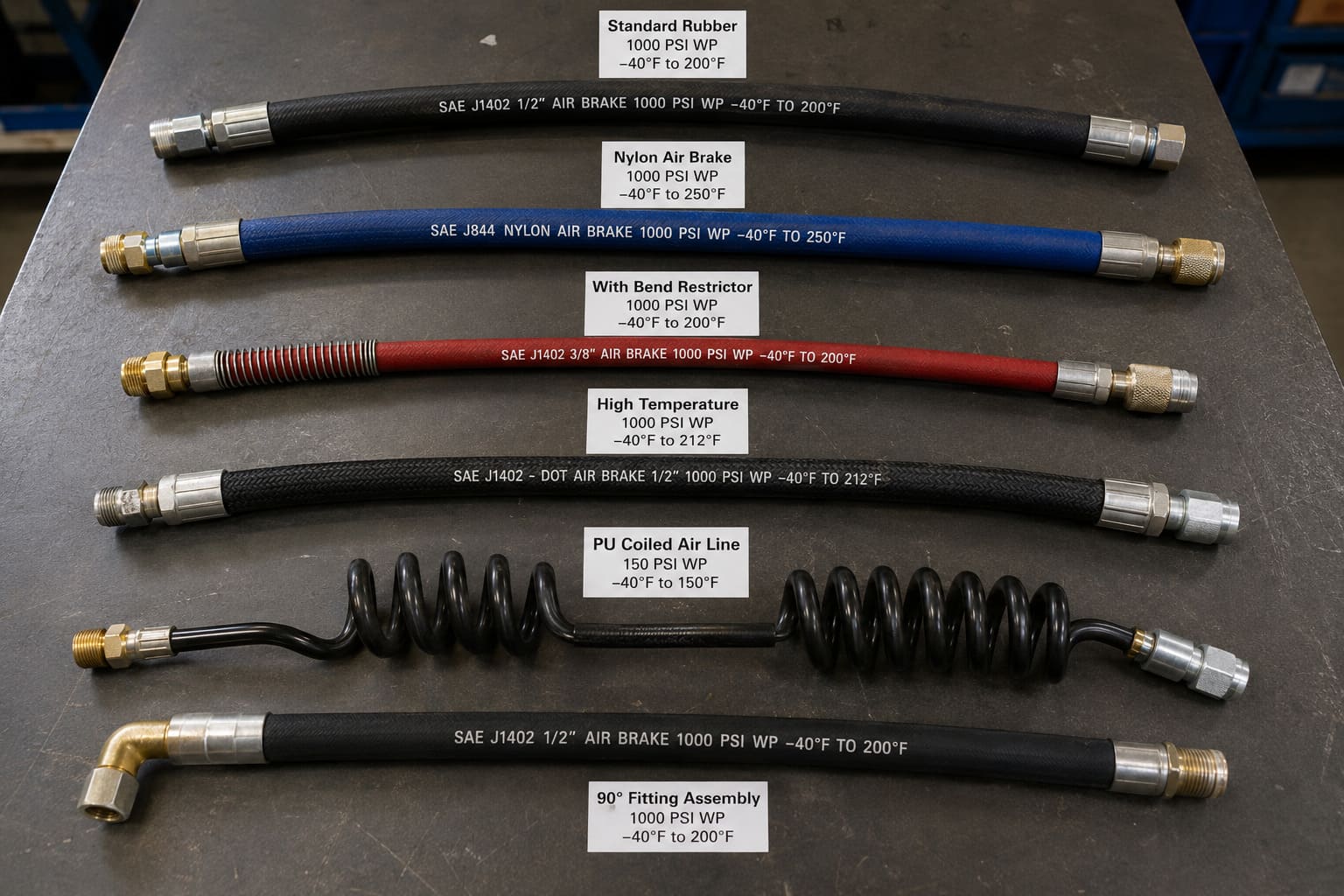
We see the consequences of mis-selection in return analysis. A customer sends back a batch claiming defective hoses, and our inspection finds the burst site is three inches from a fitting, right at a severe bend point. The hose passed every factory test. The routing violated the minimum bend specification. That is not a manufacturing defect—that is a system-level mismatch. Distributors who understand this distinction save themselves costly returns and protect their customer relationships.
Can Heat and Weather Really Destroy an Air Line Faster Than Normal Wear?
Heat and weather are accelerants. They do not create new failure modes; they speed up the ones already built into the material and the installation. I think of them as a multiplier on top of whatever baseline risk already exists.
Yes, heat and weather can destroy a semi truck air line faster than normal mechanical wear because they attack the material chemically, not just physically. Sustained high heat breaks polymer chains. Freeze-thaw cycles expand and contract the material, stressing internal bonds. Direct sunlight degrades the surface, and road chemicals in wet environments accelerate corrosion at fitting interfaces.
Heat as a Service Life Reducer
Every hose material has a temperature rating, and that rating is not a switch—it is a curve. As temperature increases, the rate of chemical degradation increases exponentially. A hose operated at its rated maximum temperature ages roughly twice as fast as the same hose at 20°F lower. Run it 30°F over the rating because it is routed near an exhaust component, and you might lose half the service life or more without ever exceeding the pressure limit.
Sources of destructive heat in a truck environment include:
- Exhaust system components radiating heat to nearby air lines
- Turbocharger housings in engine bays with tight clearances
- Brake system heat conducted along metal fittings to hose ends
- Road surface heat reflected upward in summer conditions
Weather Exposure Beyond Temperature
UV radiation and moisture work together in ways that simple temperature cycling does not capture. A hose exposed to direct sunlight on an exterior chassis location weathers differently than the same hose tucked inside a frame channel. Ozone levels are higher near electrical equipment with arcing contacts. Winter road de-icing chemicals splash onto hose surfaces and can attack certain compound formulations.10
For distributors, this means the same product can perform dramatically differently depending on where the truck operates. A fleet running in Arizona's dry heat faces different aging patterns than one in the salted roads of the Northeast. Selecting a product with broad weather resistance and advising customers on protective routing makes a measurable difference in field performance.
How Does Installation and Routing Turn a Good Hose into a Failure Risk?
I have reviewed enough returned parts to know that installation and routing decisions can turn a perfectly manufactured air line into a warranty claim. This is not about blaming the installer—it is about recognizing that a hose is a component in a system, and the system includes the way it is installed.
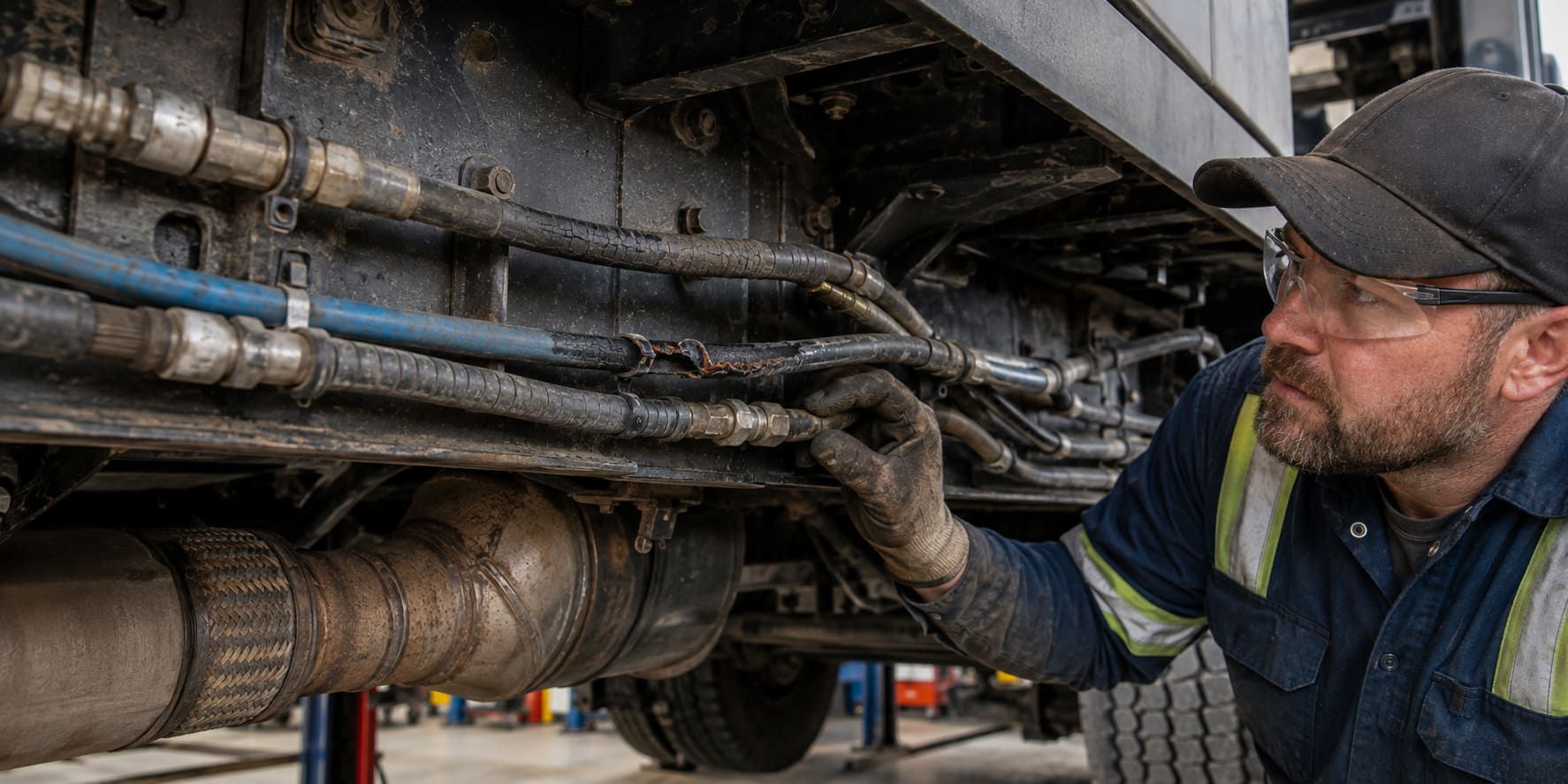
Installation and routing turn a good hose into a failure risk through twisting, over-bending, tensile stress, abrasion contact, and improper clamping. A hose that passes every factory quality check will still fail within months if it is twisted during fitting tightening, pulled tight between two fixed points, or allowed to rub against a vibrating bracket.
Common Installation Errors That Cause Cracking and Bursting
- Twisting during assembly: When a fitting is tightened without holding the hose body, the hose twists internally.11 The reinforcement layers shift, creating uneven stress distribution. Under pressure cycling, the twisted section becomes a fatigue point.
- Insufficient slack: A hose installed with zero slack pulls on its end fittings every time the chassis flexes or the component moves. The stress concentrates right at the crimp or compression fitting interface.
- Missing or incorrect clamps: A hose that is not secured can move, swing, and contact hot or sharp surfaces. Clamps that are too tight crush the outer cover and create a compression ring that eventually cracks.
- Routing near heat sources without shielding: Even a few inches of reflective heat shield can extend service life dramatically, yet many installations skip this step because the hose rating says it can handle the temperature.
- Sharp-edge contact: A hose that touches a cut frame edge, bracket corner, or bolt head wears its outer cover one vibration cycle at a time. The damage looks gradual until it suddenly is not.
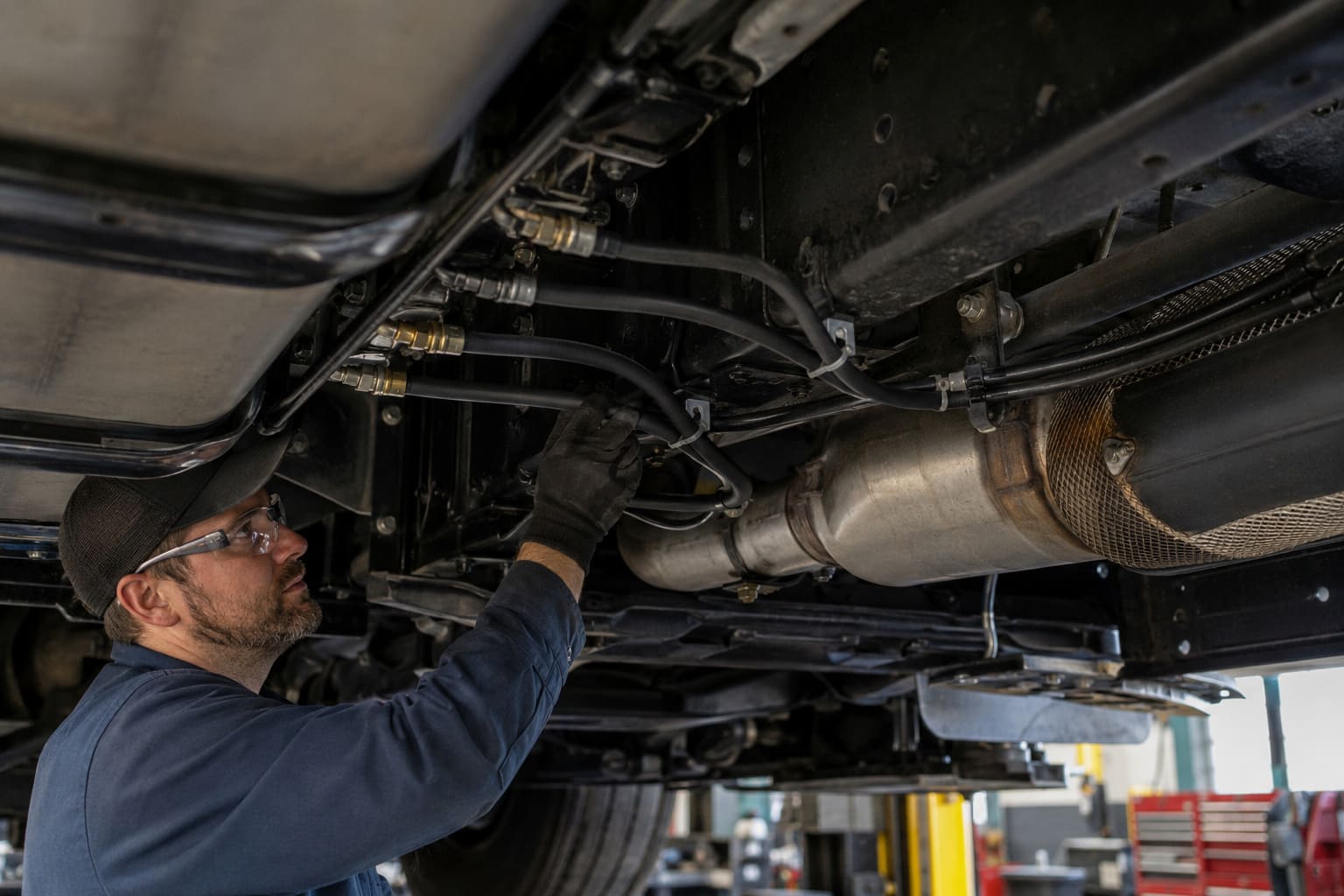
We incorporate these failure patterns into how we talk to distributors. When a customer asks why our hoses perform well in one fleet and generate complaints in another, the answer is often found in the installation environment. A distributor who can have this conversation with a fleet manager builds trust. One who simply replaces the product without understanding the root cause ships the same failure out again.
What Manufacturing Quality Controls Actually Reduce Cracking Risk?
This is where I can speak directly from our production experience. Manufacturing quality controls reduce cracking risk by catching variability before it becomes a field failure. The goal is not perfection—it is consistency across every batch.
Manufacturing quality controls reduce cracking risk through systematic raw material inspection, in-process sampling, documented standard operating procedures, and multi-point performance testing including air tightness, pressure resistance, tensile strength, and temperature resistance checks. These controls do not eliminate all failure possibilities, but they significantly lower the probability that a product will fail from a manufacturing-related cause.
The Quality Control Layers That Matter for Distributors
When you evaluate a supplier, ask about these specific control points. A supplier who can describe them clearly is managing risk actively:
1. Incoming Raw Material Inspection Every batch of rubber compound, copper rod, and metal fitting should arrive with a certificate of compliance and undergo verification testing before it enters production. If the compound supplier changed something and nobody caught it, that change is now in every hose you buy.
2. In-Process Sampling at Multiple Nodes Waiting until the end of the line to check quality means you have already produced a full batch of potential failures. We sample and test at defined production stages—after extrusion, after reinforcement braiding, after fitting crimping. Each checkpoint has a documented SOP that the operator follows every time.
3. Performance Testing Beyond Pressure A burst test tells you the ultimate failure point, but it does not tell you about fatigue life, temperature behavior, or dimensional stability. We run:
- Air tightness tests to verify seal integrity
- Pressure resistance tests for rated and safety margins
- Temperature resistance checks at both cold and hot extremes
- Tensile strength measurements to confirm material consistency
4. AQL Sampling and Final Inspection Before warehousing, we sample finished products using statistically defined AQL levels. For key products, we perform 100% final inspection. The results are archived so we can trace any field issue back to its production batch.
These controls represent a manufacturing philosophy: catch variability early, document everything, and never assume the last batch's results predict the next one. For a distributor, this translates into lower return rates and fewer difficult conversations with angry repair shops.
Frequently Asked Questions
How long should a semi truck air line normally last before showing cracks?
In typical North American heavy-duty truck applications, a quality air line properly selected and installed should last five to seven years before significant surface cracking appears, but service life varies dramatically based on climate, routing position, and exposure to heat and abrasion. Lines in harsh environments may show aging within three years.
Can I mix different brands of air lines and fittings on the same truck system?
Yes, different brands can be mixed if the fitting types, thread specifications, and material compatibilities match, but mismatched materials can create galvanic corrosion or inconsistent sealing surfaces over time. I recommend verifying fitting compatibility before mixing suppliers, especially when switching between brass and composite fitting materials.
What is the most common cause of a sudden air line burst while driving?
A sudden burst during operation is most commonly caused by a pre-existing damage point—a cut, abrasion wear, heat softening, or kinked section—that finally fails under normal pressure cycling. The hose did not suddenly become weak; it gradually reached a failure threshold that the driver could not see until it opened.
Does storing spare air lines in a hot warehouse affect their future service life?
Yes, extended storage in high temperatures, especially above 100°F, can accelerate compound aging before the hose is ever installed.12 Sunlight exposure through windows or skylights adds UV degradation. I advise distributors to store air lines in cool, dry, shaded conditions and to practice first-in-first-out inventory rotation.
How can a parts distributor reduce customer complaints about cracking air lines?
Distributors reduce complaints by selecting suppliers with documented raw material and in-process quality controls, asking detailed questions about compound specifications and temperature ratings, and sharing routing and installation best practices with their fleet and repair shop customers so the product is used within its intended operating parameters.
Conclusion
Semi truck air lines crack or burst because material aging, environmental stress, selection mismatches, and installation conditions combine to shorten service life—not because of a single simple cause. Pressure rating tells only part of the story. Temperature range, abrasion resistance, bending radius, fitting compatibility, and routing discipline all matter equally in the real world. A supplier with systematic raw material inspection, in-process quality control, and multi-point performance testing reduces the probability of manufacturing-related failure, but the product still must be selected and installed correctly to deliver its full service life.
For distributors, understanding these layered risk factors changes how you buy. You can ask better questions about compound specifications, quality documentation, and application suitability before placing a bulk order. You can have informed conversations with your repair shop and fleet customers that reduce returns and build trust. At ROADSPOWER, we work hard to control what we can—material consistency, production traceability, and comprehensive testing—so you can focus on selecting the right product for the right application and growing your business with confidence. If you want to discuss how our quality systems support your purchasing decisions, reach out to our team. We are happy to walk through our process.
"49 CFR 571.106 -- Standard No. 106; Brake hoses.", https://www.ecfr.gov/current/title-49/subtitle-B/chapter-V/part-571/subpart-B/section-571.106. Federal brake-hose performance requirements treat hose reliability as a combination of pressure resistance, tensile strength, environmental exposure, and end-fitting integrity rather than as a single-property issue; this supports the article's multifactor explanation, although the regulation does not assign field-failure probabilities to each factor. Evidence role: general_support; source type: government. Supports: Regulatory or technical sources should show that vehicle brake hose performance is evaluated across multiple dimensions, including pressure, tensile strength, temperature, ozone, and hose-end integrity.. Scope note: Contextual support; regulatory test categories do not prove the root cause of any particular failed air line. ↩
"Estimation of Synthetic Rubber Lifespan Based on Ozone ...", https://pmc.ncbi.nlm.nih.gov/articles/PMC11944956/. Polymer-aging studies describe elastomer cracking as dependent on compound chemistry, protective additives, and exposure to heat, ozone, ultraviolet radiation, and cyclic deformation, supporting the claim that material formulation strongly affects hose-cracking resistance. Evidence role: mechanism; source type: paper. Supports: A peer-reviewed review should support that elastomer formulation and additives affect resistance to thermal oxidation, ozone cracking, ultraviolet degradation, and flex-fatigue damage.. ↩
"Study on the Mechanical Behavior of Nitrile Rubber Materials Under ...", https://pmc.ncbi.nlm.nih.gov/articles/PMC12941664/. Research on thermal-oxidative aging of elastomers shows that elevated temperature increases oxidation reactions in polymer networks, producing changes in crosslink density and mechanical properties that can lead to hardening and cracking. Evidence role: mechanism; source type: paper. Supports: The source should explain that elevated temperature accelerates oxidation reactions in elastomers and can lead to changes such as hardening, embrittlement, or cracking.. ↩
"Estimation of Synthetic Rubber Lifespan Based on Ozone ... - PMC", https://pmc.ncbi.nlm.nih.gov/articles/PMC11944956/. Elastomer-degradation literature identifies ozone attack on unsaturated polymer bonds as a cause of surface cracking in strained rubber, often producing cracks oriented perpendicular to the applied tensile stress. Evidence role: mechanism; source type: paper. Supports: A technical source should support that ozone attacks carbon-carbon double bonds in unsaturated elastomers and produces cracking, especially under strain.. ↩
"Photodegradation and photostabilization of polymers ...", https://pmc.ncbi.nlm.nih.gov/articles/PMC4320144/. Studies of polymer photodegradation report that ultraviolet exposure can induce surface oxidation and chain scission, leading to discoloration, chalking, embrittlement, and micro-cracking in susceptible polymer materials. Evidence role: mechanism; source type: paper. Supports: The source should explain ultraviolet photodegradation of polymers, including chain scission or oxidation at exposed surfaces and resulting visible surface deterioration.. Scope note: Contextual support; the exact symptom pattern depends on the specific hose compound and stabilizer package. ↩
"Rapid Detection of Plasticizer Migration From UV‐Aged PVC ...", https://pmc.ncbi.nlm.nih.gov/articles/PMC12911472/. Polymer-aging research shows that plasticizers may migrate or be lost from a material over time, particularly at elevated temperature, reducing free volume and flexibility and thereby increasing stiffness or brittleness. Evidence role: mechanism; source type: paper. Supports: The source should support that plasticizers can migrate or volatilize from polymer matrices and that loss of plasticizer increases stiffness or brittleness.. Scope note: Contextual support; relevance varies by whether the specific air-line compound relies on migratory plasticizers. ↩
"Natural Aging Life Prediction of Rubber Products Using Artificial ...", https://pmc.ncbi.nlm.nih.gov/articles/PMC9460445/. Arrhenius-based aging models for polymers commonly treat degradation rate as temperature dependent, and many engineering applications use an approximate twofold rate increase per 10°C as a rule of thumb for thermally activated aging reactions. Evidence role: mechanism; source type: paper. Supports: A source should support the Arrhenius-based principle that many chemical degradation reactions accelerate substantially with temperature, often approximated as a doubling per 10°C for certain materials and reactions.. Scope note: Contextual support; the exact acceleration factor must be measured for the specific elastomer formulation and exposure condition. ↩
"49 CFR 571.106 -- Standard No. 106; Brake hoses.", https://www.ecfr.gov/current/title-49/subtitle-B/chapter-V/part-571/subpart-B/section-571.106. Brake-hose safety requirements include multiple performance tests beyond pressure, such as tensile strength, environmental conditioning, and hose-end performance, indicating that pressure rating alone is not a complete measure of service suitability. Evidence role: expert_consensus; source type: government. Supports: A regulation or standard should show that brake hoses are evaluated for multiple properties beyond pressure, such as tensile strength, temperature exposure, ozone resistance, and fitting performance.. Scope note: Contextual support; standards define minimum qualification tests and do not cover every routing or chemical exposure encountered in service. ↩
"Bend Radius Guidelines for Hydraulic Hose - StrongFlex", https://www.strongflex.com/bend-radius-guidelines-for-hydraulic-hose/. Hose-design guidance defines a minimum bend radius to limit strain on the tube, reinforcement, and cover; bending a hose more tightly than specified can promote kinking, stress concentration, and premature failure. Evidence role: mechanism; source type: institution. Supports: A technical institution or standards-based guide should explain minimum bend radius and its role in preventing kinking, reinforcement strain, and premature hose failure.. ↩
"FHWA - Effective Anti-Icing Program - Department of Transportation", https://www.fhwa.dot.gov/reports/mopeap/mop0296a.htm. Transportation research on winter maintenance chemicals shows that chloride-based deicers can accelerate corrosion of exposed vehicle metals and components, supporting concern about corrosion at air-line fitting interfaces in salted-road environments. Evidence role: general_support; source type: government. Supports: A transportation or corrosion source should support that chloride-based deicers promote corrosion of vehicle metals and may affect exposed vehicle components.. Scope note: Contextual support; this does not directly prove chemical attack on every hose compound. ↩
"Hitachi Cable America Consulting Technical Report in ...", https://downloads.regulations.gov/NHTSA-2022-0094-0004/attachment_6.pdf. Maintenance guidance for flexible hose assemblies generally instructs installers to avoid twisting during installation because torsional loading can impose uneven stress on reinforcement and fittings, increasing the likelihood of fatigue or leakage. Evidence role: mechanism; source type: government. Supports: A maintenance manual or safety guidance source should support that hose assemblies should not be installed with twist because torsional stress can shorten service life.. Scope note: Contextual support; most guidance applies broadly to flexible hose assemblies and may not be specific to one semi-truck air-line product. ↩
"Rubber Storage and Shelf Life ISO 2230", https://www.technoad.com/engineering/rubber-shelf-life/. Rubber-product storage guidance recommends cool, dry, protected storage because elevated temperature accelerates oxidative and physical aging processes, supporting the warning that hot warehouse storage can reduce future service life. Evidence role: expert_consensus; source type: institution. Supports: A standards or institutional source should support that rubber products should be stored in cool conditions because heat accelerates aging and shortens shelf life.. Scope note: Contextual support; the specific 100°F threshold should be treated as practical guidance unless verified for the particular compound. ↩