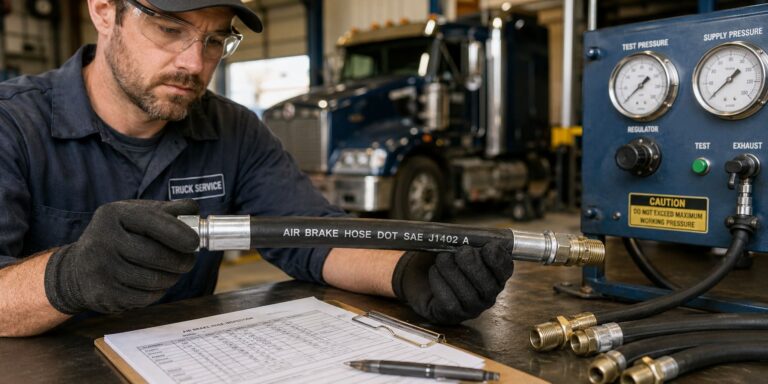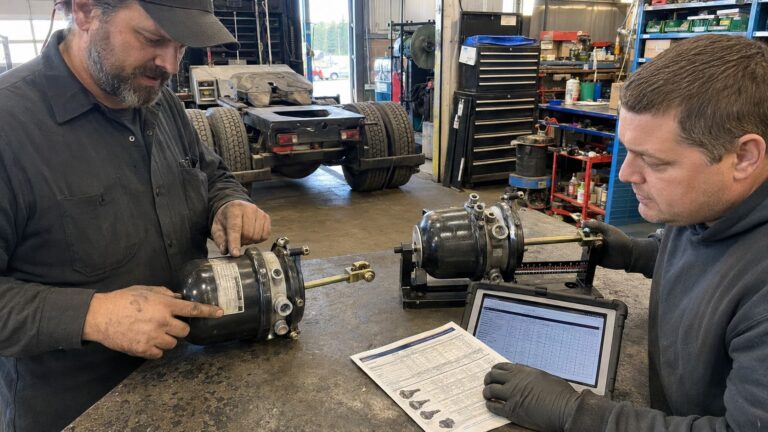
Choosing the wrong slack adjuster type causes brake performance problems, failed inspections, and frustrated customers. For distributors and repair shops sourcing replacement parts, the difference between an automatic slack adjuster and a manual slack adjuster is one of the most common — and most misunderstood — questions I hear. Getting this wrong costs time, money, and trust.
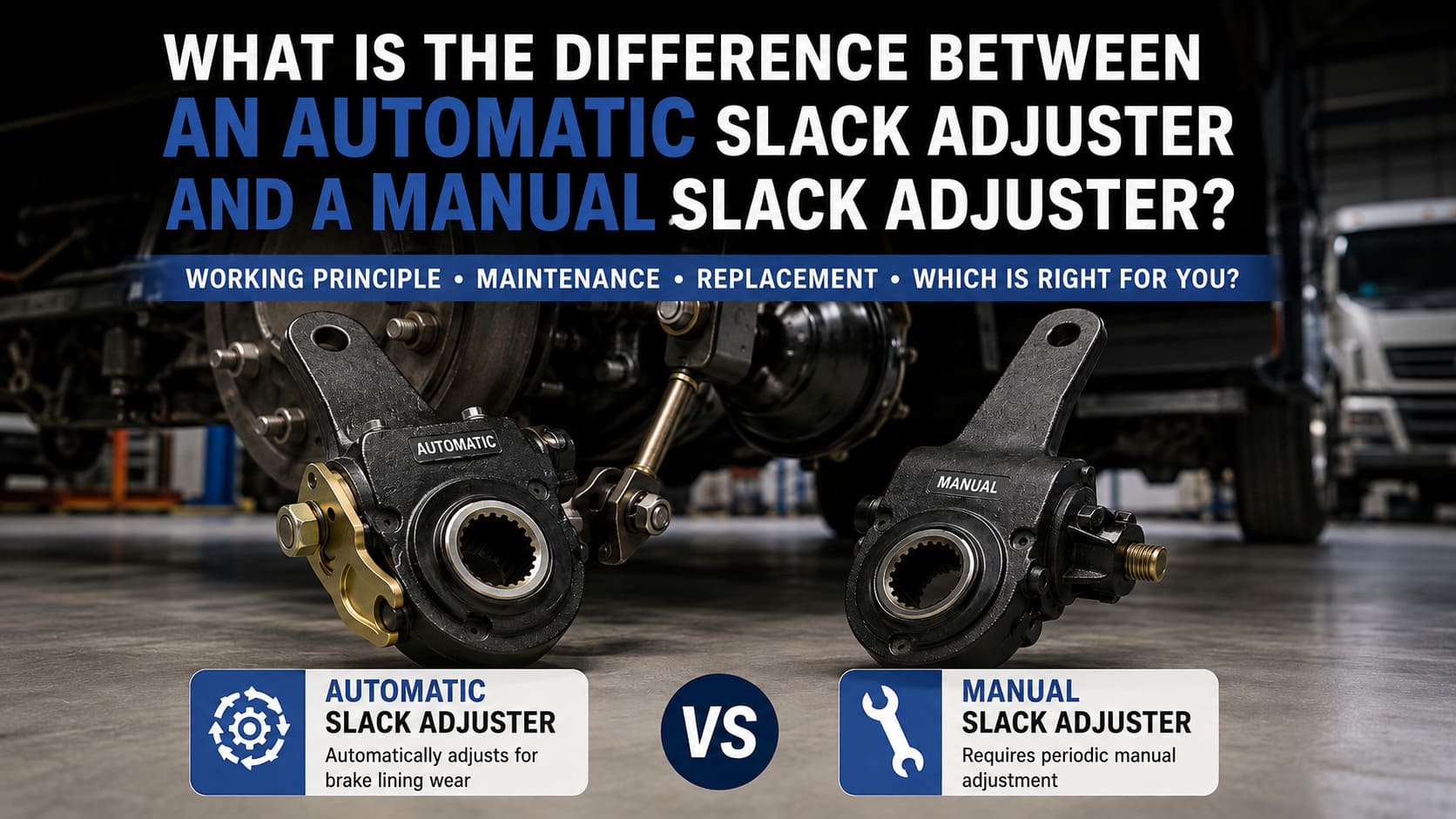
The core difference is how each type maintains the clearance between the brake lining and the drum. A manual slack adjuster requires a technician to periodically turn an adjustment bolt to maintain correct brake stroke.1 An automatic slack adjuster uses an internal sensing mechanism to compensate for lining wear continuously, reducing the need for routine manual adjustment.2 Neither type eliminates the need for regular brake inspection.3
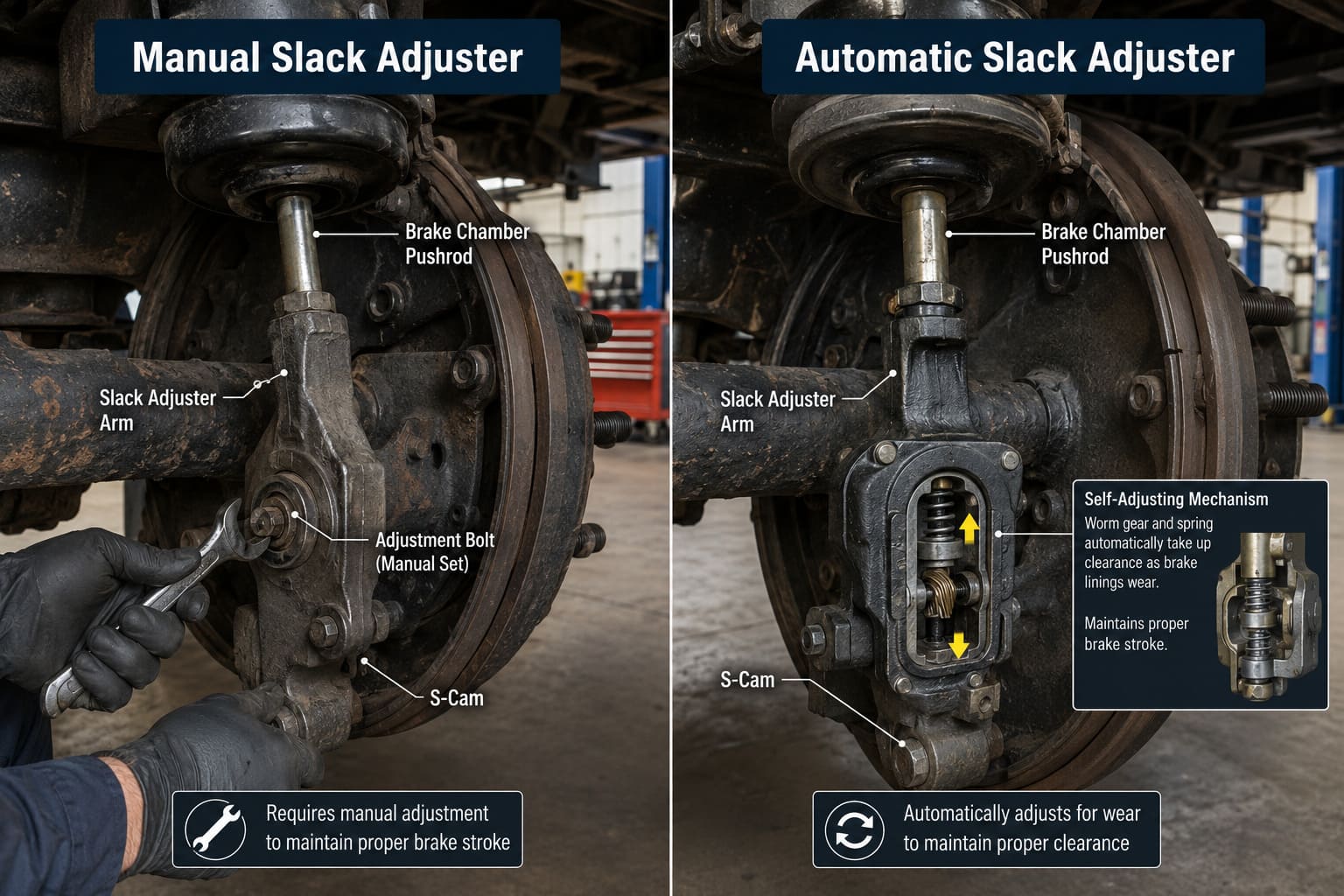
That summary answers the basic question — but it barely scratches the surface of what buyers actually need to know. The real decisions involve compatibility, maintenance responsibility, and whether a direct replacement is even appropriate. Let me walk through each of those in detail.
How Does Each Type of Slack Adjuster Work?
Many buyers understand the labels — "automatic" and "manual" — without fully understanding what those labels mean in a real brake system. That gap leads to wrong assumptions about maintenance, cost, and interchangeability.
A slack adjuster is a lever arm that connects the brake chamber pushrod to the camshaft.4 Its job is to maintain the correct clearance — called "brake slack" — between the brake lining and the drum. When that clearance grows too large due to lining wear, the brake becomes less responsive.5
The functional difference is straightforward: a manual slack adjuster requires a person to restore that clearance by manually turning an adjustment bolt. An automatic slack adjuster uses a built-in one-way clutch mechanism that senses excess stroke during brake application and self-corrects without manual intervention.
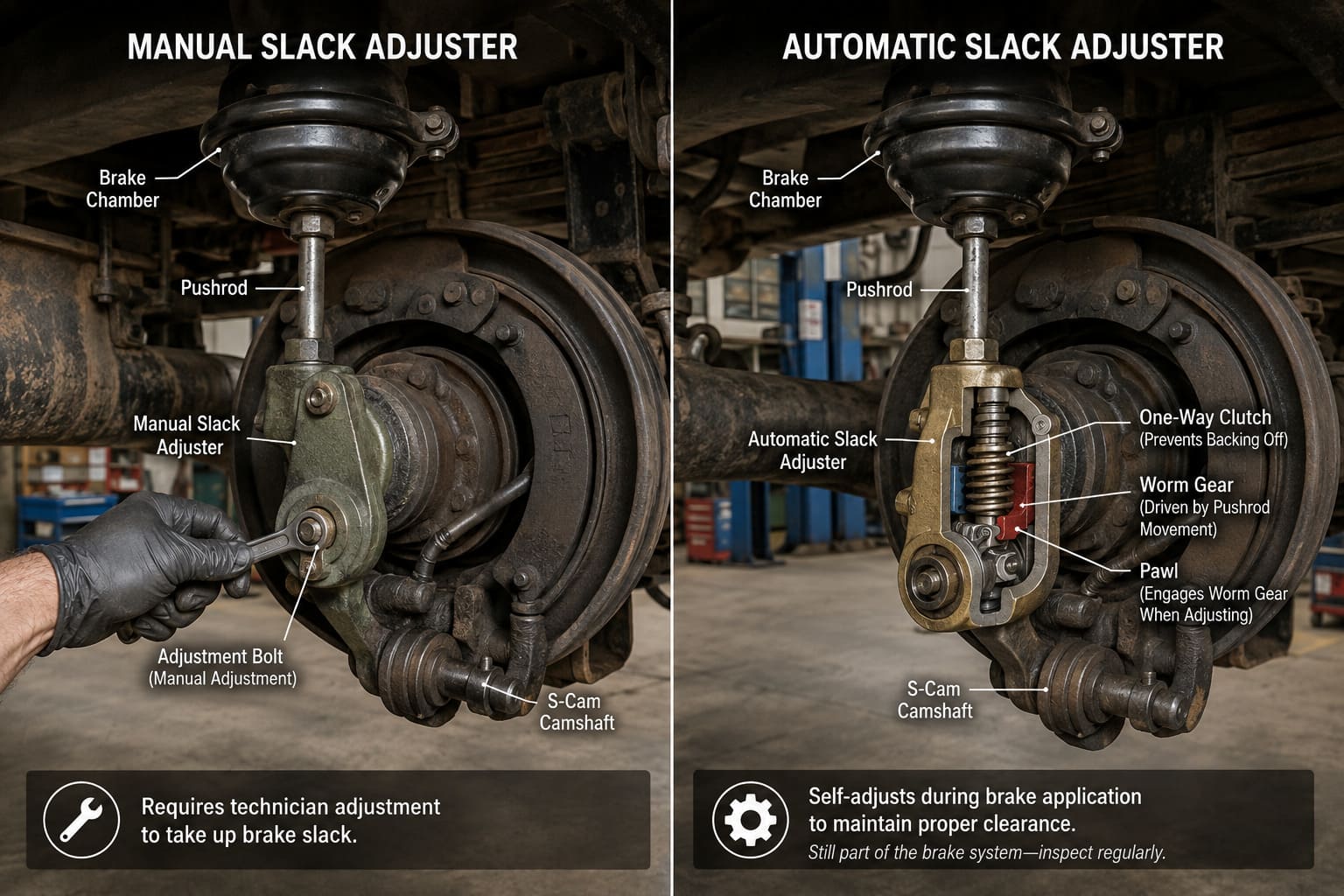
What Happens Inside a Manual Slack Adjuster?
A manual slack adjuster is a simple, robust lever. It has no internal automatic sensing mechanism. The adjustment bolt — often called the hex head — is turned by a technician using a wrench during scheduled maintenance. This restores the correct angle between the pushrod and the camshaft.
The key points for buyers:
- Adjustment frequency depends on brake usage and lining wear rate. High-duty-cycle vehicles may need more frequent attention.
- Incorrect adjustment is a real risk. Over-adjustment causes brake drag or lockup. Under-adjustment reduces braking effectiveness.6
- The part itself is mechanically simple, which contributes to its durability and lower cost in many applications.
What Happens Inside an Automatic Slack Adjuster?
An automatic slack adjuster contains a one-way clutch or pawl mechanism internally. During each brake application, it senses the pushrod travel angle. When that angle exceeds the designed range — indicating excess slack — the internal mechanism automatically rotates the worm gear to take up the slack.
Important points buyers often misunderstand:
- "Automatic" does not mean the mechanism works perfectly in all conditions. Contamination, corrosion, or internal wear can cause it to under-adjust or over-adjust.7
- An automatic slack adjuster that is out of adjustment is a warning sign.8 It usually indicates a deeper issue: worn linings, a weak brake chamber, a bent pushrod, or a failed internal mechanism — not just a part that "needs adjusting."
- Regular inspection is still required. Checking stroke length, checking for physical damage, and verifying correct function are non-negotiable maintenance steps, regardless of adjuster type.
Is an Automatic Slack Adjuster Better Than a Manual One?
This is perhaps the most common framing I hear from customers — and it is the wrong question. The better question is: which type is correct for this specific vehicle and application?
Calling one type "better" ignores the maintenance environment, the original vehicle configuration, and the operator's service capabilities.
An automatic slack adjuster reduces routine manual brake adjustment, which lowers labor demand and human error risk in environments where regular adjustment may be skipped or done incorrectly.9 A manual slack adjuster, maintained correctly, delivers reliable braking performance and is well-suited to operations with disciplined scheduled maintenance programs.
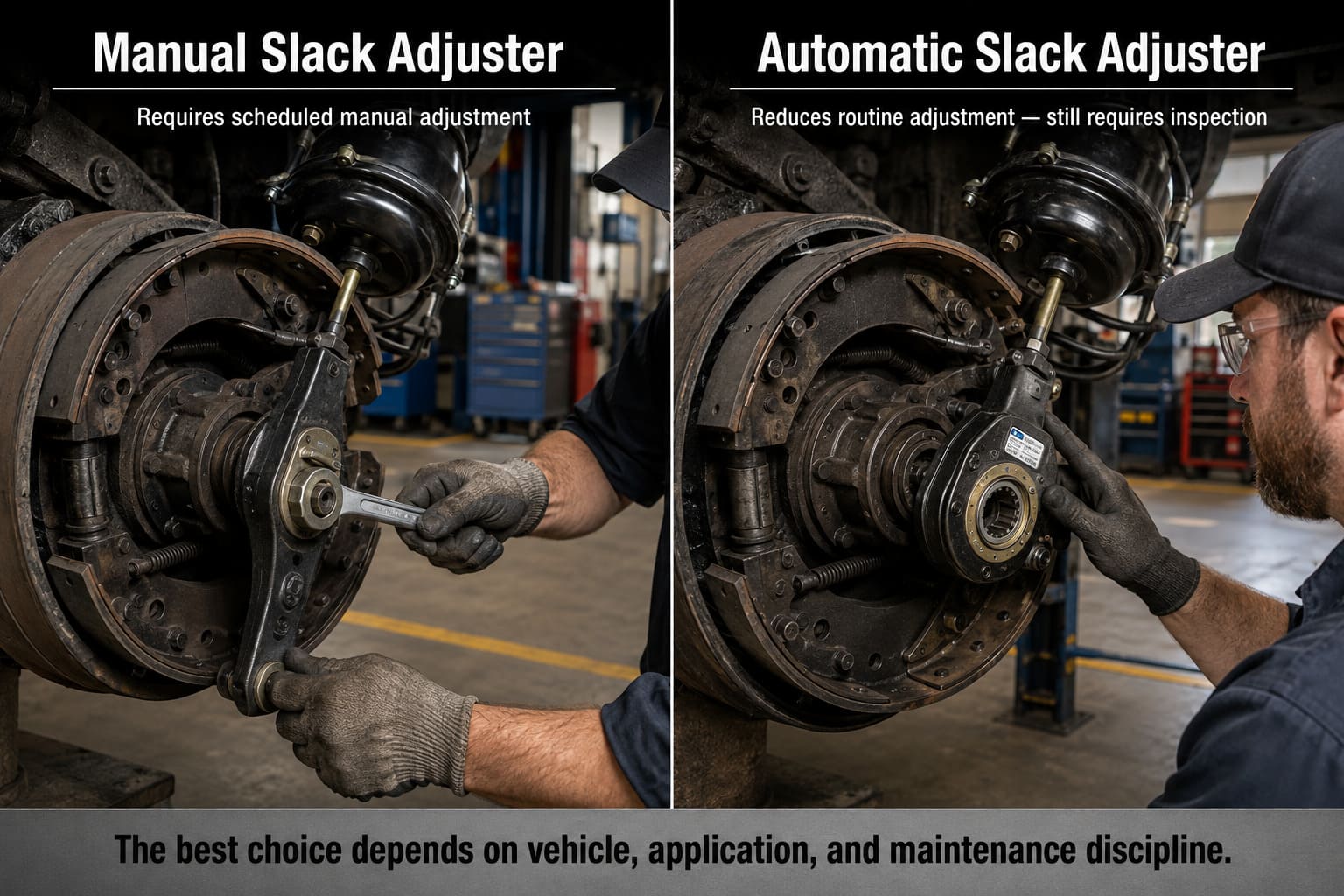
The Maintenance Discipline Factor
Here is something I tell distributors and repair shops directly: the value of a manual slack adjuster depends almost entirely on whether it will be adjusted correctly and on schedule.
In a well-managed fleet with trained technicians and strict PM intervals, a manual slack adjuster performs reliably and predictably. In an environment where maintenance is inconsistent — whether due to staffing, workload, or operator oversight — an automatic slack adjuster removes one critical variable from the equation.
This is not a criticism of manual types. It is an honest framing of the risk exposure on both sides.
The "Automatic Means No Maintenance" Misconception
This is the single biggest misconception I encounter in customer conversations. Buyers — particularly those newer to heavy truck parts — sometimes assume that switching to automatic slack adjusters means removing brake adjustment from their maintenance checklist entirely. That assumption is dangerous.
Here is what automatic slack adjusters still require:
| Maintenance Task | Manual Slack Adjuster | Automatic Slack Adjuster |
|---|---|---|
| Routine manual brake adjustment | Yes — scheduled intervals | Not required under normal conditions |
| Inspection of brake stroke length | Yes | Yes — still required |
| Visual inspection for damage or wear | Yes | Yes |
| Checking lining and drum condition | Yes | Yes |
| Investigating if out-of-adjustment | Adjust and monitor | Diagnose root cause — do not simply readjust |
Note: If an automatic slack adjuster is found out of adjustment during inspection, the correct response is to diagnose the underlying cause — not to manually reset it and move on. An automatic adjuster that fails to maintain adjustment is signaling a problem elsewhere in the brake system.
Where Manual Slack Adjusters Still Make Sense
Manual slack adjusters are not simply a cheaper or outdated option. They remain a valid choice in several real-world scenarios:
- Older vehicle configurations where the brake system was originally designed around manual adjustment
- Markets or operations where replacement parts, trained technicians, and scheduled PM are consistently available
- Cost-sensitive procurement environments where total cost of ownership — including the labor for correct maintenance — still favors manual types
- Certain specialty or vocational applications where the operating environment, brake system design, or vehicle class makes automatic adjustment less straightforward
Can You Replace a Manual Slack Adjuster with an Automatic One?
This is the replacement question I get asked most often, and the honest answer is: not without verifying compatibility first.
Many buyers assume that because both types perform the same basic function — adjusting brake slack — they are directly interchangeable. In practice, correct replacement requires confirming several specifications before selecting a part.
Direct interchangeability between manual and automatic slack adjusters cannot be assumed.10 Correct replacement depends on the vehicle model, axle and brake system configuration, original OEM specification, arm length, spline count, and installation dimensions. A parts professional or qualified technician should verify fit before sourcing a replacement.
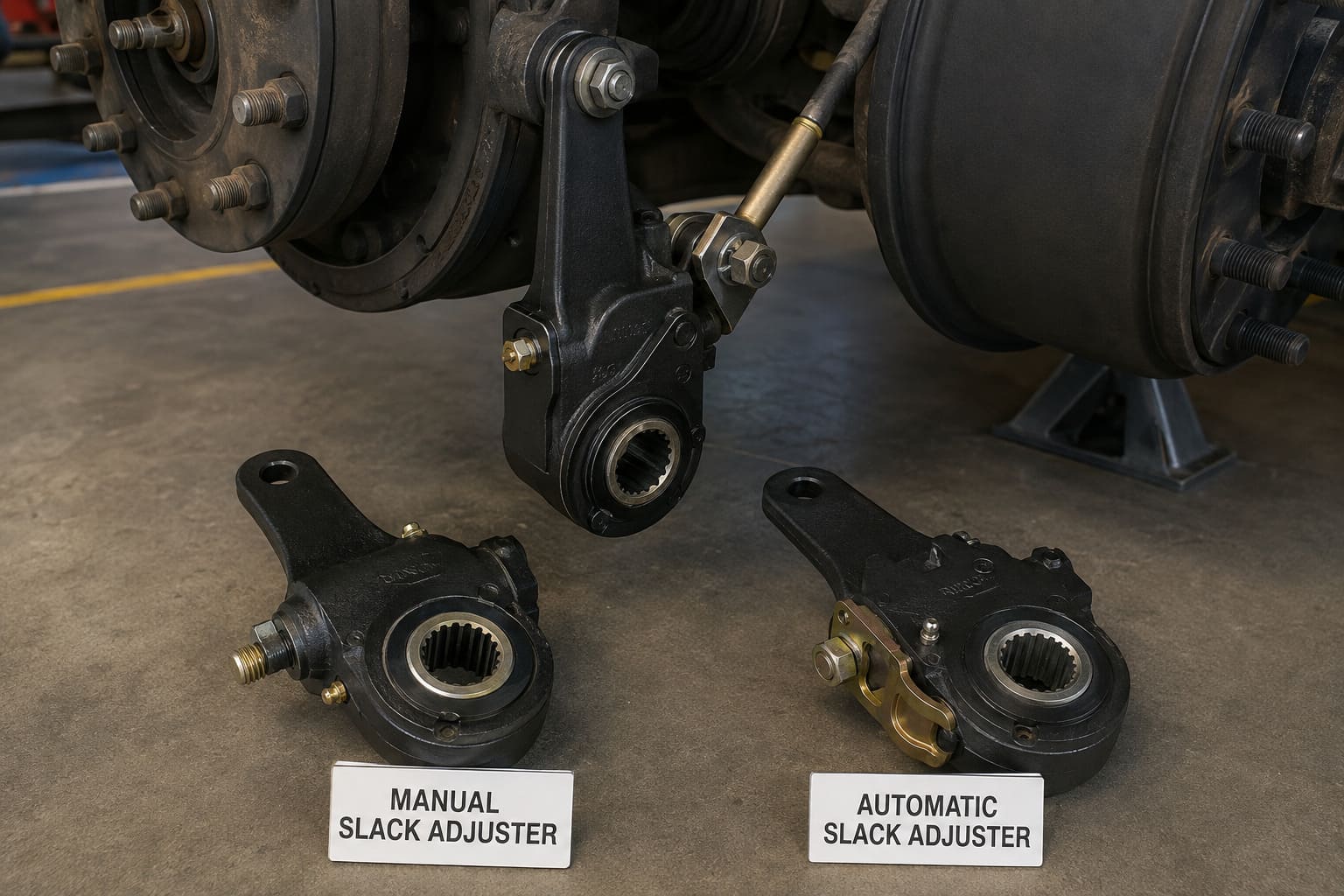
Key Specification Points to Verify
When a customer contacts me about a slack adjuster replacement, these are the data points I always ask for:
- Vehicle make, model, and year — Freightliner, Kenworth, Peterbilt, International, Volvo, Mack, and others each have specific brake system designs.
- Axle position — steer axle, drive axle, and trailer axle may use different configurations.
- Arm length — the distance from the center of the camshaft to the center of the clevis pin hole. This directly affects brake force geometry.
- Spline count and size — the slack adjuster must match the camshaft spline exactly.
- Original OEM part number — the most reliable reference for confirming a correct match.
- Customer sample or drawing — when part numbers are unavailable or uncertain, a physical sample is the most reliable verification method.
What Happens When Specifications Are Wrong?
Installing a slack adjuster with incorrect arm length, wrong spline count, or incompatible geometry creates serious brake system problems:
- Wrong arm length changes the mechanical advantage, causing over- or under-braking.
- Mismatched splines mean the adjuster cannot be properly secured to the camshaft.
- Incorrect stroke geometry can cause brake drag, uneven wear, or a non-functional brake.
These are not hypothetical risks. They are the kinds of failures that generate returns, customer complaints, and in worst cases, vehicle safety incidents. This is why I recommend confirming specifications before ordering, not after.
Frequently Asked Questions
Do automatic slack adjusters require any maintenance at all?
Yes. Automatic slack adjusters still require regular inspection, including checking brake stroke length, inspecting for physical damage or contamination, and verifying that the adjuster is functioning correctly. If an automatic slack adjuster is found out of adjustment during inspection, this signals a potential brake system problem that needs diagnosis — not just readjustment.
Can I upgrade from manual to automatic slack adjusters on any truck?
Not automatically. Compatibility depends on the vehicle's brake system design, axle configuration, camshaft spline count, arm length, and original OEM specification. Before switching types, verify these specifications against the vehicle's original configuration. When in doubt, consult a qualified brake technician or contact your parts supplier with the vehicle details and original part number.
Why would someone still choose a manual slack adjuster over an automatic?
Manual slack adjusters remain a valid choice in several situations: older vehicle configurations originally designed for manual adjustment, operations with disciplined maintenance schedules and trained technicians, cost-sensitive procurement contexts, and markets where manual types are more readily available or more familiar to local service teams. "Manual" does not mean inferior — it means maintenance-dependent.
How do I know which slack adjuster fits my specific truck?
The most reliable method is to use the OEM part number from the original component, combined with the vehicle make, model, year, axle position, arm length, and spline count. If the part number is unavailable, a physical sample or technical drawing can be used to verify dimensions. A reputable supplier should be able to confirm fit from these details before you order.
What does it mean if an automatic slack adjuster keeps going out of adjustment?
It almost always means something else in the brake system needs attention. Common causes include worn brake linings, a weak or failing brake chamber, a bent or damaged pushrod, or a failed internal mechanism in the adjuster itself. The automatic slack adjuster is reporting a problem — not causing one. A qualified technician should inspect the full brake assembly before replacing just the adjuster.
Conclusion
The difference between an automatic slack adjuster and a manual slack adjuster comes down to how brake clearance is maintained — automatically through an internal mechanism, or manually through scheduled technician adjustment. But for buyers, distributors, and repair shops, the more important questions are about compatibility, maintenance responsibility, and correct specification. Neither type is universally superior. Both require regular inspection. And neither type should be selected — or swapped in as a replacement — without first confirming the correct specifications for the specific vehicle and brake system.
If you are sourcing slack adjusters for your distribution business, repair shop, or fleet, we are glad to help you verify compatibility from vehicle details, part numbers, or customer samples. Contact the ROADSPOWER team for product inquiries, specification support, or mixed-batch pricing on heavy-duty truck brake parts.
"5.1.1 Brake Systems (Part 393 Subpart C) - CSA", https://csa.fmcsa.dot.gov/safetyplanner/MyFiles/SubSections.aspx?ch=22&sec=64&sub=130. Government air-brake inspection materials describe manual slack adjusters as devices that require periodic manual adjustment to maintain proper brake stroke, supporting the article’s definition of their maintenance function. Evidence role: definition; source type: government. Supports: A government air-brake inspection or training source should define manual slack adjusters as components that require manual adjustment to maintain proper pushrod stroke or brake clearance.. ↩
"Customer Advisory Letter", https://static.nhtsa.gov/odi/tsbs/2023/MC-10244757-0001.pdf. U.S. vehicle-safety materials on automatic brake adjusters state that these devices maintain brake adjustment as friction material wears, supporting the claim that routine manual adjustment is reduced. Evidence role: mechanism; source type: government. Supports: A government vehicle-safety source should explain that automatic brake adjusters are designed to maintain adjustment as linings wear and reduce the need for routine manual adjustment.. ↩
"5.2.3 Brake Inspections - CSA - Department of Transportation", https://csa.fmcsa.dot.gov/safetyplanner/MyFiles/SubSections.aspx?ch=22&sec=65&sub=149. FMCSA inspection regulations require periodic inspection of commercial motor vehicle brake systems, including brake adjustment conditions, supporting the statement that automatic and manual slack adjusters do not eliminate inspection duties. Evidence role: general_support; source type: government. Supports: A regulatory source should show that commercial vehicle brake systems, including adjustment and stroke, remain subject to periodic inspection regardless of slack adjuster type.. ↩
"AIR BRAKE SYSTEM - Georgia Department of Public Safety", https://dps.georgia.gov/document/publication/162476601factsheet055pdf/download. Air-brake training manuals describe the slack adjuster as the lever linking brake chamber pushrod motion to camshaft rotation, supporting the article’s component definition. Evidence role: definition; source type: education. Supports: An educational air-brake manual should identify the slack adjuster as the lever between the brake chamber pushrod and the camshaft in an S-cam brake system.. ↩
"5.1.1 Brake Systems (Part 393 Subpart C) - CSA", https://csa.fmcsa.dot.gov/safetyplanner/MyFiles/SubSections.aspx?ch. Government air-brake inspection guidance treats excessive stroke and out-of-adjustment brakes as safety defects because they reduce braking effectiveness, supporting the article’s explanation of excessive lining-to-drum clearance. Evidence role: mechanism; source type: government. Supports: A government or public safety source should explain that excessive pushrod travel or out-of-adjustment brakes can reduce braking effectiveness.. ↩
"Adjusting Air Brake Rod on Truck", https://www.facebook.com/groups/483964356970950/posts/938018304898884/. Air-brake maintenance training materials explain that overly tight adjustment can cause brake drag while excessive slack increases stroke and reduces braking force, supporting the article’s warning about incorrect adjustment. Evidence role: mechanism; source type: education. Supports: An air-brake training source should explain the consequences of brakes adjusted too tightly or too loosely.. ↩
"Forged for the Road Ahead - GAPASA", https://gapasa.com/blogs/the-essential-role-of-the-automatic-slack-adjuster. Commercial vehicle brake-maintenance guidance identifies contamination, corrosion, and component wear as conditions that can impair automatic slack adjuster operation, supporting the article’s failure-mode statement. Evidence role: mechanism; source type: institution. Supports: An institutional maintenance or inspection source should identify contamination, corrosion, and wear as factors that can impair automatic slack adjuster function.. Scope note: The source may support these as recognized contributing factors rather than proving that every under-adjustment or over-adjustment event is caused by them. ↩
"Don't assume your self-adjusting brakes are being diagnosed correctly.", https://cvsa.org/wp-content/uploads/Brake-Postcard.pdf. Commercial vehicle inspection guidance treats an out-of-adjustment automatic slack adjuster as an indication that the brake system requires diagnosis, supporting the article’s characterization of the condition as a warning sign. Evidence role: expert_consensus; source type: institution. Supports: An inspection or maintenance organization should state that an automatic slack adjuster found out of adjustment should trigger diagnosis of the brake system rather than simple readjustment.. Scope note: The support is diagnostic guidance and does not identify the exact failed component in any individual vehicle. ↩
"Trump's Transportation Department Launches Commonsense Updates ...", https://www.nhtsa.gov/press-releases/fmvss-updates-brake-pedal-requirements. NHTSA rulemaking on automatic brake adjusters links their use to reducing out-of-adjustment brake conditions associated with manual adjustment practices, supporting the article’s claim about reduced routine adjustment and human-error exposure. Evidence role: historical_context; source type: government. Supports: A government rulemaking or safety analysis should explain that automatic brake adjusters were adopted to reduce out-of-adjustment brakes associated with manual maintenance practices.. Scope note: The source supports the safety rationale broadly and may not quantify labor savings for a particular fleet. ↩
"Recommended Practice", http://www.intrucking.org/uploads/3/7/6/7/37679031/tmc_adjusting___manual_brake_adjustment_removal_installtion_and_maintenance.pdf. Technical maintenance guidance for S-cam brake components identifies slack adjuster arm length, spline configuration, and installation geometry as application-specific selection factors, supporting the statement that direct interchangeability cannot be assumed. Evidence role: general_support; source type: institution. Supports: A technical maintenance standard should show that slack adjuster selection depends on application-specific factors such as arm length, spline configuration, and installation geometry.. Scope note: The source provides general compatibility criteria rather than confirming fitment for any specific vehicle model. ↩