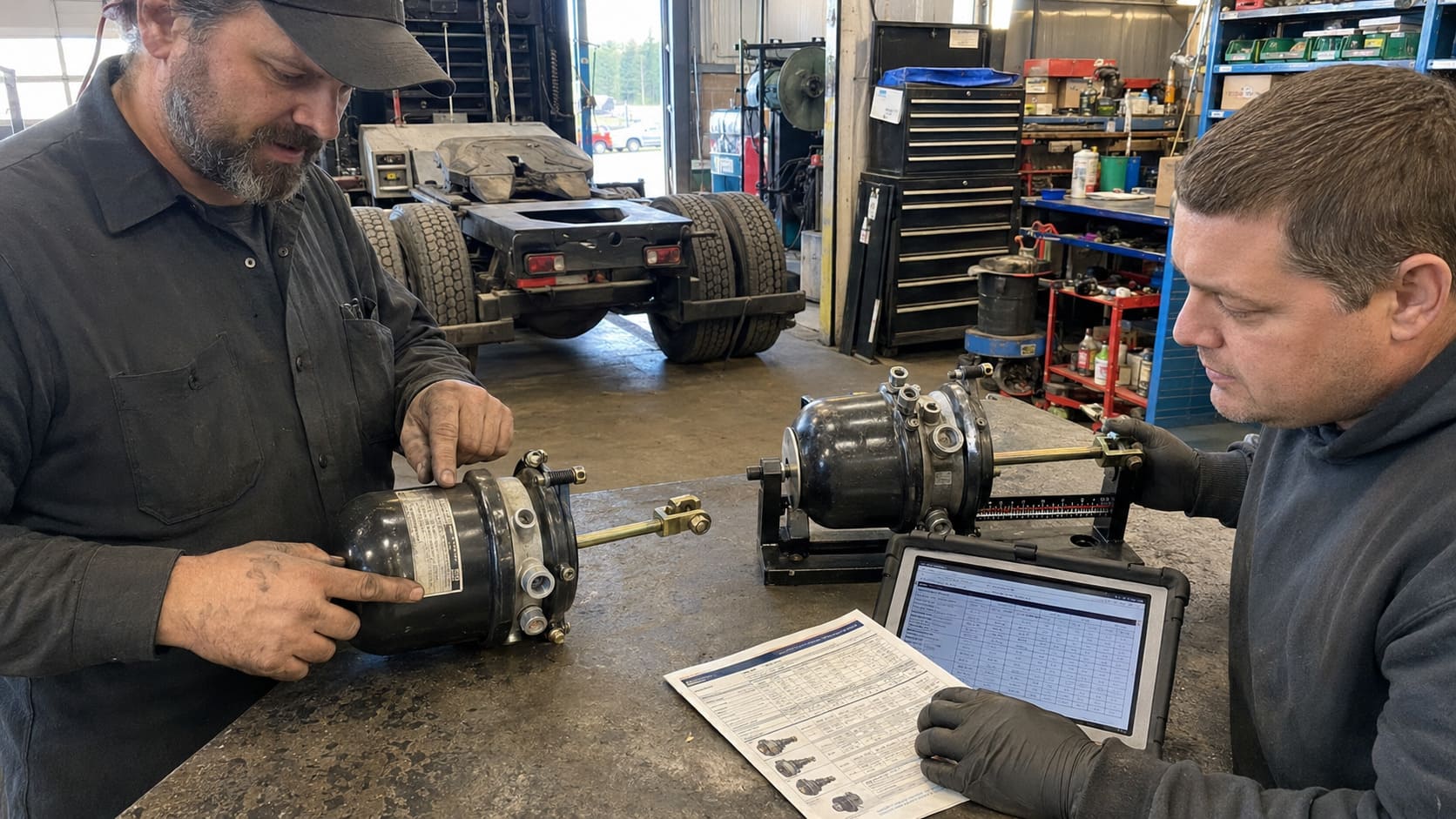
Long and short stroke brake chambers can look similar, and that creates a real problem when you need to order replacements quickly. If I guess from appearance alone, I risk sending the wrong inquiry, stocking the wrong part, or delaying a repair. The safer solution is a structured confirmation process.
To tell the difference between long and short stroke brake chambers, I first check the chamber body or label markings, then verify the rated stroke or maximum stroke data, and finally cross-check the part number against the manufacturer’s specification sheet. Appearance, chamber size, or model number alone should not be treated as final proof.
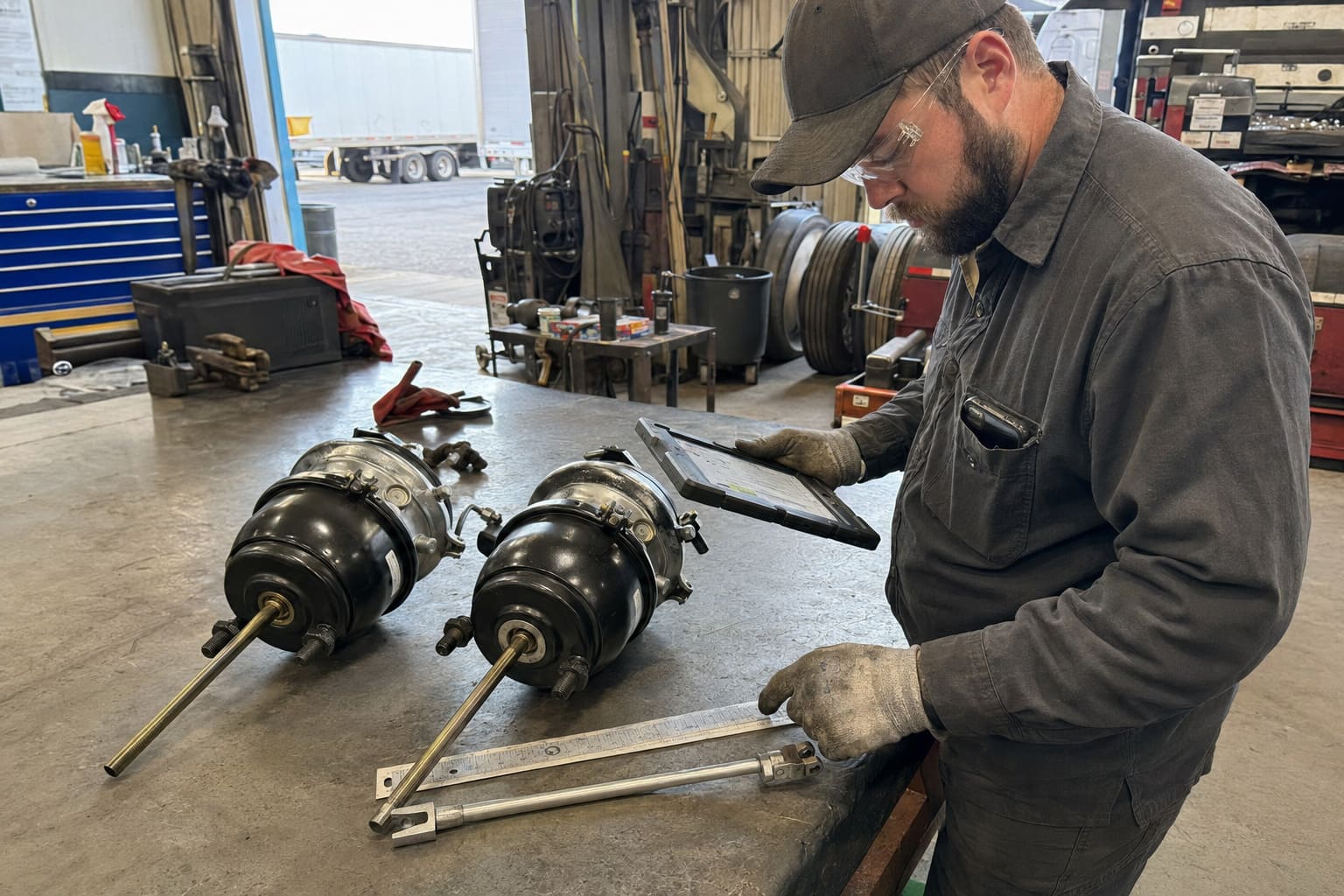
In purchasing communication, I treat this as a replacement-parts confirmation task, not a quick visual judgment. A few extra photos and data points can prevent returns, downtime, and inventory waste. Below is the same practical flow we use when helping distributors, repair shops, and fleet buyers confirm brake chamber models.
Can You Identify Long and Short Stroke Brake Chambers by Appearance Alone?
Many buyers first try to identify long and short stroke brake chambers by size, shape, clamp position, or pushrod appearance. I understand why. It feels faster. However, that shortcut can become expensive when two chambers look alike but have different stroke ratings or application requirements.
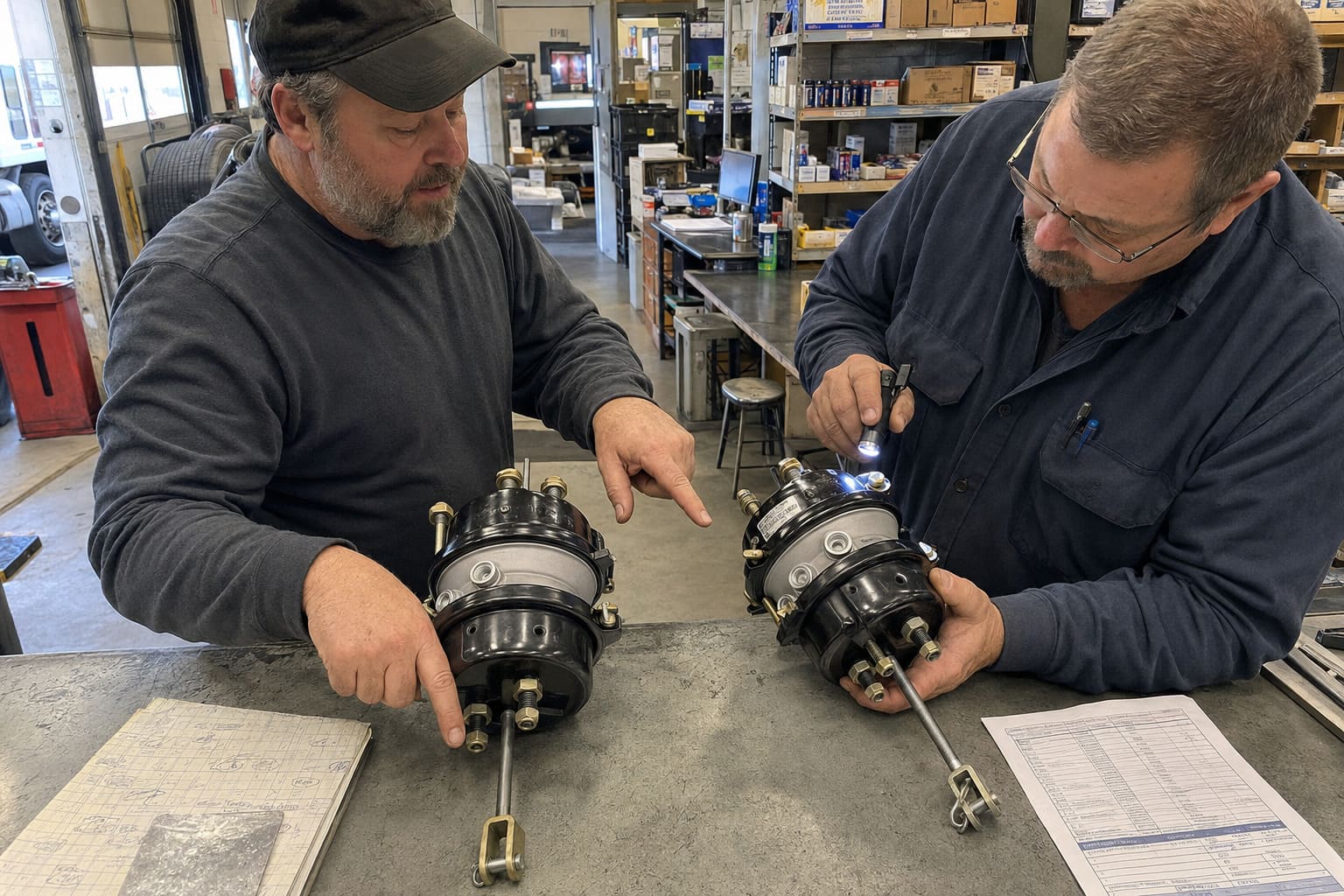
The short answer is no. I would not identify long and short stroke brake chambers by appearance alone.1 Visual clues may help start the conversation, but final confirmation should come from markings, stroke or max-stroke data, part number matching, and the manufacturer specification.
Why appearance can mislead buyers
In the heavy-duty truck aftermarket, many replacement parts look similar because they are made to fit common axle, brake, and suspension applications. Brake chambers are no exception. A buyer may see the same chamber type, similar housing diameter, or similar mounting pattern and assume the stroke is the same. That assumption is risky.
I have seen inquiries where a customer sent one side photo and asked, “Is this long stroke?” The photo showed the general chamber shape, but the label was not visible. In that case, I could not confirm the model responsibly. I asked for a clear image of the stamped markings, the old part number, and any stroke data. That extra step helped avoid a wrong replacement order.
Common visual clues are not enough
Some buyers look at these features first:
- Chamber size, such as Type 24, Type 30, or Type 36
- Housing shape or clamp band style
- Pushrod length or clevis position
- Color, tag, or dust plug style
- Brand logo or casting appearance
- Service chamber or spring brake chamber design
These details may help narrow the category, but they do not always prove the stroke type. For example, a Type 30 chamber can exist in different stroke versions depending on the design and manufacturer.2 Also, replacement parts from different brands may use different labels, stamp styles, or suffixes.
I usually tell buyers this: “A photo is useful, but a photo without markings is only the first clue.”
Why the difference matters
The difference between long and short stroke brake chambers affects replacement compatibility and brake system performance.3 I do not treat long stroke as an automatic upgrade. I also do not assume it can freely replace a short stroke version. Final matching should follow the truck application, axle setup, brake system specification, manufacturer data, and qualified technician judgment.4
A wrong identification may cause:
| Risk | What it means for buyers |
|---|---|
| Incorrect replacement order | The part arrives but does not match the application |
| Return and reshipping cost | The distributor or repair shop loses time and margin |
| Downtime | A truck or trailer stays out of service longer |
| Inventory waste | Wrong stock sits on the shelf |
| Installation incompatibility | Mounting or pushrod setup may not match requirements |
| Brake performance concerns | Incorrect parts may affect system operation |
For procurement, I always want confirmation before shipment. A brake chamber is not just a metal can with a pushrod. It is part of a regulated braking system.5 So, the correct answer starts with documentation, not guesswork.
What Markings Should I Check on Long and Short Stroke Brake Chambers?
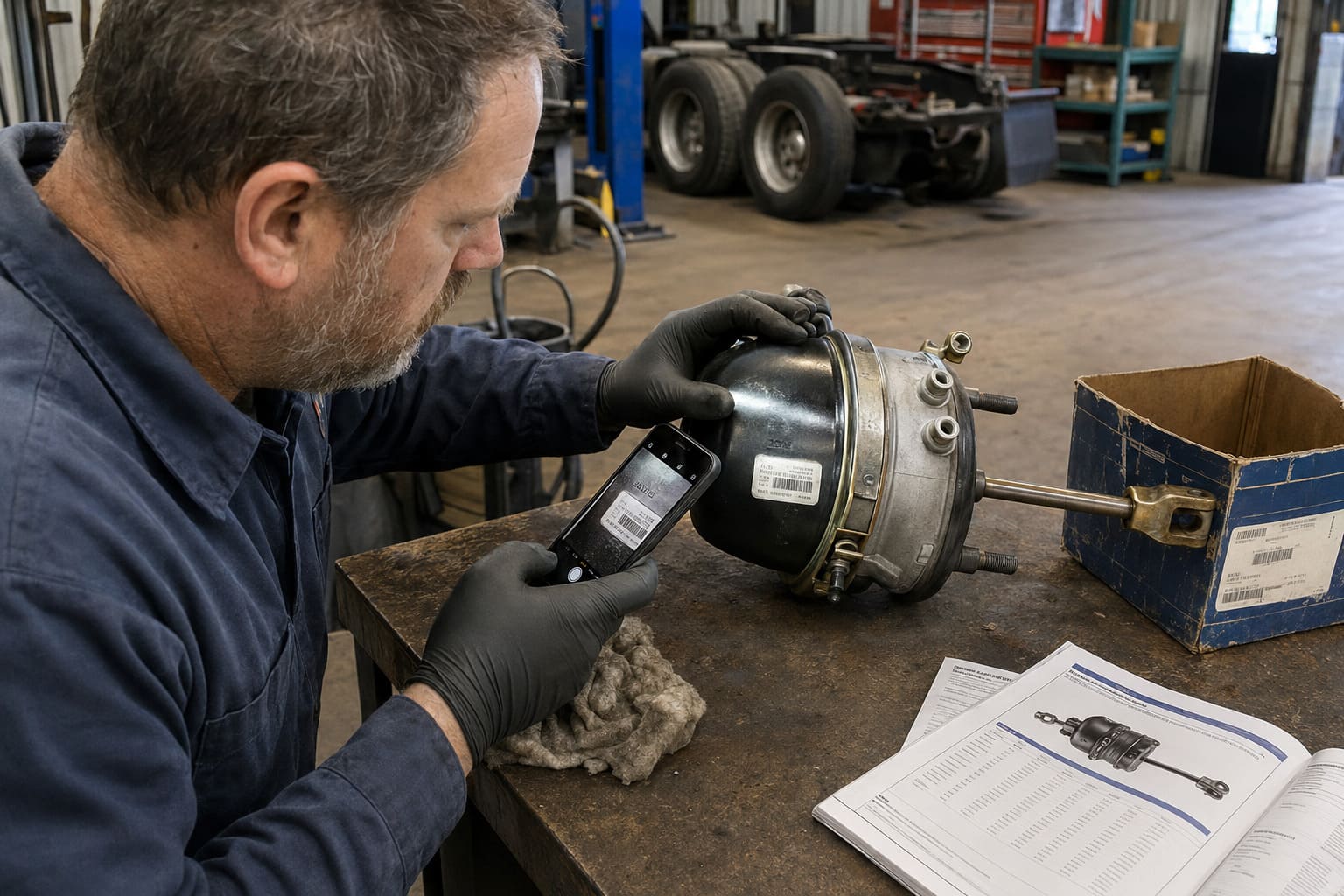
When I confirm long and short stroke brake chambers for replacement, I start with the chamber body, label, tag, or stamped markings. Buyers often skip this step because the markings are dirty, hidden, or partly damaged. Still, these markings are usually the best starting point.
You should check all visible chamber markings, including brand, part number, chamber type, stroke or long-stroke indicators, service/spring brake designation, and any stamped codes. These markings should then be compared with stroke data and the manufacturer specification before ordering a replacement.
Where to look for brake chamber markings
I usually ask customers to send photos from several angles because the useful information may not appear on the first photo. A label may be on the side facing the axle. A stamp may be covered by dust or paint. A tag may be partly hidden behind a bracket.
When you inspect a removed or installed chamber, look for:
- Manufacturer name or logo
- Part number or model number
- Chamber type, such as Type 24, Type 30, or Type 36
- Stroke marking or max-stroke marking
- Long-stroke indicator, if the brand uses one
- Service chamber or spring brake chamber code
- Date or batch code, if available
- Application or OEM reference, if printed on the label
Not every brand marks parts in the same way. That is why I avoid saying one exact letter, color, or marking rule applies to all products. Some manufacturers use clear stroke labels. Some use part number suffixes. Some use stamped numbers that must be checked in a catalog.
What photos should buyers send?
In our daily inquiry work at ROADSPOWER, incomplete photos are one of the most common causes of slow confirmation. A buyer may send a side view, but the label is blurred. Another buyer may send the old box label, but not the actual chamber. I understand the pressure when a truck is waiting in the shop, but clear photos save time.
For a fast confirmation, I recommend sending:
- One full view of the complete brake chamber
- Close-up photo of the label or tag
- Close-up photo of stamped body markings
- Photo of the mounting side
- Photo of the pushrod and clevis area
- Existing part number or brand information
- Truck, trailer, axle, or application information
- Any stroke or max-stroke data already known
How I use markings in purchasing confirmation
Markings are not just for identification. They guide the next step. If I receive a part number, I can compare it with our internal cross-reference records, supplier specifications, or manufacturer data. If I receive only a chamber type, I still need more details.
Here is a practical example:
| Information received | Can I confirm immediately? | What I ask next |
|---|---|---|
| “Type 30 brake chamber” only | No | Stroke data, part number, photos |
| Clear part number photo | Often yes | Spec sheet verification |
| Blurred label photo | No | Retake close-up photo |
| Brand and application only | Maybe | Existing part number or dimensions |
| Stroke/max-stroke shown | Strong clue | Cross-check with part number |
This process protects both sides. The buyer avoids wrong stock, and the supplier avoids shipping a part based on incomplete assumptions. I see it as a communication habit. The more complete the first inquiry is, the faster the correct brake chamber can be matched.
How Do Stroke and Max-Stroke Data Confirm the Brake Chamber Type?
The stroke value is one of the most important details when separating long and short stroke brake chambers. However, I do not use the number alone without context. I use it together with the chamber type, part number, and manufacturer specification.
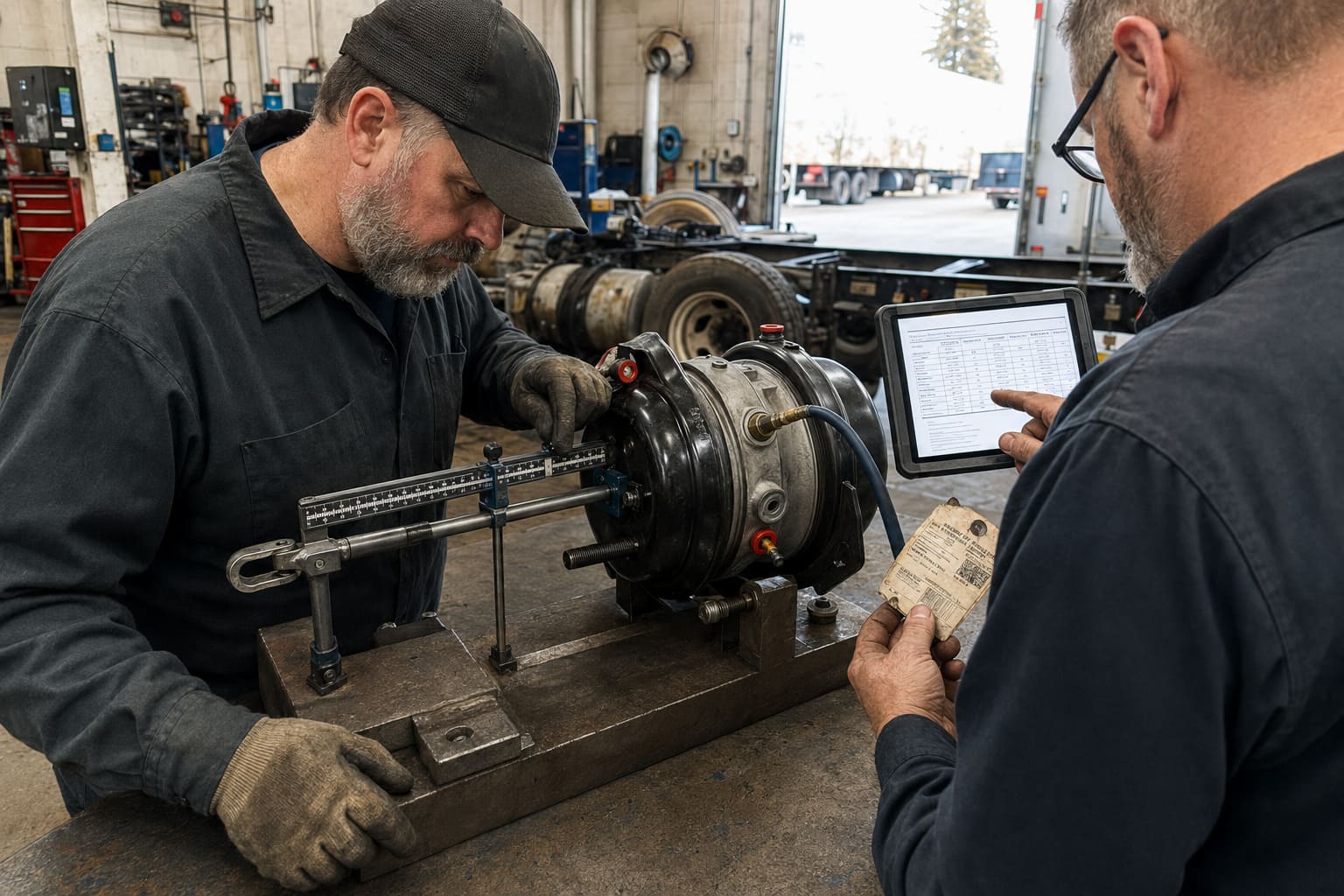
Stroke or max-stroke data helps confirm whether a brake chamber is a standard stroke or long stroke design. Buyers should compare the rated stroke information on the chamber or spec sheet with the required application, instead of relying only on chamber size or visual appearance.
What “stroke” means in purchasing terms
In simple purchasing language, stroke refers to the pushrod travel range designed for the chamber.6 Long stroke chambers are designed with a different stroke capacity than standard or short stroke versions.7 This difference must match the brake system requirements.
I am careful here because field measurement and brake adjustment involve safety. A qualified technician should inspect and judge the actual installed brake system condition. As a supplier, I focus on replacement identification, procurement data, and part matching.
Why chamber type alone is not enough
A common misunderstanding is that “Type 30” automatically tells the full story. It does not. Type numbers usually refer to effective diaphragm area or chamber size category, not the complete replacement specification.8 A Type 30 short stroke and a Type 30 long stroke may both exist.
That is why I usually confirm these points together:
- Chamber type: Type 24, Type 30, etc.
- Stroke or max-stroke rating: shown on label, stamp, or spec sheet
- Brake chamber function: service chamber or spring brake chamber
- Mounting configuration: bolt pattern, port orientation, bracket compatibility
- Pushrod details: length, thread, clevis requirements, if applicable
- Part number: direct match or approved cross-reference
How buyers should use stroke data
The stroke data should answer one question: Does this replacement chamber match the original specification and application? It should not be used as a casual upgrade guide.
For example, if a buyer has an old chamber with a readable part number, I first check whether that number corresponds to a standard stroke or long stroke version. Then I compare the replacement part specification. If the buyer only provides a measured pushrod position from an installed truck, I ask for more data because field conditions can be affected by adjustment, wear, installation, and application.9
Practical confirmation table
The table below shows how I think through the confirmation process:
| Data point | Why it matters | How I use it |
|---|---|---|
| Chamber type | Defines general size category | Narrows product family |
| Rated stroke/max stroke | Separates stroke version | Confirms standard vs long stroke design |
| Part number | Links to catalog data | Enables direct or cross-reference match |
| Manufacturer spec sheet | Provides official parameters | Final technical confirmation |
| Application info | Reduces mismatch risk | Checks fitment and market version |
| Photos of markings | Prevents typo or memory errors | Supports supplier-side verification |
Do not guess from pushrod length alone
Pushrod length may vary because of installation requirements, previous replacement history, or customer modification. I do not treat a long-looking pushrod as proof of a long stroke chamber. The pushrod can be cut, replaced, or adjusted.10 The chamber’s rated stroke must come from reliable markings or documentation.
This is especially important for distributors and fleet buyers who stock parts. If you buy based on a visual shortcut, you may receive parts that look right on the shelf but fail during installation matching. In contrast, if you build your inventory list around part numbers and confirmed specifications, your purchasing becomes much more stable.
Why Should Part Numbers and Spec Sheets Be Cross-Checked Before Ordering Long and Short Stroke Brake Chambers?
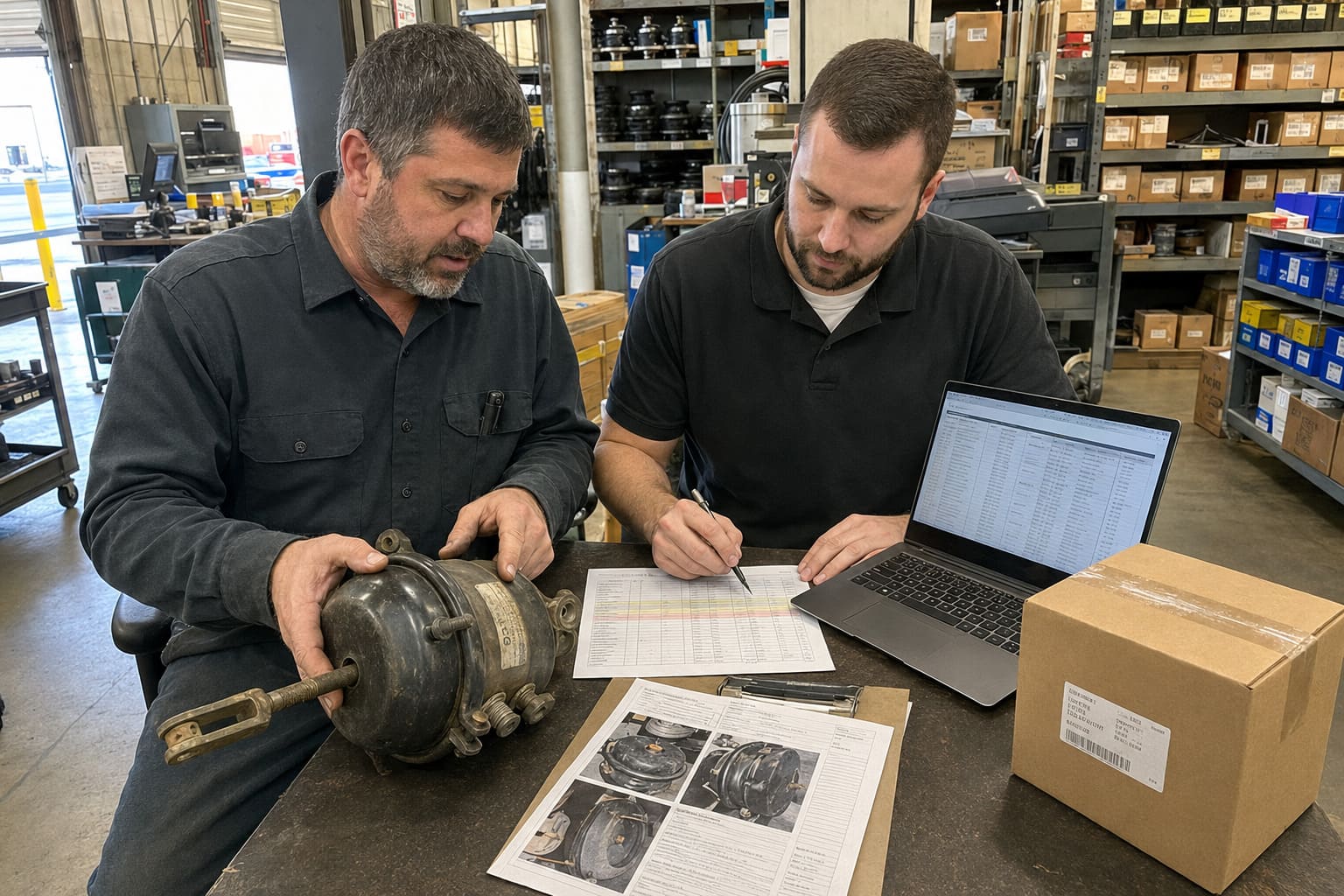
Part numbers and specification sheets are the final safety net when ordering long and short stroke brake chambers. Without them, the inquiry depends too much on memory, photos, or local naming habits. I have seen different customers use different words for the same part, so documentation matters.
Before ordering long and short stroke brake chambers, buyers should cross-check the existing part number, replacement number, stroke rating, chamber type, and manufacturer specification sheet.11 This reduces the risk of wrong orders, returns, downtime, and inventory confusion.
Why part numbers reduce confusion
In the aftermarket, one brake chamber may be described in several ways. A repair shop may call it by application. A distributor may call it by chamber type. A fleet buyer may use an internal stock code. A manufacturer may use a complete part number with suffixes that indicate configuration.
That is why I prefer part numbers whenever possible. A part number can connect the inquiry to:
- Original manufacturer data
- Aftermarket cross-reference lists
- Stroke and max-stroke specifications
- Mounting and port configuration
- Packaging and inventory records
- Previous purchase history
However, I still cross-check. Part numbers can be mistyped. Labels can be damaged. Old parts may not be original to the vehicle. Different brands may use similar numbering patterns but not identical specifications.
What a good purchasing inquiry should include
When a distributor, repair shop, or fleet sends a complete inquiry, we can usually respond faster and with fewer follow-up questions. I recommend this format:
- Existing part number: Include brand if available.
- Clear photos: Show label, body stamp, full chamber, and mounting side.
- Stroke or max-stroke data: Send label data or spec information.
- Application information: Truck/trailer brand, axle position, or market version.
- Order requirement: Quantity, MOQ expectation, packing needs, and delivery terms.
- Special request: Private label, mixed order, sample confirmation, or urgent shipment.
For example, a stronger inquiry says:
“We need replacement brake chambers for a North American trailer application. Existing part number is visible in the attached photo. Please confirm whether this is long stroke or standard stroke and quote 200 pcs with neutral packing.”
That is much better than:
“Please quote Type 30 chamber.”
The first inquiry gives me enough information to check compatibility. The second inquiry leaves too many open questions.
How ROADSPOWER handles confirmation
At ROADSPOWER, we supply aftermarket parts for North American and South American heavy-duty truck markets. We often help overseas distributors, repair shops, and fleet buyers confirm models during order communication. Our role is not to replace the judgment of a qualified technician. Our role is to support accurate procurement with clear part data, photos, samples, drawings, and specification checks.
For brake chamber-related inquiries, we usually follow this internal logic:
| Step | What we check | Why it helps |
|---|---|---|
| 1 | Photos of labels and markings | Confirms visible identification data |
| 2 | Part number or customer sample | Supports direct matching or development |
| 3 | Stroke/max-stroke specification | Separates long stroke and standard stroke |
| 4 | Application and market | Checks North/South America fitment needs |
| 5 | Quality and packing requirement | Aligns product, label, and shipment plan |
Our factory in Ningbo operates under ISO 9001 quality management, and we manage core production processes in-house. For truck parts buyers, that matters because repeat orders need consistency. A confirmed part number should not become a mystery again on the next purchase order.
Why spec sheets matter for inventory planning
For distributors and fleets, brake chamber identification is not only a repair issue. It is also an inventory issue.12 If your system mixes long stroke and standard stroke chambers under vague names, your warehouse team may pick the wrong item. Your sales team may quote the wrong replacement. Your customer may return the product.
A simple internal inventory record should include:
- Part number
- Brand or supplier code
- Chamber type
- Stroke version
- Key dimensions or configuration
- Application notes
- Cross-reference numbers
- Packing quantity
- Photo of label and product
This is a small habit, but it prevents repeated confusion. I have found that the best buyers do not rely on memory. They build clean records and keep photos attached to each SKU.
Frequently Asked Questions
Is a Type 30 brake chamber always long stroke?
No. Type 30 describes the general chamber size category, but it does not always confirm the stroke version. I would check the label, stamped markings, rated stroke or max-stroke data, part number, and manufacturer specification before deciding whether it is long stroke or standard stroke.
Can I replace a short stroke brake chamber with a long stroke brake chamber?
I would not assume they are freely interchangeable. The replacement must match the vehicle or trailer brake system specification, mounting requirements, and manufacturer guidance. A qualified technician should make the final installation judgment, while the supplier should help confirm the correct replacement part data.
What photos should I send to confirm long and short stroke brake chambers?
You should send a full product photo, close-ups of the label, stamped body markings, mounting side, pushrod area, and any old box label. If you have the existing part number, brand, application, or stroke data, include that information in the same inquiry.
Are brake chamber markings the same across all brands?
No. Different manufacturers may use different labels, suffixes, stamps, or catalog rules. Some markings are clear, while others require cross-reference checking. I always recommend verifying the actual part number and manufacturer specification sheet instead of relying on one universal marking rule.
Why does wrong brake chamber identification cause purchasing problems?
Wrong identification can lead to incorrect orders, returns, delayed repairs, inventory waste, and possible fitment or brake performance concerns. For distributors and fleet buyers, the cost is not only the part price. The bigger cost is downtime, reshipping, and customer dissatisfaction.
Conclusion
The safest way to tell the difference between long and short stroke brake chambers is to avoid guessing from appearance alone. I recommend a simple confirmation flow: check the body or label markings, verify stroke or max-stroke data, and cross-check the part number with the manufacturer specification. If you need replacement support for heavy-duty truck brake chamber inquiries, send ROADSPOWER clear photos, part numbers, application details, and quantity requirements. We can help you confirm the model and prepare a practical quotation for your market.
"49 CFR § 393.47 - Brake actuators, slack adjusters, linings ...", https://www.law.cornell.edu/cfr/text/49/393.47. Federal brake inspection rules specify allowable pushrod travel by brake chamber type and stroke category, supporting the conclusion that chamber appearance alone is insufficient for reliable long-stroke identification. Evidence role: general_support; source type: government. Supports: Official brake inspection rules distinguish brake chambers by type and allowable pushrod travel, supporting the need to verify rated stroke information rather than relying on appearance.. ↩
"49 CFR § 393.47 - Brake actuators, slack adjusters, linings ...", https://www.law.cornell.edu/cfr/text/49/393.47. 49 C.F.R. § 393.47 identifies maximum pushrod travel values for brake chambers by chamber type and includes distinct stroke values for Type 30 configurations, supporting the statement that Type 30 does not by itself determine the stroke version. Evidence role: definition; source type: government. Supports: Regulatory stroke tables list Type 30 chambers with different allowable pushrod travel values, including longer-stroke variants.. ↩
"49 CFR 393.47 -- Brake actuators, slack adjusters, linings ...", https://www.ecfr.gov/current/title-49/subtitle-B/chapter-III/subchapter-B/part-393/subpart-C/section-393.47. Federal commercial-vehicle brake rules regulate brake actuator condition and pushrod travel limits, indicating that brake chamber stroke is a functional parameter relevant to both replacement compatibility and brake performance. Evidence role: mechanism; source type: government. Supports: Brake regulations connect actuator stroke limits and braking system compliance, showing that chamber stroke is relevant to safe brake operation.. ↩
"5.2.3 Brake Inspections - CSA - Department of Transportation", https://csa.fmcsa.dot.gov/safetyplanner/MyFiles/SubSections.aspx?ch=22&sec=65&sub=149. Commercial-vehicle brake maintenance guidance requires brake systems to be maintained in safe working order and emphasizes proper inspection and repair practices, supporting the article’s recommendation to match replacement chambers using application data, specifications, and qualified technical judgment. Evidence role: expert_consensus; source type: government. Supports: Official maintenance guidance emphasizes proper inspection, repair competence, and compliance with brake system specifications.. ↩
"49 CFR Part 393 Subpart C -- Brakes", https://www.ecfr.gov/current/title-49/subtitle-B/chapter-III/subchapter-B/part-393/subpart-C. Federal Motor Carrier Safety Regulations and FMVSS No. 121 establish requirements for commercial-vehicle brake systems, providing regulatory context for treating brake chambers as safety-regulated components. Evidence role: general_support; source type: government. Supports: Commercial vehicle brake systems, including brake actuators, are governed by federal safety requirements.. ↩
"Federal Motor Carrier Safety Administration, DOT § 393.47", https://www.govinfo.gov/content/pkg/CFR-2015-title49-vol5/pdf/CFR-2015-title49-vol5-sec393-47.pdf. Air-brake training materials define brake chamber stroke as the distance the pushrod travels when the brake is applied, supporting the article’s use of stroke as a pushrod-travel parameter. Evidence role: definition; source type: education. Supports: Air-brake training materials define brake chamber stroke in terms of pushrod movement or travel.. ↩
"49 CFR 393.47 -- Brake actuators, slack adjusters, linings ...", https://www.ecfr.gov/current/title-49/subtitle-B/chapter-III/subchapter-B/part-393/subpart-C/section-393.47. Federal brake actuator tables distinguish standard and long-stroke brake chambers by different maximum pushrod travel values, supporting the statement that long-stroke chambers are designed with different stroke capacity. Evidence role: definition; source type: government. Supports: Official stroke-limit tables distinguish standard and long-stroke brake chambers by allowable pushrod travel.. ↩
"Bendix® Piggyback Spring Brake Chamber Assembly S D -02-4500", https://static.nhtsa.gov/odi/tsbs/2022/MC-10208807-0001.pdf. Air-brake technical manuals describe brake chamber type numbers as size or effective-diaphragm-area designations, supporting the point that a type number alone is not a complete replacement specification. Evidence role: definition; source type: education. Supports: Technical air-brake materials explain that chamber type designations correspond to chamber size or diaphragm area rather than all installation details.. ↩
"Federal Motor Carrier Safety Administration, DOT § 393.47", https://www.govinfo.gov/content/pkg/CFR-2015-title49-vol5/pdf/CFR-2015-title49-vol5-sec393-47.pdf. Government air-brake inspection guidance links pushrod travel to brake adjustment and component condition, providing support for the caution that field measurements may reflect adjustment or wear rather than only the chamber’s rated stroke. Evidence role: mechanism; source type: government. Supports: Inspection and training guidance explains that pushrod travel changes with brake adjustment and mechanical condition.. ↩
"Gunite Automatic Slack Adjusters", https://static.nhtsa.gov/odi/rcl/2011/RCORRD-11V167-7733.pdf. Air-brake maintenance guidance describes pushrod and clevis setup as service-adjustable installation features, which contextually supports the statement that pushrod appearance alone should not be used to identify the brake chamber’s rated stroke. Evidence role: mechanism; source type: education. Supports: Maintenance or training documents describe pushrod and clevis adjustment or service procedures, supporting the warning that pushrod appearance is not a reliable stroke identifier.. Scope note: The likely sources support adjustability and service setup generally; they may not directly document every possible field modification, such as cutting or replacement, across all chamber models. ↩
"How does ISO 9001 support traceability requirements in ...", https://connect981.com/faqs/how-does-iso-9001-support-traceability-requirements-in-manufacturing. Quality-management standards require organizations to control externally provided products and verify that purchased items conform to specified requirements, contextually supporting the practice of cross-checking brake chamber part numbers and specifications before ordering. Evidence role: general_support; source type: institution. Supports: Quality-management standards and maintenance literature support verifying purchased items against specifications and maintaining traceable identification data.. Scope note: Quality-management standards support the verification process generally; they do not specifically prescribe the exact brake chamber data fields listed in the article. ↩
"Finding the Waste: Parts Inventory Analysis Using Lean Methodology", https://pmc.ncbi.nlm.nih.gov/articles/PMC11493152/. Maintenance-inventory research identifies spare-parts data quality and accurate item identification as factors in inventory control and service availability, contextually supporting the claim that brake chamber identification affects inventory as well as repair. Evidence role: general_support; source type: paper. Supports: Research on spare-parts inventory and maintenance management links accurate part identification and data quality to inventory control and downtime reduction.. Scope note: The support is contextual because spare-parts inventory studies usually address maintenance parts broadly rather than brake chambers specifically. ↩