Do you still pick air brake tubing by color or price? That guess can cause brake failures and wasted inventory. Let's clear this up quickly.
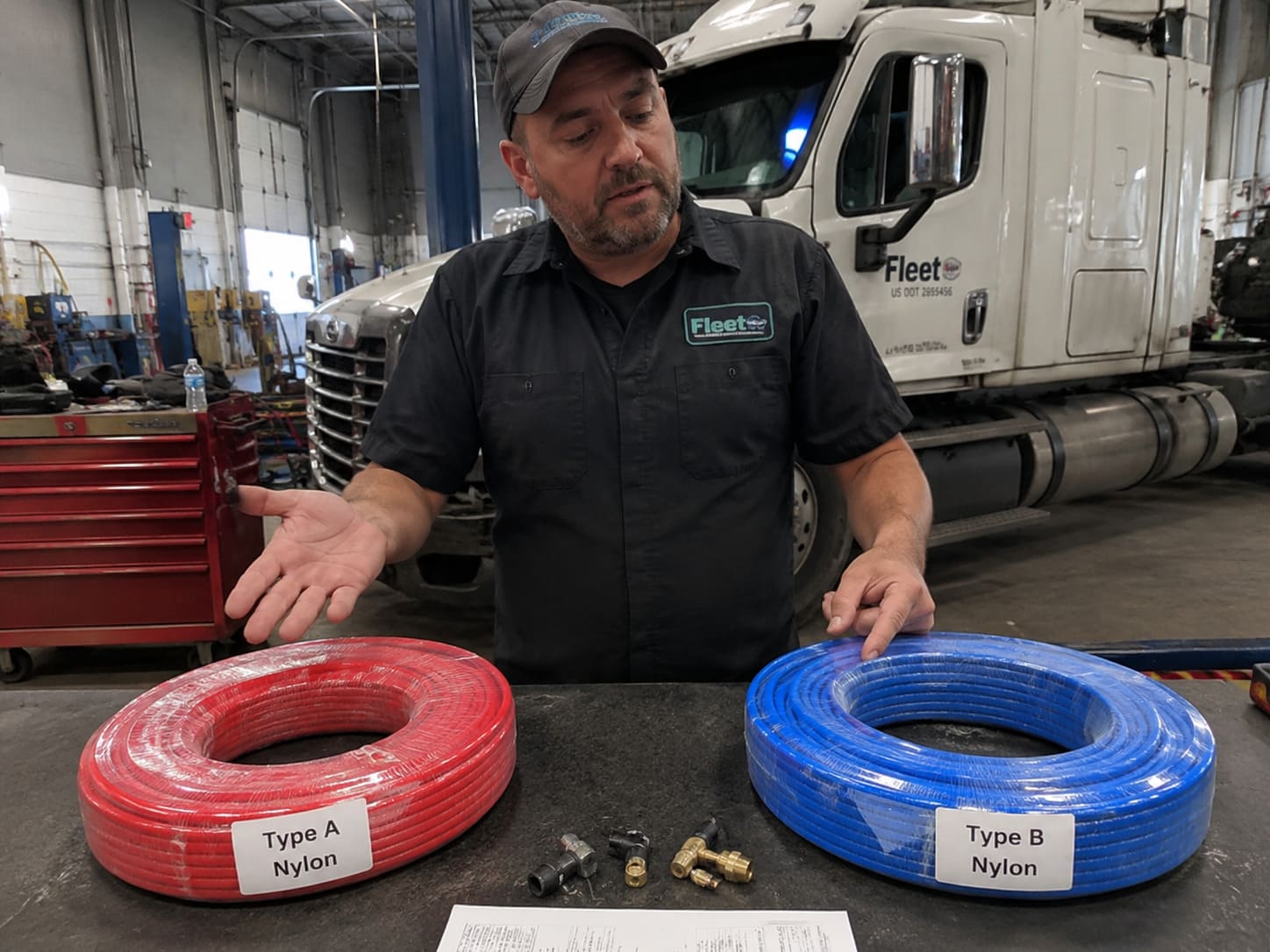
Type A is non-reinforced air brake tubing, Type B is reinforced. But you cannot decide which to buy based on that alone. You must check the tubing marking, the installation position, and the vehicle’s demand before placing an order.
Before we explain each type, I want to tell you about a call I got last month. A distributor ordered a full container of tubing based on a photo. When the product arrived, half of it was wrong for his customers’ brake lines. He lost margin and trust. This article will show you how to avoid that mistake with one simple checklist.
So what exactly does “Type A” and “Type B” mean on air brake tubing?
Many catalogs just label the tubing as “A” or “B” without linking that letter to your truck. That gap creates fitment trouble. Let’s define the terms so you can match them to real brake line work.
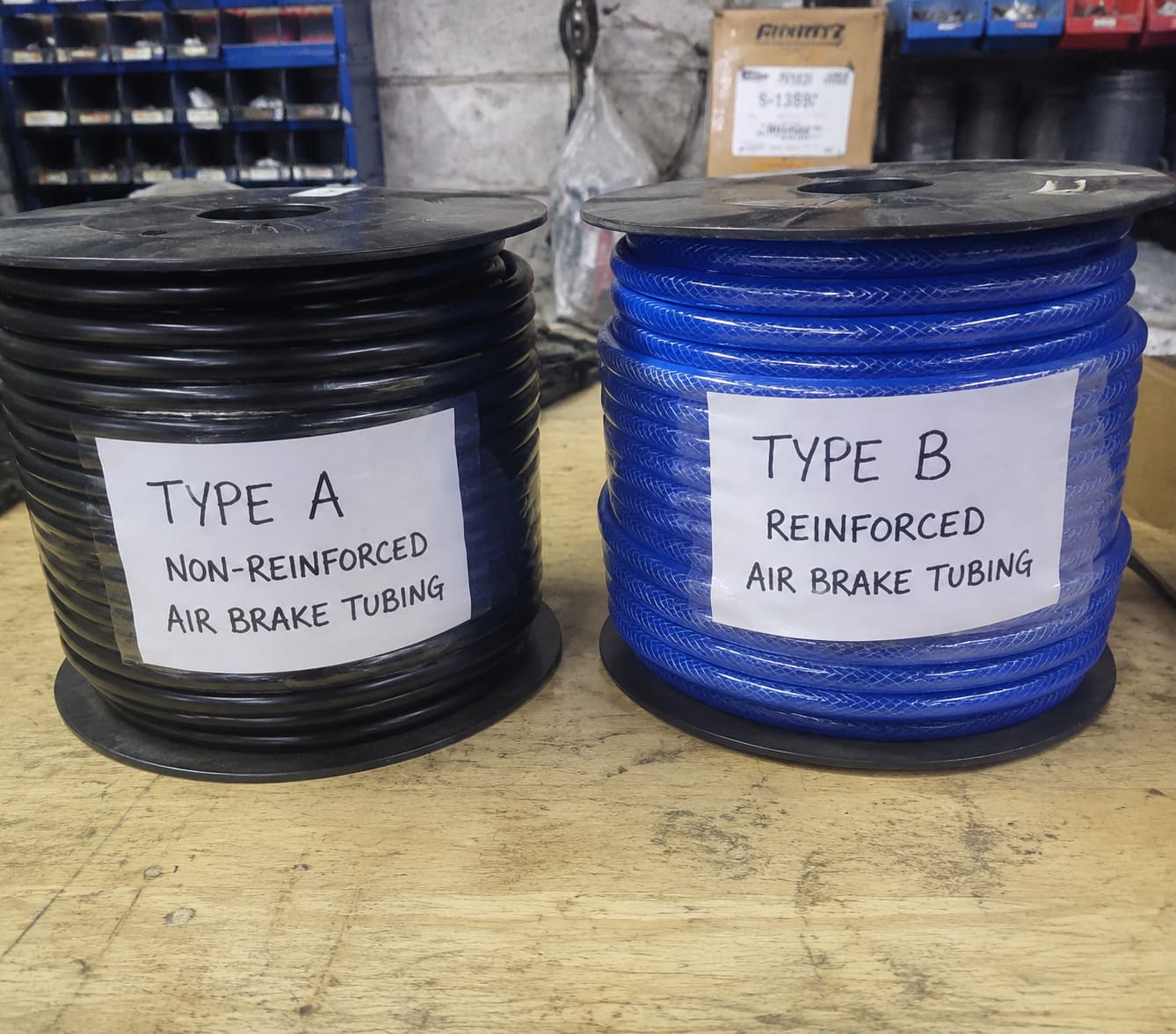
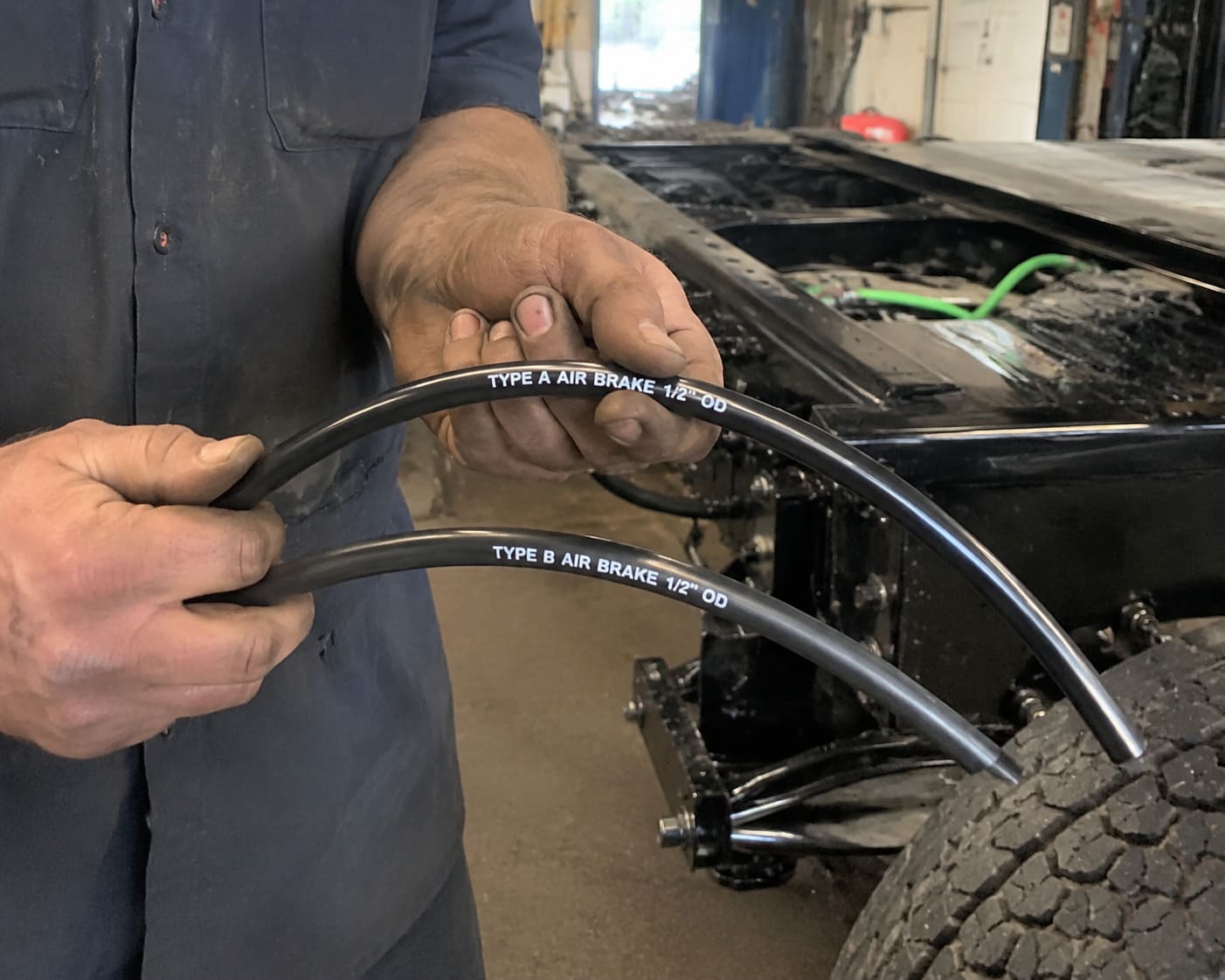
Type A air brake tubing has no reinforcement layer. Type B has a braided or spiral reinforcement over the nylon core. But the final authority is always the printed marking on the tubing and the supplier’s specification sheet.
I want to go deeper on this because I have seen buyers treat “Type B” like a premium upgrade for all positions. That is not what the standard means.
In heavy-duty trucks, the braking system uses nylon tubing to carry compressed air from the compressor to the brake chambers1. The standard most commonly referenced is SAE J8442. This standard defines Type A as non-reinforced tubing and Type B as reinforced tubing. The reinforcement is typically a polyester or aramid braid that wraps around the nylon core3. This extra layer helps the tube handle two things: higher surrounding temperature and more abrasion. That sounds like a safer tube, and in a shop it is easy to think, “Let me just use Type B everywhere and I won’t have a problem.” But that logic creates new problems.
Type B is stiffer because of that braid. If you route long lines from the tractor to the trailer using only Type B, your mechanics will fight the tubing around bends and clamps. I remember a fleet in Texas that complained their new tubing was almost impossible to work with. They had bought Type B for every service and supply line. We checked their original factory setup and found that the long runs along the frame rail had come with Type A. The heat near those frame sections never exceeded the rating of non-reinforced nylon. Once they switched back to Type A for those positions, installation time dropped and there were no air leaks.
Also, cost matters. For a distributor selling to repair shops, a price gap of even a few cents per foot changes how many boxes a customer buys each month. Pushing Type B where it is not needed can make your offer look expensive. So the meaning of Type A and Type B is not about better or worse. It is about which line position needs a reinforcement layer.
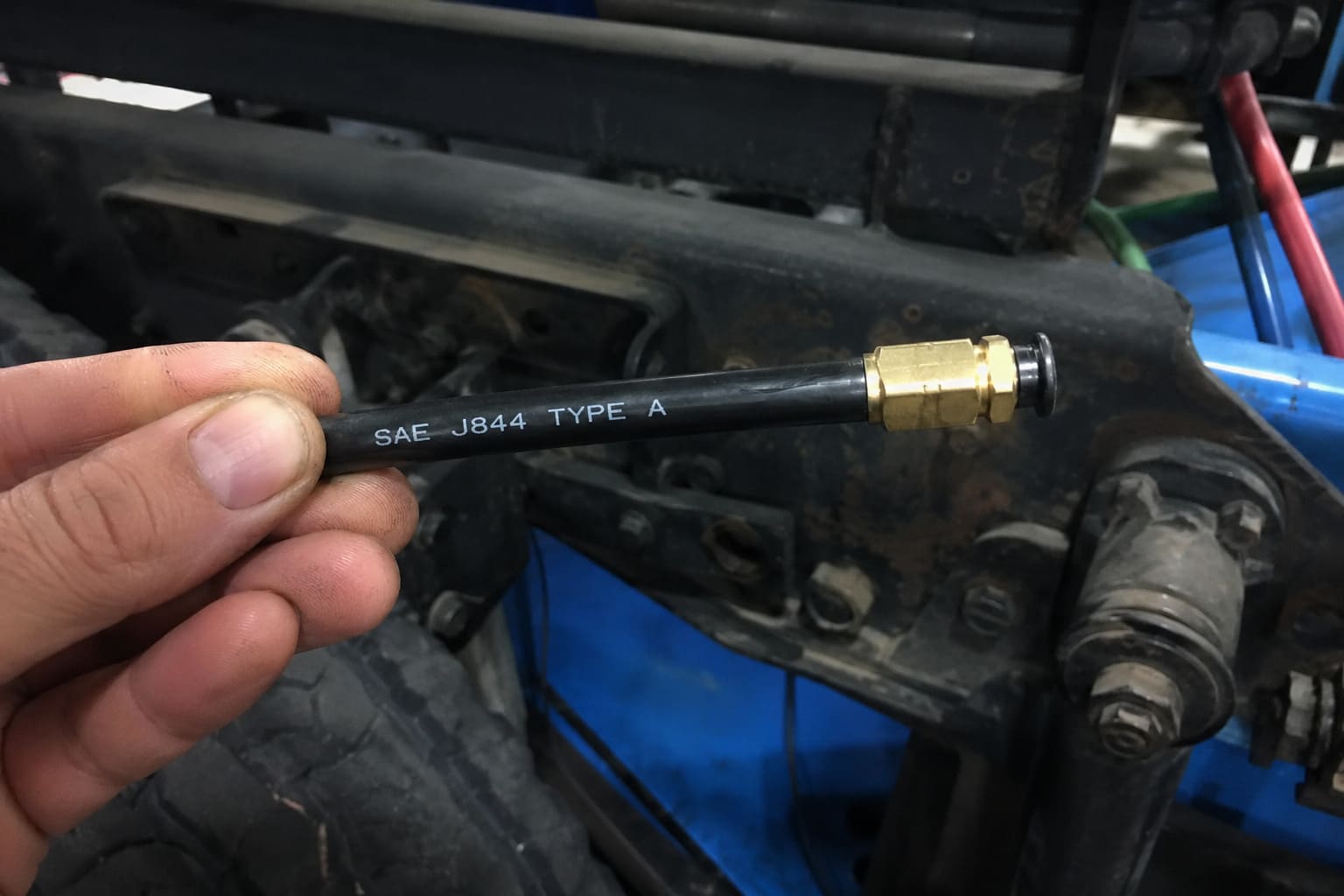
I always tell our team to start with one question when a buyer asks about type: “Can you send us the marking you see on the old tube?” If the old tube says SAE J844 TYPE A, then the replacement must match, unless the application has changed. Without that check, the letter alone means nothing.
Is Type B air brake tubing always the better choice?
Many buyers believe more reinforcement equals higher quality, so they try to switch all positions to Type B. That quick decision often leads to stiff installation complaints and wasted money.
Type B is not a universal upgrade. It is built for high-heat and high-wear spots like compressor lines. Using it everywhere can make routing harder and raise your part cost without a performance gain.
I learned this lesson years ago from a distributor in Chile. He was proud of his “all heavy-duty” catalog and only stocked reinforced tubing. His logic was that if it could handle the worst spot, it would handle any spot. But local fleets kept buying from another supplier who sold the standard Type A for trailer lines. That non-reinforced tubing was lighter, cheaper, and easier to pull through the trailer frame in the field. He was losing volume because he didn’t stock the right type for the right application. After we helped him introduce a proper mix—80% Type A for long service lines and 20% Type B for engine-compartment spots—his sales turned around in two months.
The core of this mistake is forgetting that an air brake system has many different temperature and movement zones. The line coming directly off the air compressor can see temperatures above 150°F4. In that zone, a non-reinforced nylon tube can soften and eventually blow out5. That is exactly where Type B must be used. Similarly, tubing that passes close to the exhaust manifold or the air dryer needs that extra protection. But the service and emergency lines that run from the back of the cab to the trailer gladhands rarely touch heat that high. These lines face road debris and vibration, not engine heat. Type A’s flexibility helps the coiled sections extend and retract without stress cracking.
I also tell fleet procurement managers to think about inventory at their repair bay. If you stock only one type, a mechanic under time pressure will grab whatever is on the shelf and install it. That can put non-reinforced tubing right next to the turbocharger. The truck may leave the shop fine, but six months later a heat-blistered line cracks and the brakes drag. This is not a failure of the tubing quality; it is a failure of application matching.
The safer approach is to stock both types with clear bin labels and a quick reference sheet showing which positions take which type. That way, your customer’s shop floor decision is guided, not guessed. So next time someone asks you, “Should I just buy Type B for everything?” your answer should be, “Where exactly will you install it?”
What procurement risks do buyers face if they ignore the Type A vs Type B difference?
The wrong choice on this one part number can start a chain of returns, safety complaints, and dead stock. That turns a simple purchase into a long-term headache for your business.
Using the wrong type can cause air leaks, brake drag, and DOT flag issues6. It can also leave you holding tubing that no local shop wants, creating a write-off you will remember for years.
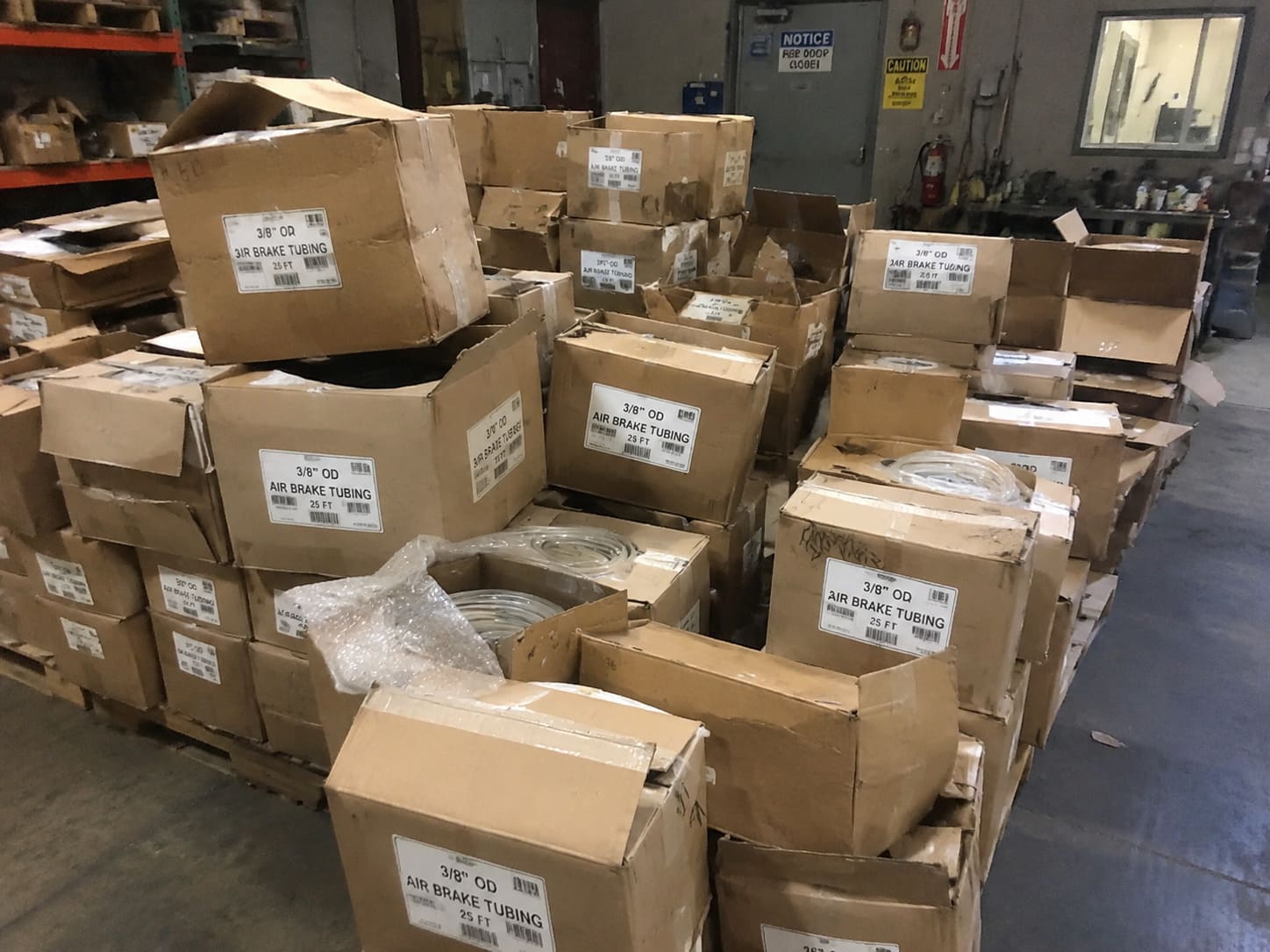
Let me give you a real case from our pre-sales log. A wholesaler in the Midwest ordered two pallets of what he called “heavy-duty air brake tubing.” He sent us a screenshot from a website, but the image was generic and the text didn’t mention reinforcement. The price looked attractive, so he placed the order. When the tubing arrived, it was SAE J844 Type A. His biggest customer needed Type B for compressor discharge lines. The wholesaler couldn’t return the product because it wasn’t defective; it was just the wrong type. He ended up liquidating that stock at breakeven and then had to reorder from us with proper documentation. He lost not just margin but also two weeks of availability with his key account.
This happens more often than sellers admit. The root cause is treating Type A and Type B like a minor detail instead of a technical selection point. Three concrete risks sit behind every order:
- Air tightness trouble. Reinforced tubing often has a slightly thicker wall and a different outer diameter tolerance. Some push-to-connect fittings grab non-reinforced tubing well but struggle with reinforced tubing if the spec isn’t matched. I have seen a repair shop chase air leaks for a whole afternoon only to find the fitting was correct for Type A but not for the Type B tube they had grabbed.
- Heat-related failure. Non-reinforced tubing near the compressor discharge will fail prematurely. This isn’t a quality issue; it’s putting the wrong material in the wrong place. When that line bursts, the truck loses air pressure, the brakes apply suddenly, and the roadside call exposes a compliance risk7 that can involve DOT inspection.
- Inventory mismatch. Distributors who only stock what they “think” is universal end up with SKUs that don’t match regional service patterns. In some South American markets, fleets replace many trailer lines and demand straight Type A8. In parts of the US where trucks operate in extreme cold and run additional heated air dryer lines, there’s a steady need for Type B in those specific positions. If your shelf doesn’t reflect real demand, every month that tubing sits is a month you tie up cash.
What I do with every new inquiry is simple. I send a short Product Recommendation Form that asks: vehicle make and model, application market, installation position or intended use, any marking on the original tube, size, and a photo if possible. With this information, our team can cross-check the SAE J844 type, confirm the fitting compatibility, and recommend the correct tubing before you spend a dollar. We also include basic test data—air tightness, pressure resistance, temperature range—that you can show your customer without making legal claims.
This process turns the “which type” question from a guessing game into a documented decision. If you skip it, the risk lands on your P&L.
Conclusion
Choose Type A or B by application—not by assumption. Verify markings, position, and supplier specs to avoid safety risks and costly inventory errors.
"SAE J844 DOT Approved Nylon Air Brake Tubing - Mytee Products", https://www.myteeproducts.com/sae-j844-dot-approved-nylon-air-brake-tubing.html?srsltid=AfmBOoqk_CFOPfASYSedAWsTv5VrjMgXw_5FJqZUdvfOTgDLfFdeOHjM. SAE J844 covers nonmetallic tubing—primarily nylon (polyamide) grades such as PA11 and PA12—for use in automotive and commercial vehicle air brake systems, reflecting the material's combination of flexibility, chemical resistance, and pressure-bearing capability at typical brake system operating pressures. Evidence role: definition; source type: institution. Supports: Nylon (polyamide) is the predominant material specified for nonmetallic air brake tubing in heavy-duty commercial vehicles under SAE J844. Scope note: Other materials (e.g., polyurethane, PTFE) are used in related pneumatic applications but are governed by different standards; this note is specific to the nylon-based tubing addressed by SAE J844. ↩
"Federal Motor Vehicle Safety Standards; Brake Hoses", https://www.federalregister.gov/documents/2004/12/20/04-27088/federal-motor-vehicle-safety-standards-brake-hoses. SAE International Standard J844 establishes material, dimensional, and performance requirements for nonmetallic tubing used in automotive air brake systems, including the Type A (non-reinforced) and Type B (reinforced) classifications referenced throughout this article. Evidence role: definition; source type: institution. Supports: SAE J844 defines Type A as non-reinforced and Type B as reinforced nylon tubing for air brake systems. Scope note: Access to the full standard text requires purchase from SAE International; secondary sources may paraphrase rather than quote the normative definitions directly. ↩
"US6670004B1 - Laminated nylon air brake tubing - Google Patents", https://patents.google.com/patent/US6670004B1/en. Engineering literature on reinforced thermoplastic tubing identifies polyester and aramid (e.g., Kevlar) fiber braids as common reinforcement materials that improve burst pressure resistance, abrasion resistance, and thermal stability in pneumatic line applications. Evidence role: mechanism; source type: paper. Supports: Polyester and aramid fibers are used as braid reinforcement in reinforced nylon tubing for pneumatic and hydraulic applications. Scope note: General reinforced-tubing literature may not be specific to SAE J844 Type B; confirmation of permitted materials requires consulting the standard or a manufacturer's certified data sheet. ↩
"49 CFR 571.121 -- Standard No. 121; Air brake systems. - eCFR", https://www.ecfr.gov/current/title-49/subtitle-B/chapter-V/part-571/subpart-B/section-571.121. Technical documentation from commercial vehicle air system engineering indicates that compressed air exiting the compressor discharge port can reach temperatures well above 150°F (65°C), particularly under high-demand or high-ambient-temperature conditions, necessitating heat-resistant tubing materials in that circuit. Evidence role: statistic; source type: research. Supports: Air compressor discharge temperatures in heavy-duty commercial vehicles can exceed 150°F under normal operating conditions. Scope note: Exact temperature ranges vary by compressor model, duty cycle, and ambient conditions; a single threshold figure may not represent all operating scenarios. ↩
"Nylon Tubing Temperature Range, A Technical Reference for ...", https://www.abbeyextrusions.com/blog/extrusion-news-technical-guides-1/nylon-tubing-temperature-range-a-technical-reference-for-engineers-30. Polymer engineering references document that common nylon grades (e.g., PA11, PA12) used in pneumatic tubing exhibit a significant reduction in tensile strength and creep resistance as temperatures approach and exceed their heat deflection temperature, which can result in tube deformation or rupture under sustained pressure. Evidence role: mechanism; source type: education. Supports: Nylon polymers used in tubing lose structural integrity at elevated temperatures, increasing the risk of deformation and pressure failure. Scope note: The precise failure temperature depends on the specific nylon grade, wall thickness, and internal pressure; the article's general claim may not apply uniformly across all non-reinforced tubing products. ↩
"5.1.1 Brake Systems (Part 393 Subpart C) - CSA", https://csa.fmcsa.dot.gov/safetyplanner/MyFiles/SubSections.aspx?ch=22&sec=64&sub=130. Under 49 CFR Part 393 (Federal Motor Carrier Safety Regulations), commercial motor vehicles must be equipped with air brake systems that meet prescribed performance standards; components that do not conform to applicable specifications may be cited as defective during roadside inspections conducted under FMCSA guidelines. Evidence role: general_support; source type: government. Supports: Federal regulations require air brake system components in commercial vehicles to meet specified performance standards, and non-compliant tubing can result in out-of-service orders during DOT inspections. Scope note: 49 CFR Part 393 references performance outcomes rather than mandating specific SAE J844 type designations by name; the direct regulatory link between Type A/B selection and an inspection citation depends on the specific failure mode observed. ↩
"Fail-Safe Air Brakes? This is How #3danimation #airbrake #truck",
. The Federal Motor Carrier Safety Administration and SAE technical literature describe the spring-brake (fail-safe) design of commercial vehicle air brake systems, in which a loss of supply air pressure causes spring-actuated brake chambers to apply the brakes automatically, consistent with the failure scenario described in this article. Evidence role: mechanism; source type: institution. Supports: Air brake systems on commercial vehicles are designed to apply the brakes automatically when air pressure drops below a threshold, as a fail-safe feature. Scope note: The specific pressure threshold at which automatic application occurs varies by system design and vehicle configuration. ↩"Bludot Manufacturing - Trailer Brake Systems for OEMs", https://bludotinc.com/. Industry analyses of Latin American commercial vehicle aftermarket segments note that trailer-heavy freight operations, common in South American long-haul markets, generate disproportionate demand for trailer service line components, which are predominantly non-reinforced (Type A) applications. Evidence role: general_support; source type: institution. Supports: Regional differences in fleet composition and operating conditions influence the mix of air brake tubing types demanded in aftermarket channels. Scope note: No publicly available quantitative market study specifically disaggregating Type A versus Type B air brake tubing demand by region was identified; this claim reflects qualitative trade observations and should be verified against current market data. ↩