I get this question more often than you might think. A customer asked me last month, "If hydraulic brakes work fine on my pickup, why does my semi need all those air lines and fittings?" It's a good question. And the answer changes how you buy parts, how you maintain your fleet, and how you explain safety to your drivers.
Heavy-duty trucks use air brakes because compressed air can be stored, distributed across multiple axles and trailers, and designed with fail-safe protections1 that match the long, heavy, modular nature of commercial vehicles—not because hydraulic brakes are weak, but because air systems fit the task better.
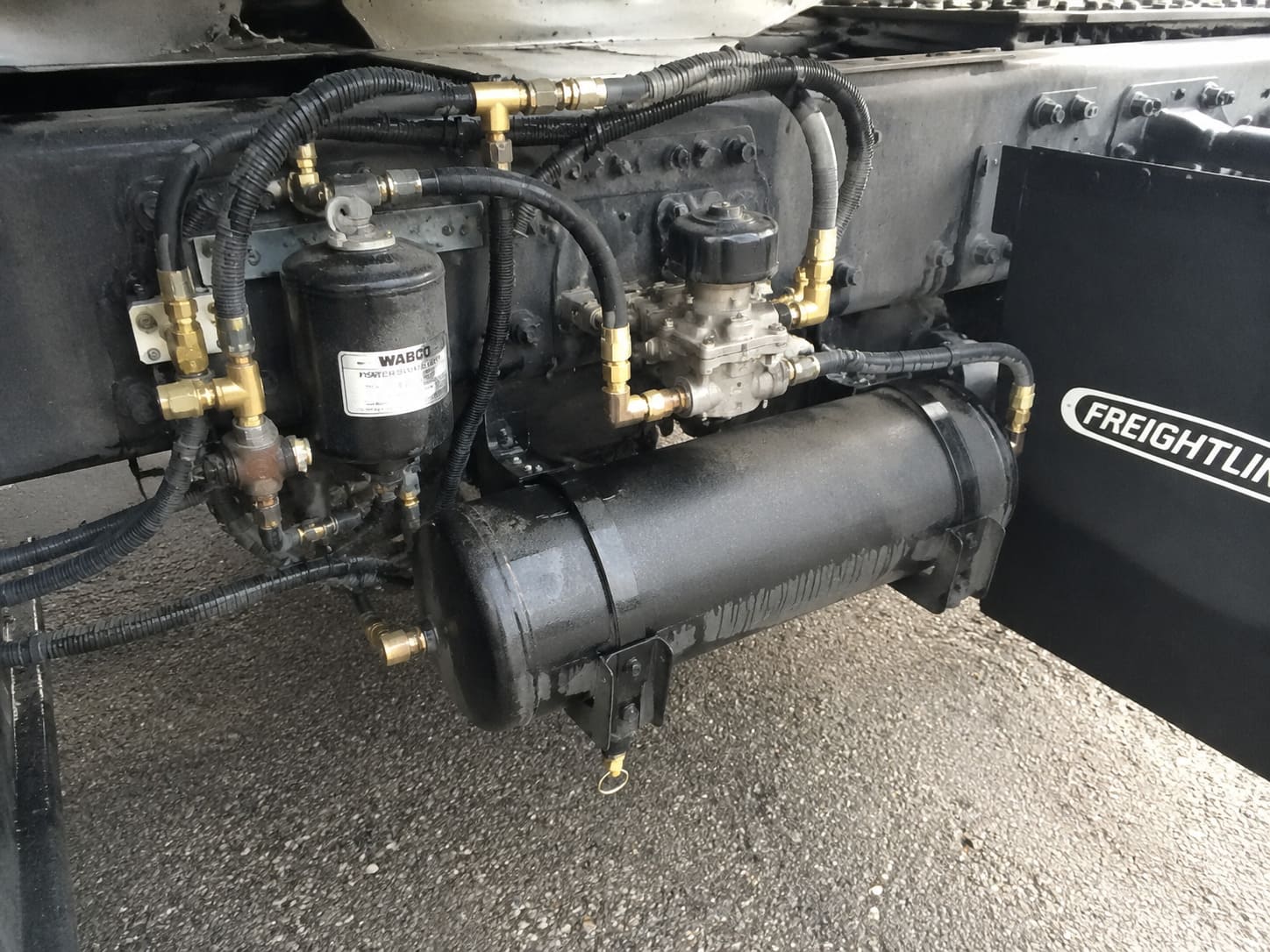
The real difference is not about strength. It's about how the system manages energy, detects problems, and keeps working when parts fail. That matters when you're buying replacement air lines, choosing brass fittings, or deciding if a cheaper seal is worth the risk.
What makes air brakes different from hydraulic brakes?
I once had a repair shop owner tell me, "Air brakes feel like more work." He wasn't wrong. Air brake systems have compressors, reservoirs, valves, regulators, and dozens of fittings. Hydraulic systems are simpler: a master cylinder, brake fluid, lines, and calipers. So why add complexity?
Air brakes use compressed air stored in tanks to push brake chamber diaphragms, which activate mechanical linkages or cams to apply the brakes. Hydraulic brakes use pressurized fluid transferred directly from a master cylinder to wheel cylinders or calipers. The key difference is that air can be generated, stored, and distributed across long distances and multiple independent units.
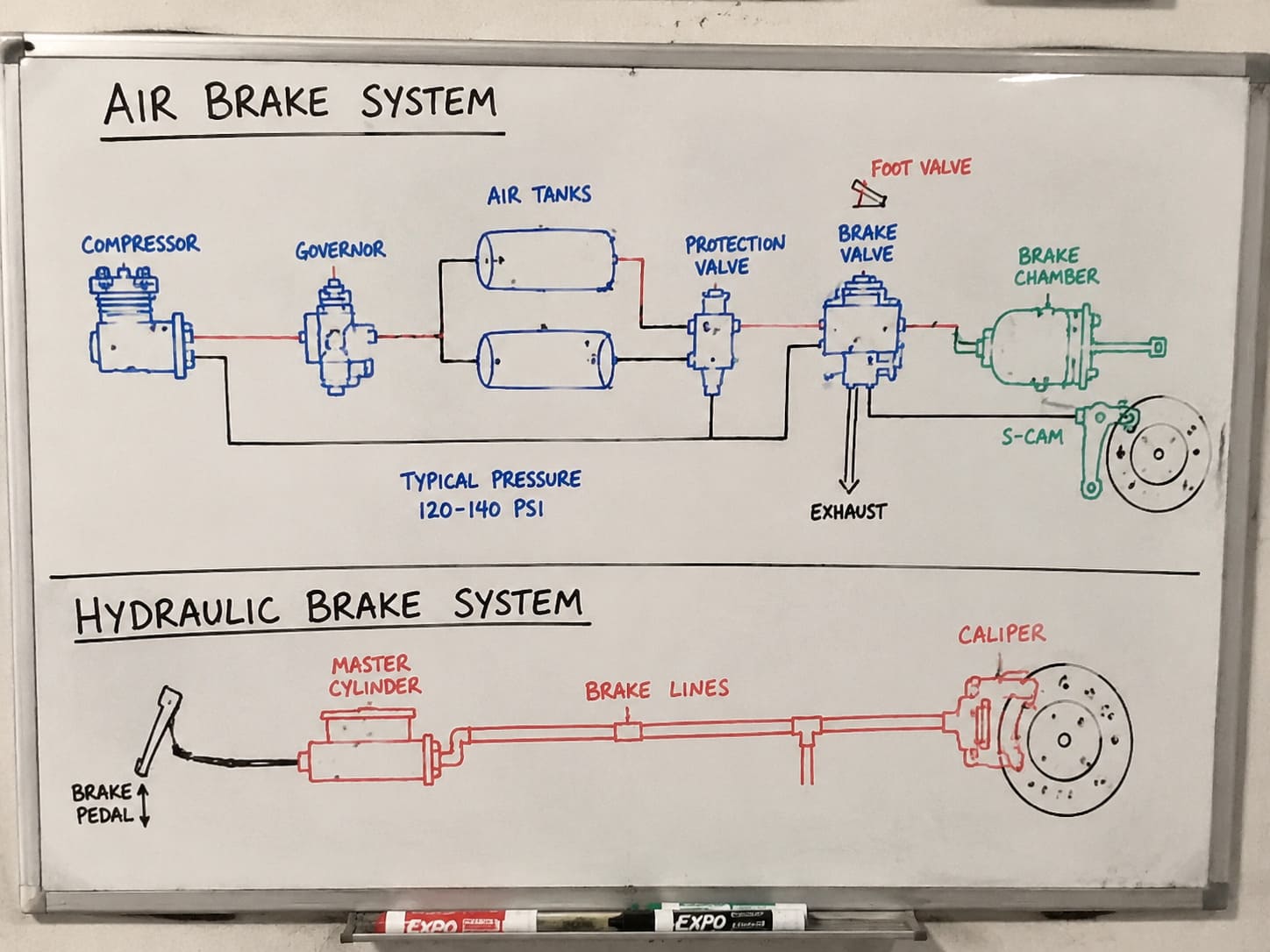
Compressed air is not transferred the way brake fluid is. It's produced by an engine-driven compressor, stored in steel or aluminum tanks at around 120–140 psi2, and regulated through valves that control when and how much pressure reaches each brake chamber. That stored energy is always available, even if the compressor temporarily stops. Hydraulic systems don't store energy; they transmit it instantly from pedal to wheel.3 That works fine in a car or light truck, but heavy vehicles need something more.
Here's why storage matters. A tractor pulling a loaded trailer may have ten or more brake chambers across multiple axles.4 Each chamber needs consistent pressure, delivered quickly, without depending on a single hydraulic line running the full length of the vehicle. Air reservoirs act like batteries: they hold energy close to where it's needed. If one trailer disconnects, the tractor still has full braking power.5 If a hydraulic line fails, you lose all braking downstream from that break.
I've seen aftermarket distributors struggle with this concept when they try to substitute parts. A brass fitting that leaks slowly may not cause immediate failure, but it reduces reservoir pressure over time. That shows up as longer stopping distances, low-air warnings, and driver complaints. The system is designed with redundancy, but only if every connection holds pressure. That's why I test fittings under 150 psi before they leave our facility. Small leaks become big problems under load.
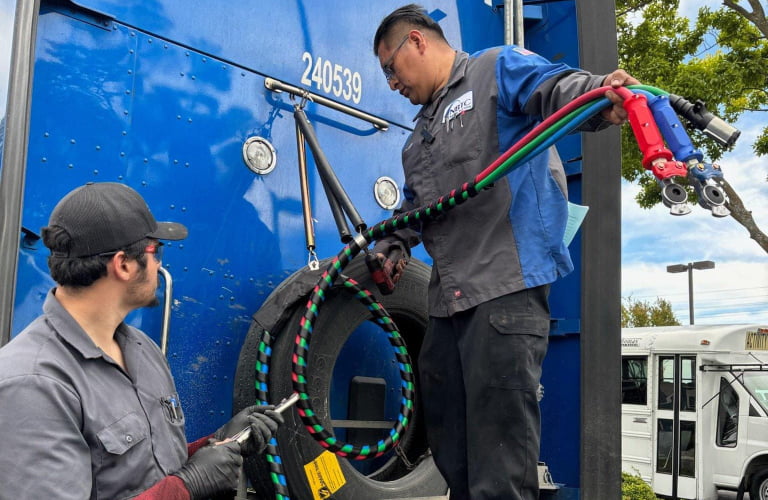
Another difference: air brakes can control multiple trailers independently. Glad hands—the coupling points between tractor and trailer air lines—allow each trailer to brake when the driver presses the pedal, but also allow each trailer to apply its own parking brakes using spring brake chambers. Hydraulic systems can't do that without adding separate pumps and reservoirs to each trailer. The modularity of air systems matches the modularity of the trucking industry. You can add or remove trailers without redesigning the brake system.
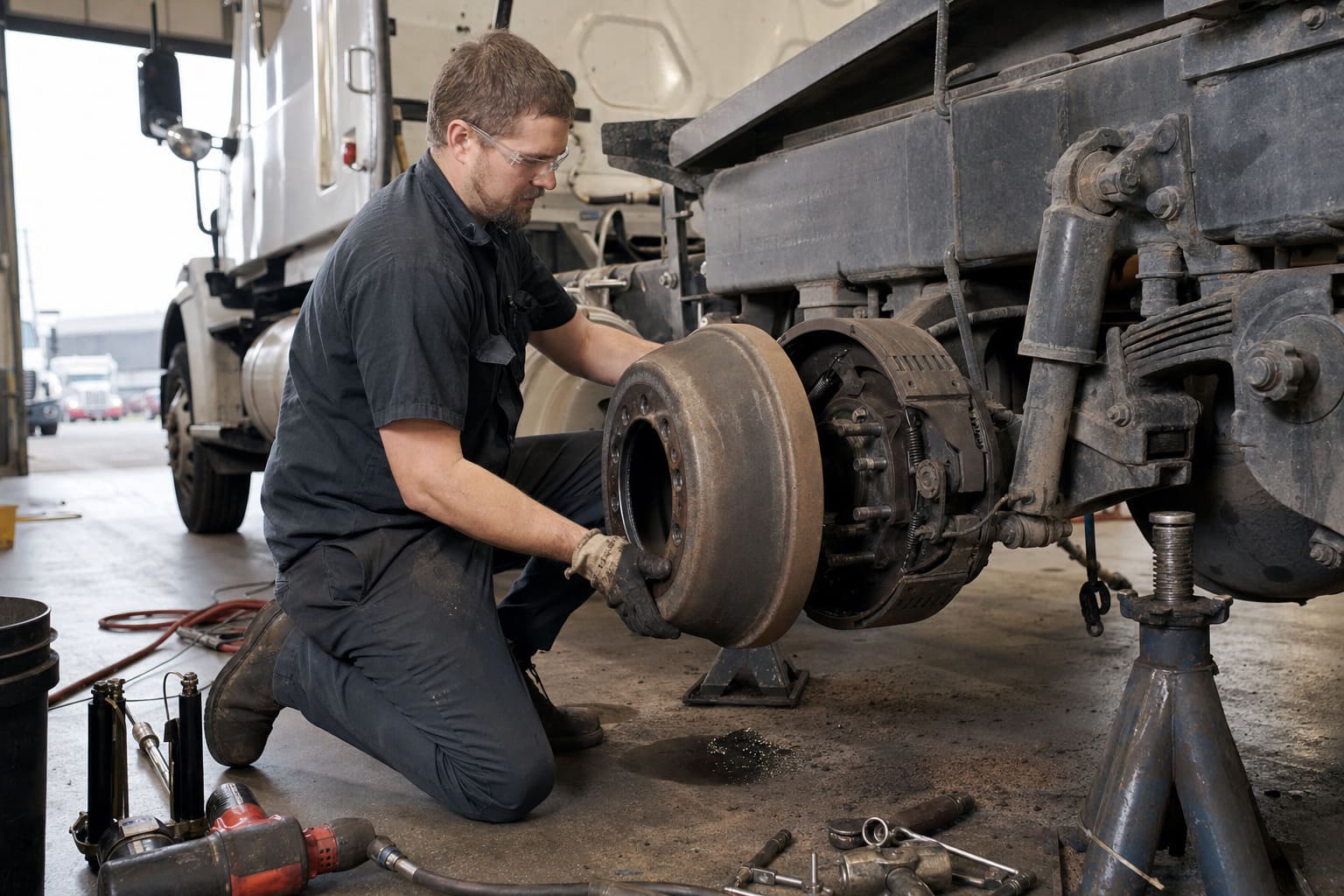
The trade-off is complexity. Air systems need regular draining to remove moisture, they need functioning compressors, and they need airtight connections at every joint. Hydraulic systems need clean fluid and intact lines. Both require maintenance, but air systems have more parts that can fail—and more ways to detect and manage those failures.
Why are air brakes considered safer for heavy vehicles?
One of my fleet customers told me he chose air brakes because "they fail safe." I asked him what that meant. He said, "If I lose air, the brakes lock up." He was half right. That's true for parking brakes, but not for service brakes. This is where the safety logic gets important—and where misunderstandings can lead to bad maintenance decisions.
Air brake systems include spring brake chambers that automatically apply parking brakes when air pressure drops below safe levels, typically around 60 psi6. This fail-safe design prevents uncontrolled rolling if air supply is lost. Service brakes, however, still require sufficient air pressure to function, so low-air warnings and pressure gauges are legally required7 to alert drivers before braking performance degrades.
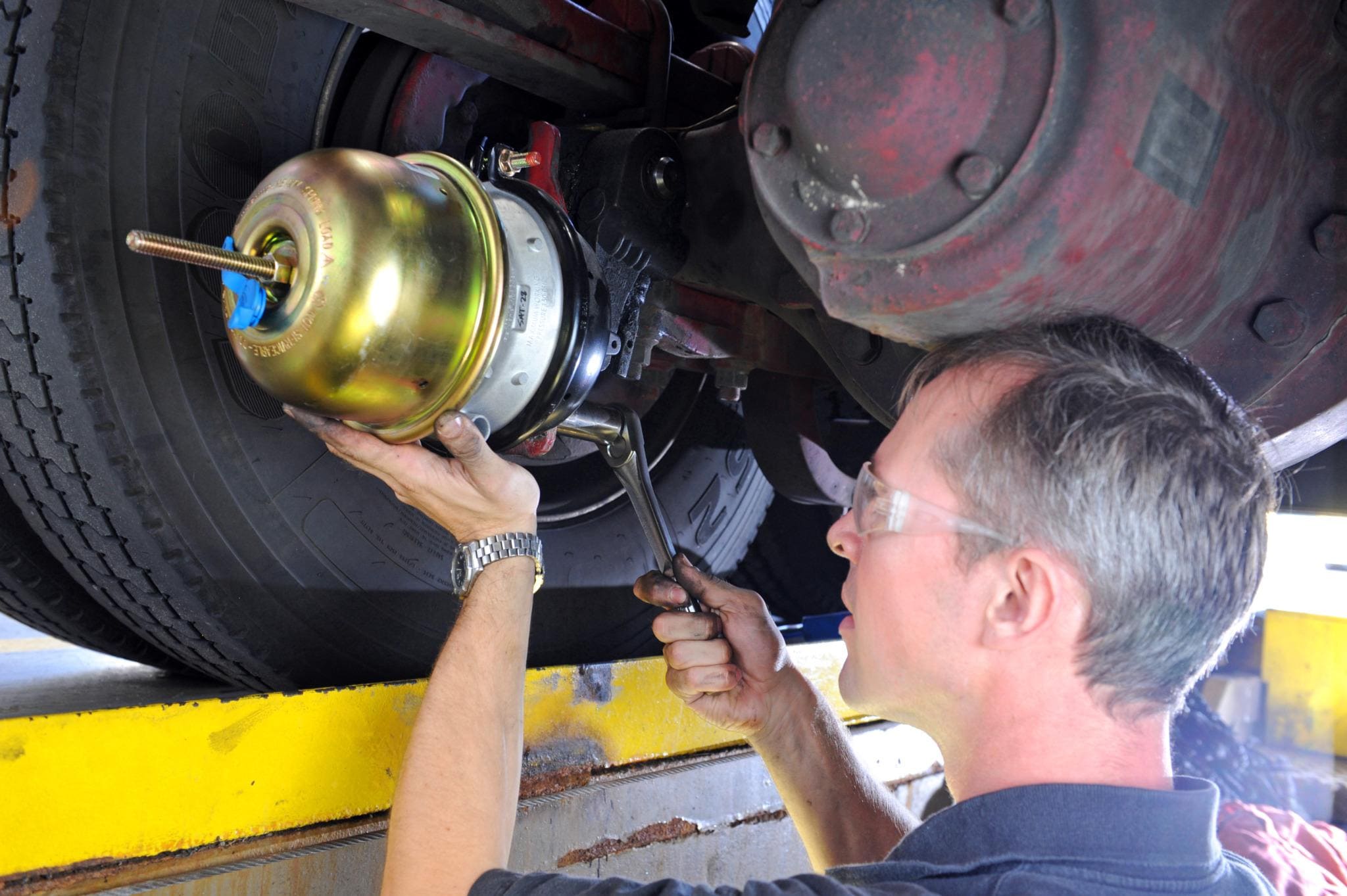
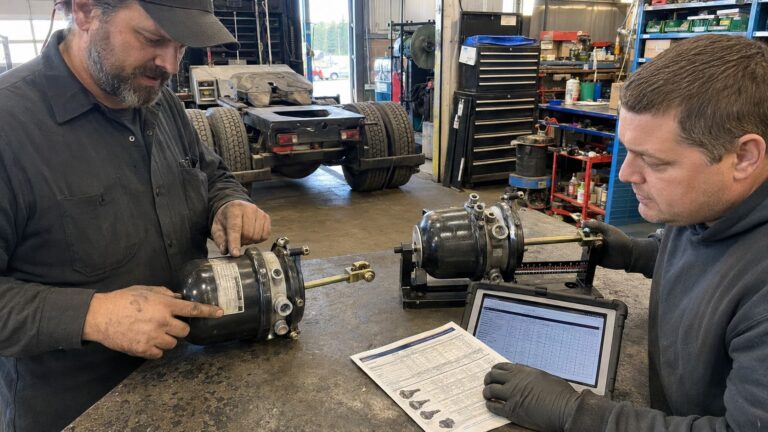
Let me break that down. Every heavy truck has two types of brakes controlled by compressed air: service brakes and parking brakes. Service brakes are applied by the brake pedal and use air pressure to push a diaphragm inside the brake chamber, which rotates a slack adjuster and applies force to the brake shoes or pads. More pressure equals more braking force. If air pressure drops, service braking power drops too. That's not fail-safe; that's reduced performance.
Parking brakes work the opposite way. They use large, powerful springs inside special chambers (called spring brake chambers or "piggyback" chambers). When the truck is running and air pressure is normal (above 60 psi), compressed air holds those springs compressed, keeping the parking brakes released. When you pull the yellow diamond knob on the dash, you release air from the spring chamber, and the spring pushes the brake shoes or pads into the locked position. If air pressure drops below 60 psi for any reason—leak, compressor failure, broken line—those springs automatically apply the parking brakes. That prevents runaway vehicles.
This dual design is why air systems are considered safer for heavy vehicles. A hydraulic system that loses fluid pressure loses all braking ability.8 An air system that loses pressure still has mechanical spring force to stop the vehicle, even if it stops suddenly and without driver control. That's not ideal, but it's better than rolling uncontrolled down a hill.
Here's where parts quality matters. Every air line, every brass fitting, every seal in the system affects how long it takes for pressure to drop when something fails. A slow leak may not trigger the low-air warning until the driver is already experiencing reduced braking. A fitting that cracks under vibration can cause sudden pressure loss. I've worked with repair shops that traced random brake lockups to corroded fittings that failed under load. The spring brakes did their job, but the failure could have been prevented with better parts.
DOT regulations (FMVSS 121 in the U.S.) require dual air systems: one for the front axle, one for the rear axles.9 If one system fails, the other still provides partial braking. Pressure gauges must be visible to the driver, and low-air warning lights or buzzers must activate before pressure drops below safe levels. SAE standards define how quickly air pressure must build after starting the engine, and how much pressure must remain after multiple brake applications. These rules exist because air brake safety depends on monitoring and redundancy, not just on the spring brake mechanism.
I've had customers ask why we test our air lines to 200 psi when normal operating pressure is only 120–140 psi. The answer is safety margin. A line that barely holds 150 psi may last six months before vibration or temperature cycling causes it to leak. A line tested to 200 psi will last years. The same logic applies to fittings, seals, and pressure regulators. Heavy vehicles can't afford just-good-enough parts.
Hydraulic brakes, by contrast, don't have spring-applied parking brakes. They use mechanical locks or electric motors for parking. If hydraulic pressure fails, you lose service braking, and the parking brake may not engage until the vehicle is already stopped. That's fine for a car, where a single driver can pull a hand lever. It's not fine for a 40-ton tractor-trailer combination.
How does air brake design support tractor-trailer combinations?
A distributor I work with sells parts for both straight trucks and tractor-trailers. He told me his tractor-trailer customers have more repeat orders for air lines and glad hands than his straight truck customers. I wasn't surprised. The more connections you have, the more points where leaks can happen. But those connections also make the system flexible.
Tractor-trailer combinations need independent braking control for each trailer, rapid air transfer across long wheelbases, and the ability to disconnect and reconnect trailers without resetting the brake system. Compressed air can be distributed through standardized couplings (glad hands) and controlled by relay valves, making it practical for modular vehicle designs that hydraulic systems cannot match.
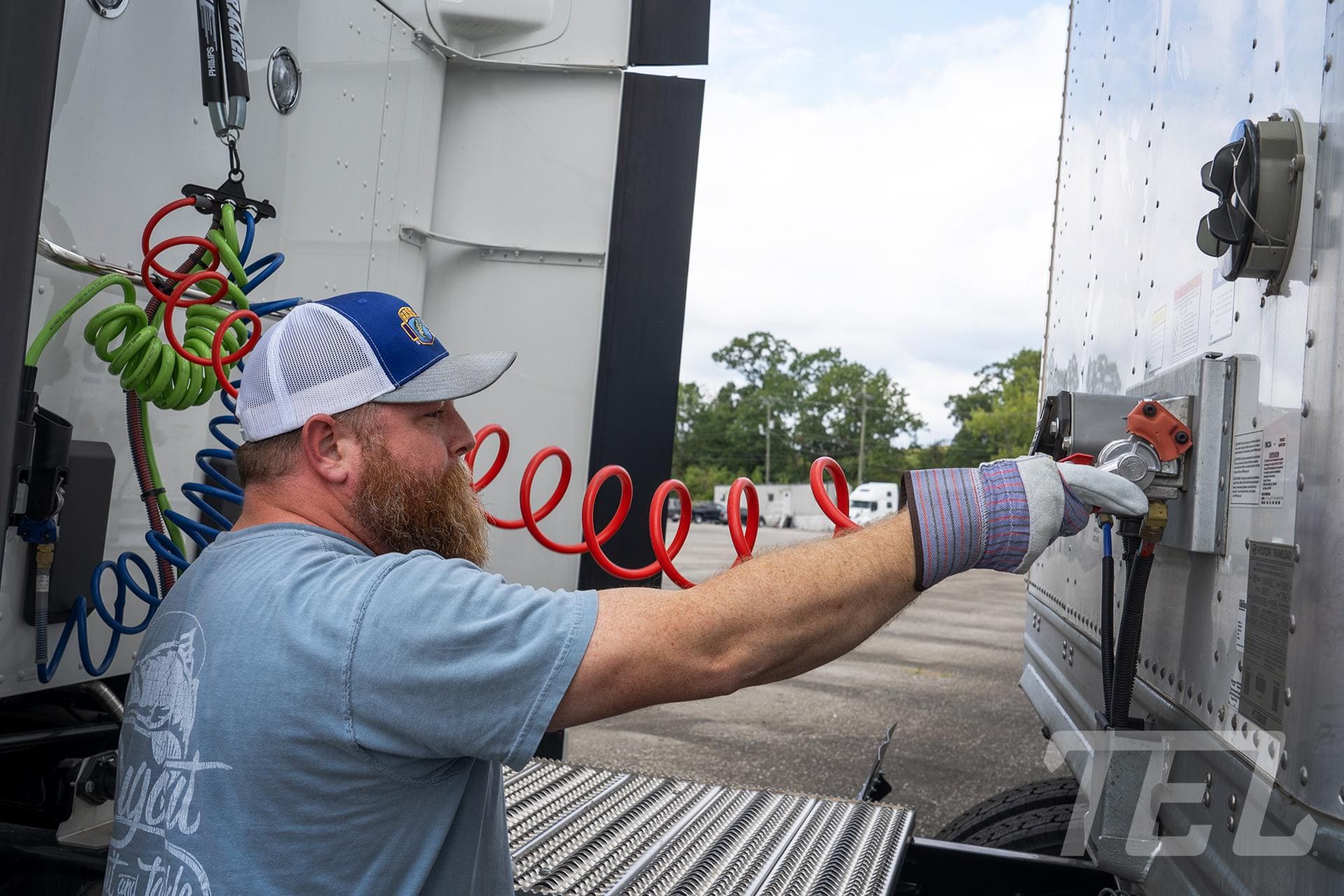
When you couple a trailer to a tractor, you connect two air lines: the service line (usually blue) and the emergency line (usually red).10 The service line carries air pressure from the brake pedal to the trailer's relay valve, which controls the trailer's service brakes. The emergency line supplies air to release the trailer's spring brakes and feeds the trailer's air reservoirs. When you disconnect the trailer, the emergency line depressurizes, and the trailer's spring brakes automatically apply. That prevents a parked trailer from rolling away.
This design is simple, but it only works because air is compressible and can be stored. Hydraulic fluid is incompressible, so you can't "store" braking force in a hydraulic tank the way you store compressed air in a reservoir. If you tried to run hydraulic lines from a tractor to a trailer, you'd need a pump on the trailer to maintain pressure, and you'd need to bleed air from the system every time you connected a trailer. That's impractical for daily operations.
Relay valves are the key to making this work. A relay valve is a spring-loaded control device mounted near the trailer axles.11 It senses the air pressure signal from the service line and uses that signal to open a larger valve, allowing air from the trailer's own reservoirs to flow to the brake chambers. This means the trailer brakes using its own stored air, not air transferred from the tractor. The tractor only sends a control signal. That reduces lag time and ensures consistent braking even if the trailer is 53 feet behind the cab.
I've worked with fleet managers who don't understand this. They assume air has to travel from the tractor compressor to the trailer brakes every time the driver presses the pedal. That's not how it works. The trailer carries its own air supply, recharged continuously through the emergency line while the truck is running. This design allows multiple trailers to brake simultaneously without overloading the tractor's compressor or causing pressure drops.
Glad hands are another critical component. They're spring-loaded, self-sealing couplings designed to connect and disconnect quickly without tools. The seal inside the glad hand must hold pressure under vibration, temperature swings, and repeated coupling cycles. A worn glad hand seal leaks slowly, which shows up as low air pressure warnings after the truck has been parked overnight. I've had repair shops tell me they replace glad hand seals every year as preventive maintenance. That's a good practice, but only if the replacement seals are made from the right rubber compound.
One of my customers once bought cheaper glad hand seals from a different supplier. They lasted three months. The rubber hardened in cold weather and cracked. The fleet had to replace them again during winter, which cost more in labor than they saved on parts. We manufacture our seals from DOT-approved nitrile rubber with temperature resistance from -40°F to 250°F. That's not a sales pitch; it's a design requirement based on real-world failure modes.
Air line routing also matters. Lines must be secured to prevent chafing, routed away from exhaust components, and protected from road debris. A pinched air line reduces flow, which causes uneven braking. A cracked line drops pressure slowly, which may not trigger warnings until the system is already compromised. I've seen aftermarket installations where installers used automotive-grade rubber hose instead of DOT-approved air brake tubing. Those hoses couldn't handle the pressure cycling and failed within months.
The modularity of air brake systems is also why they dominate in South American markets, where trucks often pull multiple trailers or swap trailers frequently. Hydraulic systems would require dedicated pumps and lines for each trailer, plus complex synchronization to prevent brake imbalance. Air systems just need two glad hands per trailer and a relay valve. The simplicity scales.
What are the practical implications for parts selection and maintenance?
I spend a lot of time talking to repair shop owners about why parts quality matters. One owner told me he uses the cheapest air lines he can find because "they all do the same thing." I asked him how often he deals with comeback jobs for air leaks. He paused. Then he said, "More than I'd like."
Air brake system reliability depends on every component holding pressure under vibration, temperature extremes, and long service intervals. Air lines must resist abrasion and aging, brass fittings must seal without cracking, and pressure regulators must maintain consistent output. Poor-quality parts cause slow leaks, reduced braking performance, and increased maintenance costs that outweigh the initial savings.
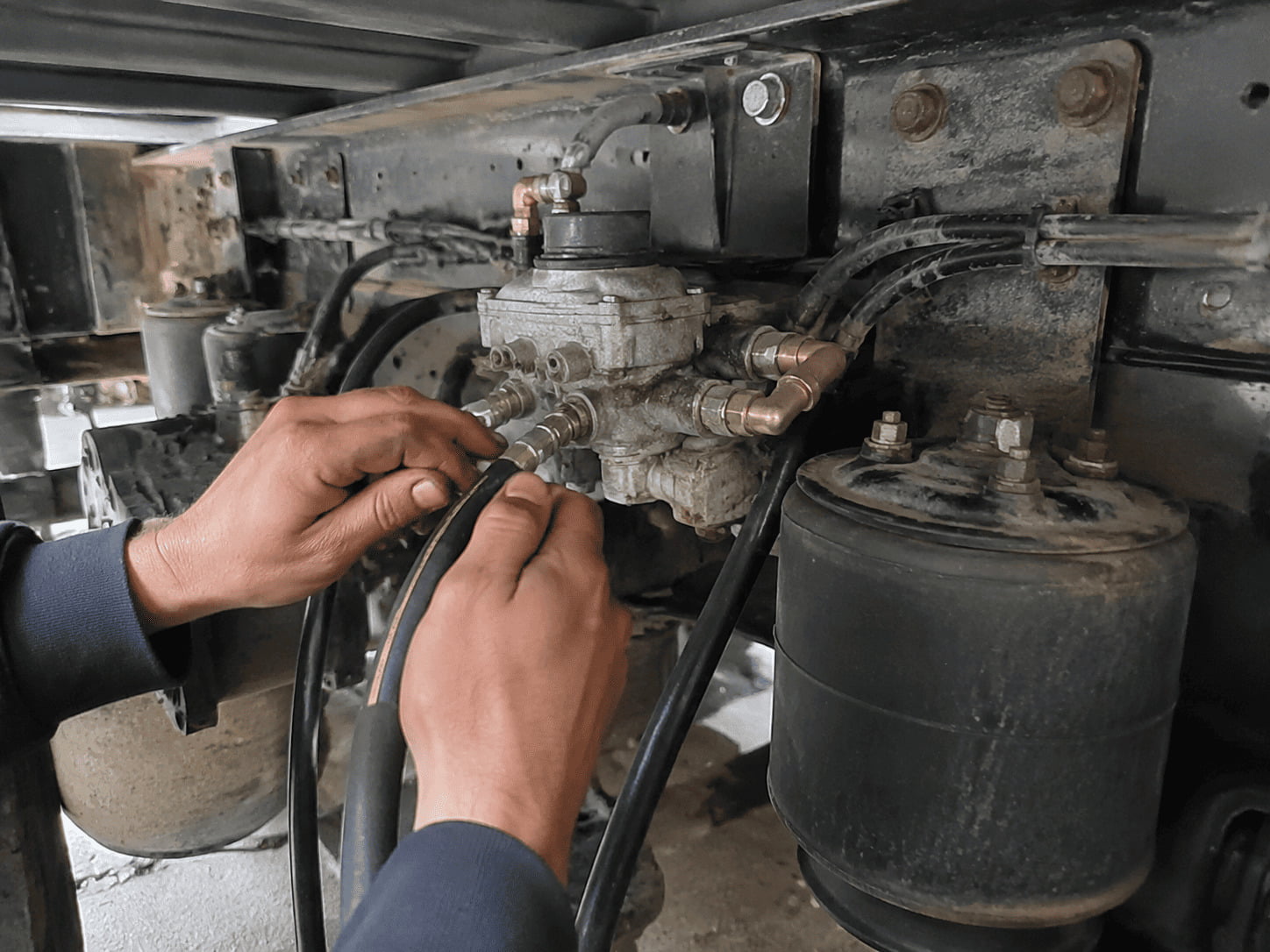
Let me give you a specific example. A fleet customer once had multiple trucks showing low-air warnings after sitting overnight. The compressors were fine. The reservoirs held pressure when tested individually. The problem was brass fittings on the air dryer and purge valves. Those fittings were made from recycled brass with high zinc content. Zinc corrodes faster than copper, especially in humid climates. The fittings developed micro-cracks that leaked slowly. Replacing them with marine-grade brass fittings solved the problem permanently.
Another example: air lines. DOT-approved air brake tubing is usually reinforced nylon or EPDM rubber with a textile braid.12 The tubing must handle 150 psi working pressure, resist ozone and UV degradation, and remain flexible at low temperatures. I've seen aftermarket suppliers sell PVC tubing as "air brake line." PVC gets brittle in cold weather and cracks under pressure cycling. It's not DOT-approved, and it's not safe. We test every batch of tubing with tensile strength, pressure resistance, and temperature cycling tests. That's not optional; it's how you prevent field failures.
Fittings are another weak point. Brass fittings used in air brake systems need consistent wall thickness, smooth threads, and lead-free alloy composition (required under EPA rules). A fitting with thin walls may pass initial inspection but crack under vibration. A fitting with rough threads may damage the mating component and cause slow leaks. We machine our fittings to SAE J512 tolerances and inspect them with batch sampling before shipment. That level of quality control costs more, but it eliminates comebacks.
Seals are often overlooked. O-rings, gaskets, and diaphragms in brake valves, regulators, and chambers must resist compression set, resist petroleum-based contaminants, and maintain elasticity across temperature ranges. A seal that works fine at 70°F may harden and leak at -10°F. We source seals made from nitrile rubber (NBR) or ethylene propylene diene monomer (EPDM) depending on the application, and we test them under temperature cycling to verify performance.
Pressure regulators and valves also matter. A regulator that drifts from 120 psi to 140 psi may not seem like a big deal, but it affects brake balance and increases wear on downstream components. A valve with worn internal seats leaks air slowly, which increases compressor run time and fuel consumption. I've worked with fleets that track air system efficiency as part of their maintenance program. They've found that replacing worn valves and regulators can reduce compressor duty cycle by 10–15%, which saves fuel and extends compressor life.
Here's a maintenance checklist I share with my repair shop customers:
| Component | Inspection Interval | Common Failure Mode | Replacement Criteria |
|---|---|---|---|
| Air lines | Every 6 months | Abrasion, cracking, dry rot | Visible damage, leaks at fittings |
| Glad hands | Every 12 months | Seal hardening, spring fatigue | Leaks when coupled, difficult to connect |
| Brass fittings | Every inspection | Corrosion, cracking, thread damage | Visible corrosion, leaks under pressure |
| Brake chambers | Every 12 months | Diaphragm tears, spring fatigue | Air leaks, inconsistent stroke length |
| Spring brakes | Every 24 months | Spring sag, pushrod wear | Delayed release, incomplete application |
| Compressor | Every 24 months | Valve wear, piston ring wear | Excessive oil carryover, low output pressure |
| Air dryer | Every 12 months | Desiccant saturation, purge valve failure | Water in reservoirs, frequent purging |
One more thing: documentation. I've had fleet managers ask me for material certificates, DOT compliance statements, and test reports for the parts we supply. That's not bureaucracy; it's liability management. If a truck is involved in an accident and the brake system is questioned, having documentation that proves your replacement parts met DOT and SAE standards protects you legally. We provide batch certificates with every shipment. That's standard
"5.1.1 Brake Systems (Part 393 Subpart C) - CSA", https://csa.fmcsa.dot.gov/safetyplanner/MyFiles/SubSections.aspx?ch=22&sec=64&sub=130. Government driver-training and inspection materials describe commercial air brake systems as using compressed-air reservoirs, valves, trailer supply lines, and spring-applied parking or emergency brakes, supporting the general explanation that air systems suit multi-axle and tractor-trailer vehicles. Evidence role: general_support; source type: government. Supports: Air brake systems in commercial vehicles use compressed-air reservoirs, distribution valves, trailer connections, and spring brake mechanisms.. Scope note: Such sources usually explain the design and operation rather than proving that air brakes are the only possible design choice for heavy vehicles. ↩
"Section 5: Air Brakes - California DMV", https://www.dmv.ca.gov/portal/handbook/commercial-driver-handbook/section-5-air-brakes/. Commercial driver licensing materials commonly specify air-compressor governor cut-in and cut-out pressure ranges around 100–125 psi or higher, with many heavy-vehicle systems operating near the 120–140 psi range cited here. Evidence role: statistic; source type: government. Supports: Commercial air brake systems commonly operate with governor cut-in and cut-out pressures in the approximate 100–140 psi range.. Scope note: Exact pressure settings vary by vehicle, compressor governor, and jurisdiction, so the source should be used to support the range as typical rather than universal. ↩
"14.3: Pascal's Principle and Hydraulics - Maricopa Open Digital Press", https://open.maricopa.edu/mccphy121jg5/chapter/pascals-principle-and-hydraulics/. Educational engineering sources explain that hydraulic brakes transmit pedal force through incompressible fluid under Pascal’s law, whereas vehicle air brakes store compressed air in reservoirs for later controlled use. Evidence role: mechanism; source type: education. Supports: Hydraulic brakes transmit force through incompressible brake fluid, while air brakes store compressed air in reservoirs before controlled application.. Scope note: This supports the general mechanism; specialized hydraulic systems can include accumulators, so the statement applies most directly to conventional automotive hydraulic brakes. ↩
"49 CFR 571.121 -- Standard No. 121; Air brake systems. - eCFR", https://www.ecfr.gov/current/title-49/subtitle-B/chapter-V/part-571/subpart-B/section-571.121. Technical training materials for commercial air brakes describe brake chambers mounted at wheel-end brake assemblies across tractor and trailer axles, which supports the plausibility of ten or more chambers on common five-axle tractor-trailer combinations. Evidence role: general_support; source type: institution. Supports: Air-braked tractor-trailer combinations use brake chambers at wheel-end brake positions across tractor and trailer axles, making ten or more chambers plausible on common multi-axle combinations.. Scope note: The exact number depends on axle count, brake configuration, and whether all wheel positions use service chambers. ↩
"Are tractor protection valves required by § 393.43(b), or may ...", https://www.fmcsa.dot.gov/safety/are-tractor-protection-valves-required-ss-39343b-or-may-similar-devices-be-used. Commercial vehicle air-brake guidance describes tractor protection valves as devices that help prevent loss of tractor air pressure when trailer supply pressure is lost and that allow trailer emergency brakes to apply during separation or major leakage. Evidence role: mechanism; source type: government. Supports: Tractor protection systems are designed to preserve tractor air pressure and apply trailer emergency brakes when trailer supply pressure is lost.. Scope note: The phrase “full braking power” should be read cautiously; actual braking after a separation depends on system condition and which circuits remain intact. ↩
"Section 5: Air Brakes - California DMV", https://www.dmv.ca.gov/portal/handbook/commercial-driver-handbook/section-5-air-brakes/. Government commercial-driver materials explain that spring brakes are held released by air pressure and apply mechanically when air pressure becomes too low, with low-air warning requirements intended to alert drivers before pressure reaches unsafe levels. Evidence role: mechanism; source type: government. Supports: Spring brake chambers use mechanical spring force to apply parking or emergency brakes when air pressure is insufficient to hold the springs released.. Scope note: The exact application pressure varies by vehicle and spring-brake design, so a source may support the mechanism more directly than the specific 60 psi value. ↩
"49 CFR 571.121 -- Standard No. 121; Air brake systems. - eCFR", https://www.ecfr.gov/current/title-49/subtitle-B/chapter-V/part-571/subpart-B/section-571.121. FMVSS No. 121 sets performance and equipment requirements for air-braked vehicles, including provisions for reservoir pressure indication and low-pressure warning signals. Evidence role: historical_context; source type: government. Supports: Federal Motor Vehicle Safety Standard No. 121 requires air-braked vehicles to include pressure indicators and warning signals under specified conditions.. Scope note: The precise applicability depends on vehicle type, manufacture date, and regulatory classification. ↩
"Interpretation ID: nht76-1.9 - NHTSA", https://www.nhtsa.gov/interpretations/nht76-19. Vehicle safety materials explain that hydraulic service brakes depend on hydraulic fluid pressure, so leaks or pressure loss can substantially reduce or eliminate service braking in the affected circuit. Evidence role: general_support; source type: government. Supports: Hydraulic brake systems depend on fluid pressure for service braking, and fluid loss or pressure failure can cause major braking degradation.. Scope note: Modern hydraulic systems often use split circuits and warning devices, so the source may support severe loss of braking rather than literal loss of all braking in every design. ↩
"Instructor Bulletin 09-30 - Other Resources (CA Dept of Education)", https://www.cde.ca.gov/ls/tn/or/bulletin0930.asp. FMVSS No. 121 specifies performance requirements for air-braked vehicles, including requirements addressing reservoir capacity, pressure loss warnings, and braking capability under partial system failure. Evidence role: historical_context; source type: government. Supports: FMVSS 121 contains requirements for service brake system performance, reservoirs, warnings, and partial-system failure performance in air-braked vehicles.. Scope note: The regulation may not phrase the requirement exactly as “one for the front axle, one for the rear axles,” so the citation should be used to support the dual/redundant safety requirement rather than that simplified layout in all vehicles. ↩
"5.1.1 Brake Systems (Part 393 Subpart C) - CSA", https://csa.fmcsa.dot.gov/safetyplanner/MyFiles/SubSections.aspx?ch=22&sec=64&sub=130. Commercial driver air-brake manuals describe separate trailer service and emergency or supply lines, commonly associated with blue and red glad-hand connections, for controlling trailer service brakes and supplying trailer air. Evidence role: definition; source type: government. Supports: Commercial vehicle air brake systems use separate service and emergency or supply lines between tractor and trailer, commonly identified by blue and red connections.. Scope note: Color conventions are common but may vary with equipment condition or nonstandard installations. ↩
"Relay valve - Wikipedia", https://en.wikipedia.org/wiki/Relay_valve. Technical air-brake training materials describe relay valves as control valves placed close to brake chambers or axle groups so that a service-line signal can release reservoir air locally and reduce brake application lag. Evidence role: mechanism; source type: institution. Supports: Relay valves use a control pressure signal to route air from nearby reservoirs to brake chambers, reducing response delay in long air brake circuits.. Scope note: Mounting location and internal design vary by vehicle and valve model. ↩
"49 CFR 571.106 -- Standard No. 106; Brake hoses. - eCFR", https://www.ecfr.gov/current/title-49/subtitle-B/chapter-V/part-571/subpart-B/section-571.106. Federal brake hose standards and SAE air-brake tubing specifications set performance requirements for air brake hose and tubing, including pressure, burst, aging, and environmental resistance criteria for approved materials. Evidence role: definition; source type: government. Supports: Federal brake hose standards and related SAE specifications define performance requirements for air brake hose and nylon air brake tubing used in motor vehicles.. Scope note: The source may specify performance requirements rather than state that approved tubing is “usually” nylon or EPDM; material prevalence may need a separate standards or technical-manual source. ↩