Choosing the wrong air power line length is one of the most common — and most avoidable — specification mistakes in heavy-duty truck parts procurement. Air power lines connect the tractor to the trailer pneumatic system1, and a line that is too short pulls under load while a line that is too long sags, rubs2, and creates installation headaches. Getting the length right matters more than most buyers expect.
The short answer: no single length is universally best. The right air power line length depends on the tractor-trailer connection distance, your routing method, how much working slack the application requires, and — for distributors and repair shops — what mismatch risk your inventory strategy can tolerate. 12-foot lines suit shorter connection setups, 15-foot lines work as a solid mid-range option for many common configurations, and 18-foot lines address applications that genuinely need more reach. The wrong length in either direction can cause real problems.
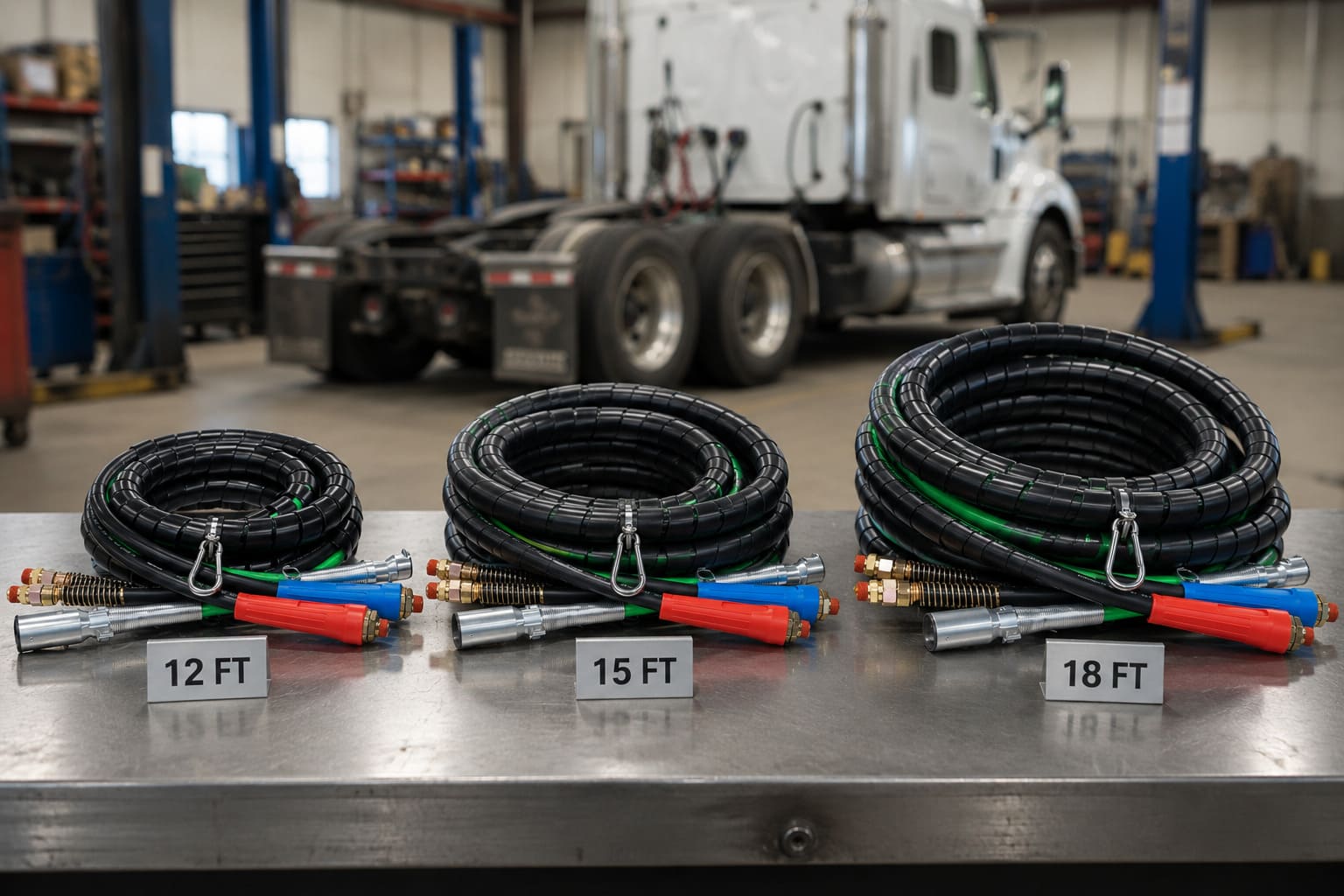
But knowing the general range is just the starting point. The more important question is how to evaluate the right fit for your specific vehicles, customers, or stocking strategy — and how to avoid the length-mismatch problems we see repeatedly on the supplier side.
Are Air Power Lines the Same as Other Air Lines on a Truck?
It is worth clarifying what we are talking about before comparing lengths. Many buyers conflate several different product types, and the confusion can lead to wrong specifications.
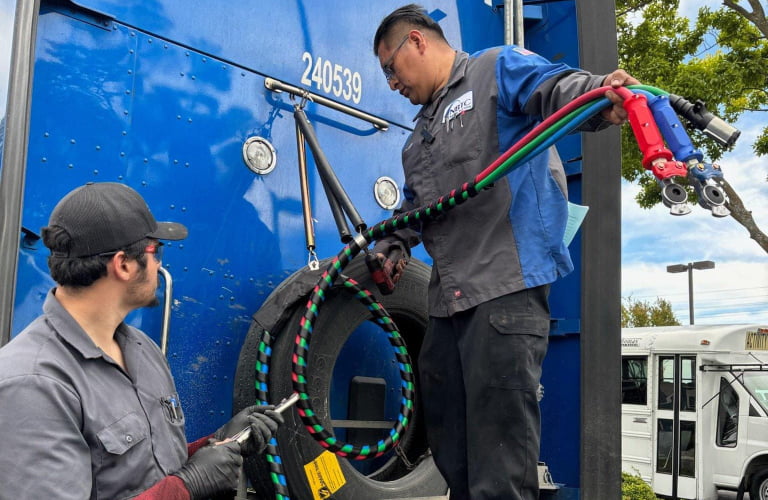
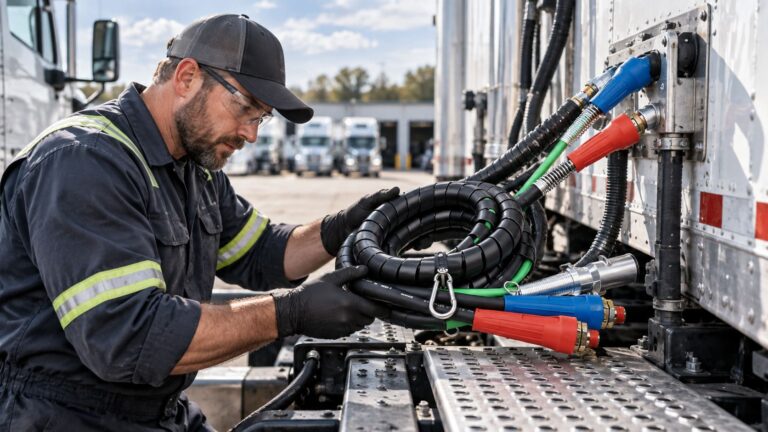
Air power lines — sometimes called glad hand lines or service/emergency air lines — are the coiled or straight pneumatic hoses that run between the tractor and trailer. They connect at the glad hand couplers and carry pressurized air to operate the trailer braking system3 and, in some configurations, auxiliary pneumatic functions. They are distinct from chassis-mounted air brake tubing, 3-in-1 kits that bundle air and electrical lines together4, and other under-hood or frame-rail air plumbing.
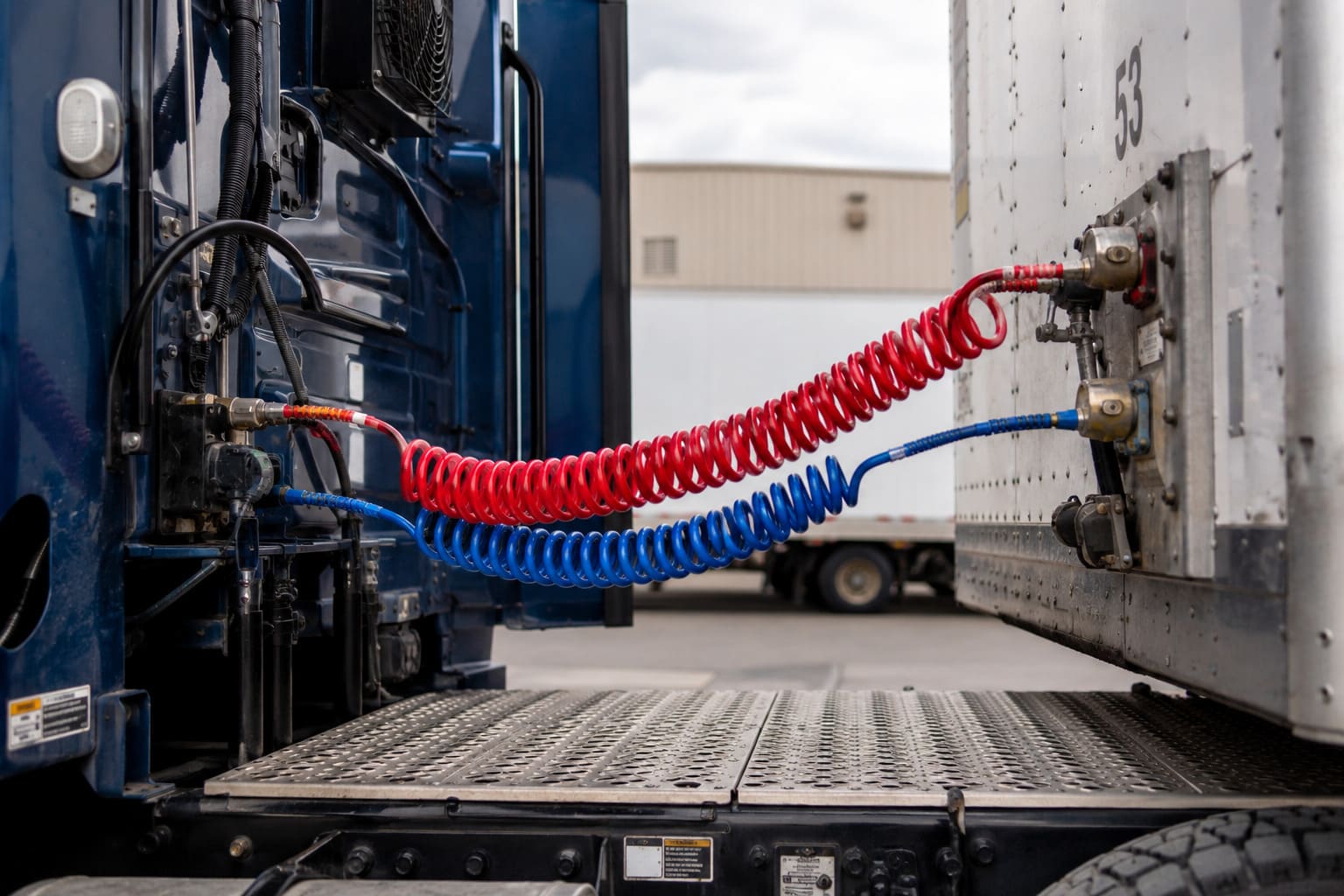
When customers contact us with length questions, the first thing we confirm is that they are specifying the right product category. A buyer who needs a coiled tractor-to-trailer air line and accidentally orders a straight chassis air tube will not get the fit they need — regardless of the listed length.
What does "length" actually mean on a coiled air power line?
This is a point that generates consistent confusion in our customer inquiries.
For coiled air power lines, the stated length typically refers to the extended length — the length when the coil is fully stretched out. This is not the resting coil diameter, and it is not the mid-extension working length. The working slack available at normal trailer articulation is somewhere between the fully compressed coil length and the rated extended length.
For straight air power lines, the stated length is the straight-line measurement from end fitting to end fitting.
Buyers comparing a 15-foot coiled line with a 15-foot straight line should not expect identical performance in the same installation. Always confirm which style — coiled or straight — applies to your application, and clarify with your supplier which measurement convention is being used.
When Does a 12-Foot Air Power Line Make Sense?
Some buyers assume that shorter means more restrictive, and they automatically reach for longer options. That instinct is worth questioning.
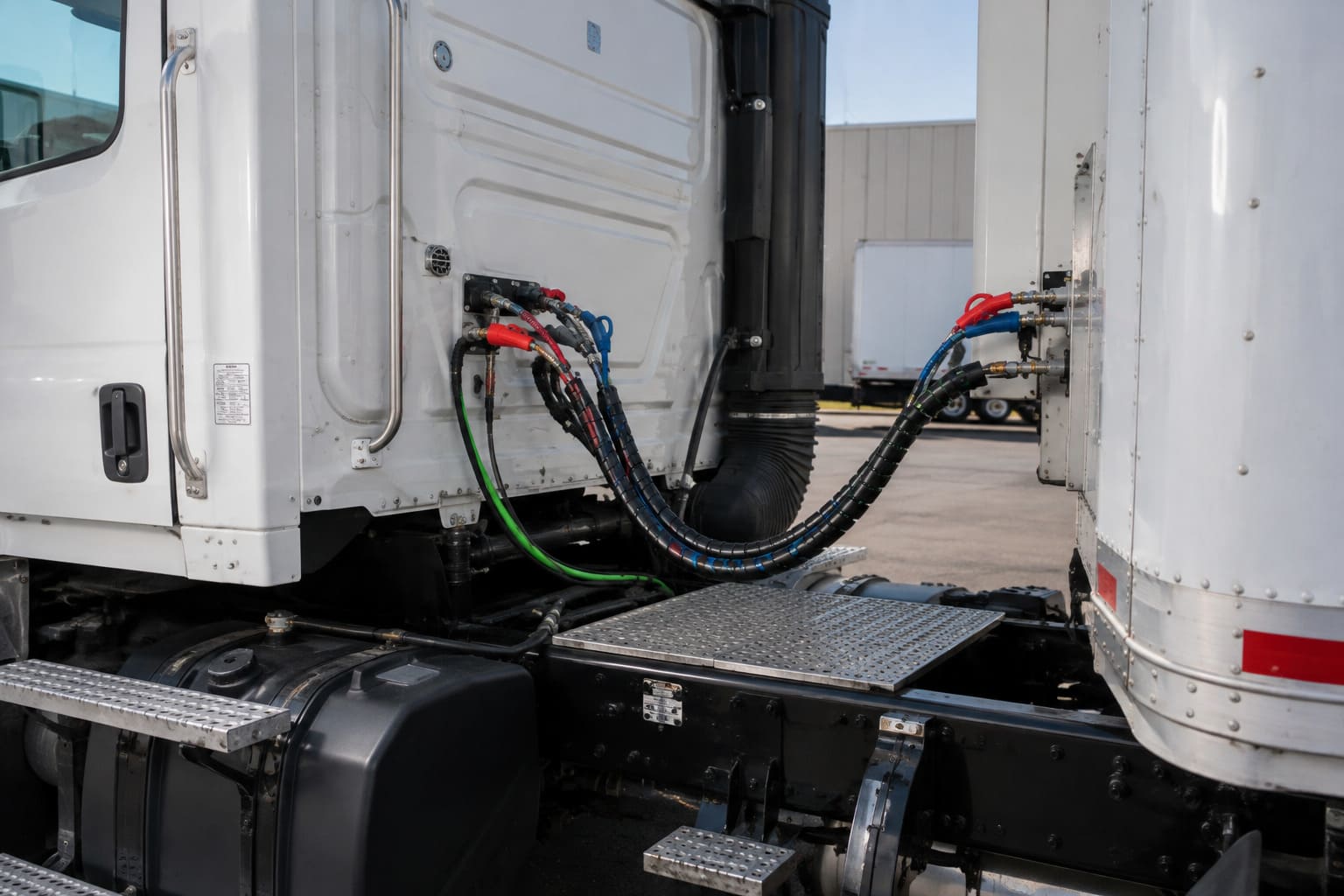
A 12-foot air power line is appropriate when the tractor-trailer connection distance is shorter, the routing geometry is compact, and the application does not require significant working slack. Forcing a longer line into a short-distance setup can introduce just as many problems as specifying a line that is too short.
What applications commonly use 12-foot lines?
The 12-foot length appears most frequently in shorter-wheelbase tractor configurations, vocational setups where the fifth wheel is positioned closer to the cab, and some regional haul or local delivery configurations. In these setups, a 15-foot or 18-foot line may have excess length that hangs loosely, contacts the frame or landing gear, or gets tangled during hookup.
A few scenarios where 12-foot lines come up in our customer conversations:
- Shorter day cab configurations where the fifth wheel sits closer to the rear axle
- Vocational trucks with non-standard fifth wheel positions
- Specific trailer types where the glad hand mount is positioned closer to the front of the trailer
The routing and sag risk with overlength lines
When a line is longer than the application needs, the excess length has to go somewhere. In practice, it sags below the frame, drags against chassis components, or coils awkwardly near the connection point5. Over time, this can increase the risk of abrasion wear, kinking, and physical damage6 — particularly where the line contacts metal edges.
We hear about this from distributors whose customers report lines wearing through prematurely. When we ask for photos or the vehicle details, overlength installation is a common factor. The fix is not always a higher-spec product — sometimes it is simply the right length.
When Is a 15-Foot Air Power Line the Right Choice?
The 15-foot air power line is frequently the starting point for buyers who do not have exact vehicle measurements and are trying to cover a range of common configurations without going too long.
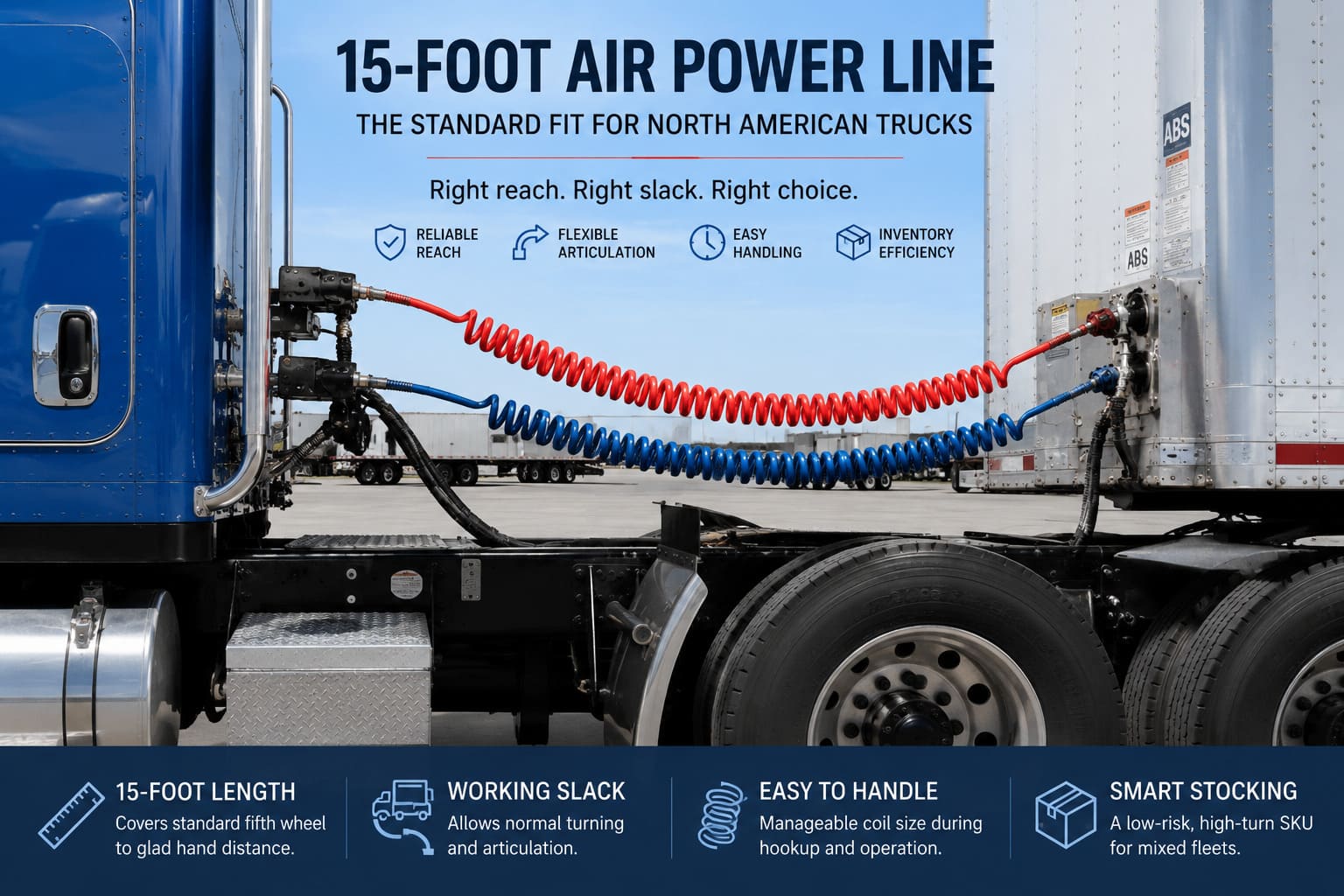
For many standard tractor-trailer combinations in the North American market — including common configurations on Freightliner, Kenworth, Peterbilt, International, and Volvo — a 15-foot line covers the connection distance with working slack7 that accommodates normal turning and articulation8 without excessive overhang.
Why 15 feet is a common distributor stocking choice
In our experience fielding orders from North American distributors and repair shops, 15-foot lines move consistently across a broader vehicle range than either 12-foot or 18-foot lines. That does not make them universal — but it does make them a lower-risk SKU for shops that serve mixed fleets.
Here is what makes 15-foot lines a practical mid-range option:
- Connection distance coverage: The 15-foot length provides enough reach for most standard fifth wheel positions without excess slack in typical configurations
- Handling during hookup: Drivers report that 15-foot lines are generally manageable during hookup without the excess coil that can accompany 18-foot lines
- Inventory efficiency: For repair shops serving mixed fleets, stocking 15-foot lines as a primary SKU reduces the risk of frequent zero-coverage gaps
What 15-foot lines may not cover
A 15-foot line is not automatically the right choice for:
- Trucks with extended wheelbase configurations where the distance from the cab to the fifth wheel is longer than standard
- Trailer types with unusual glad hand positioning
- Applications where the driver or fleet spec explicitly calls for 18-foot lines by policy or by engineering recommendation
When customers contact us with a "15-foot line isn't reaching" complaint, the follow-up conversation usually confirms one of these scenarios. In those cases, the 18-foot option is worth evaluating — not as a universal upgrade, but as a solution to a specific geometry problem.
When Should You Specify an 18-Foot Air Power Line?
The 18-foot air power line is the longest of the three standard lengths, and it is the one we see most frequently misapplied. A common assumption among buyers is that longer means "safer" or "more universal." In our experience, that assumption causes at least as many problems as it solves.
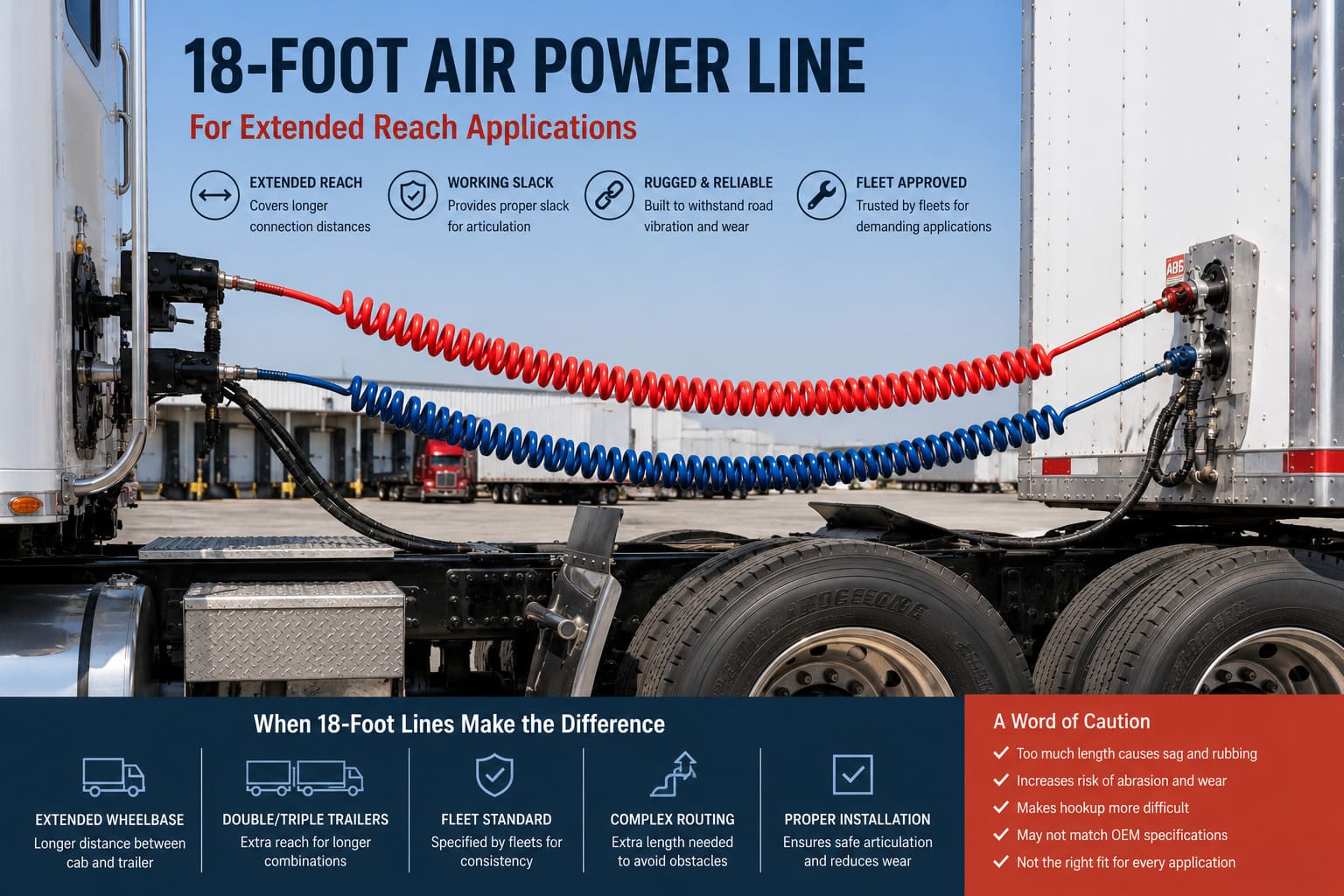
An 18-foot line makes sense when the application genuinely requires more reach or more working slack than a 15-foot line can provide. It is not automatically the right upgrade when a 15-foot line is specified — and it is definitely not the right default for all trucks.
Scenarios where 18-foot lines are appropriate
- Extended wheelbase tractors where the fifth wheel sits further back from the cab than standard configurations
- Double or triple trailer setups where longer connection distances or unusual routing is a genuine requirement
- Fleet-specific policies where maintenance managers have standardized on 18-foot lines based on their own vehicle evaluation
- Applications with complex routing paths where the line must clear obstacles and the extra length is needed for proper routing — not just as slack
The real risk of treating 18-foot lines as a universal default
We have seen distributors stock exclusively 18-foot lines on the logic that "it fits everything." Here is what that approach can lead to:
| Problem | Cause |
|---|---|
| Excess sag and rubbing | Too much length for the connection distance |
| Abrasion and premature wear | Line contacting chassis, landing gear, or trailer frame |
| Difficult hookup | Excess coil gets in the way during connection |
| Customer returns | Line does not match vehicle manufacturer specification |
| Inventory mismatch | Customers with 12-foot or 15-foot requirements need separate orders |
The point is not that 18-foot lines are a poor product — they are the right answer for the right application. The point is that no single length eliminates specification risk.
How Should Distributors and Repair Shops Think About Stocking All Three Lengths?
For individual truck owners, the length decision is a one-time specification question. For distributors, wholesalers, and repair shops, it is an inventory coverage question — and that reframe changes the analysis entirely.
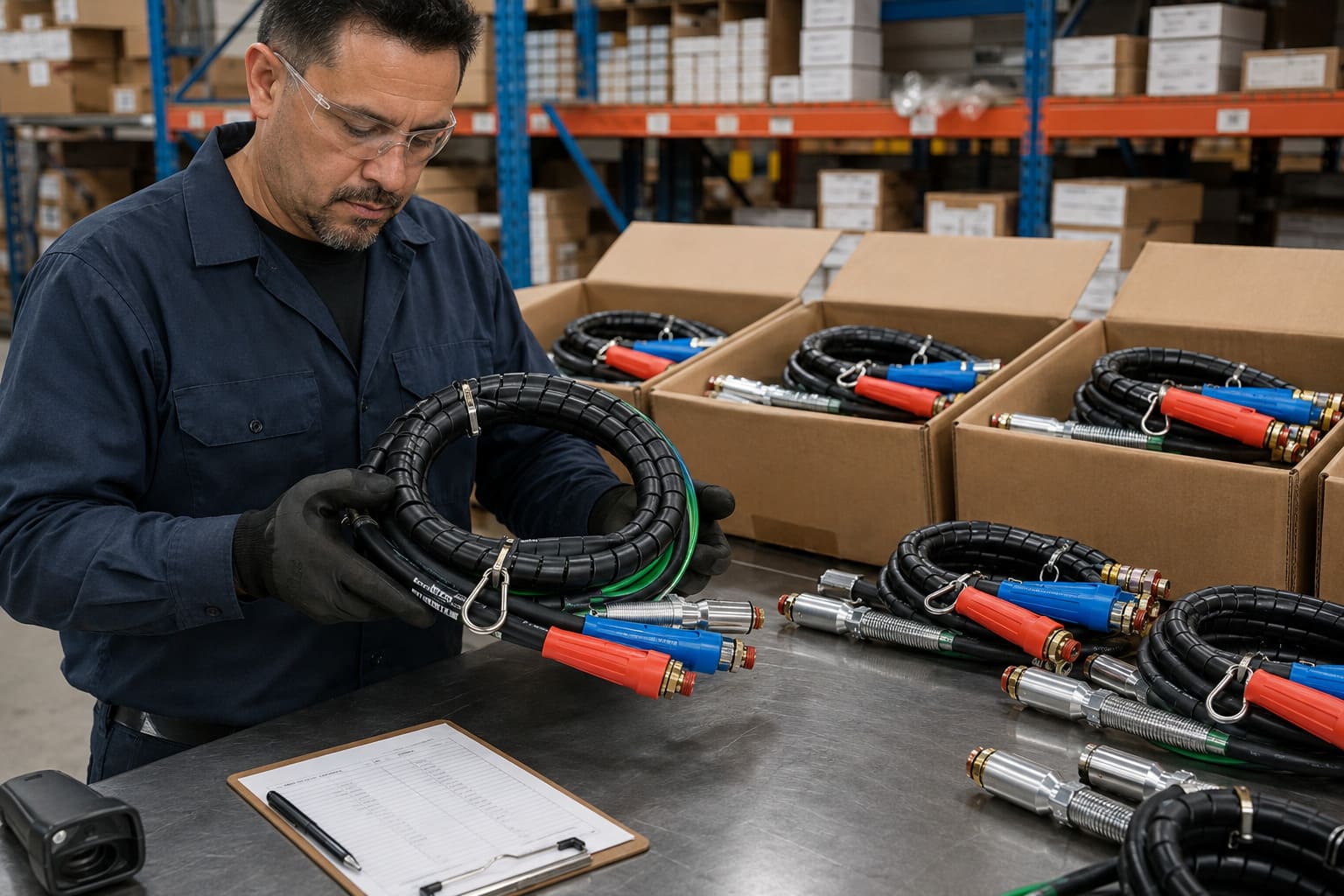
Stocking only one length simplifies SKU management. It also creates specific, predictable failure points: wrong-fit complaints, emergency reorders, and customers who go elsewhere when you do not have the length they need on the shelf.
A practical approach to mixed-length inventory
Based on the order patterns and conversations we have with distributors who serve North American fleets, a common-sense approach looks something like this:
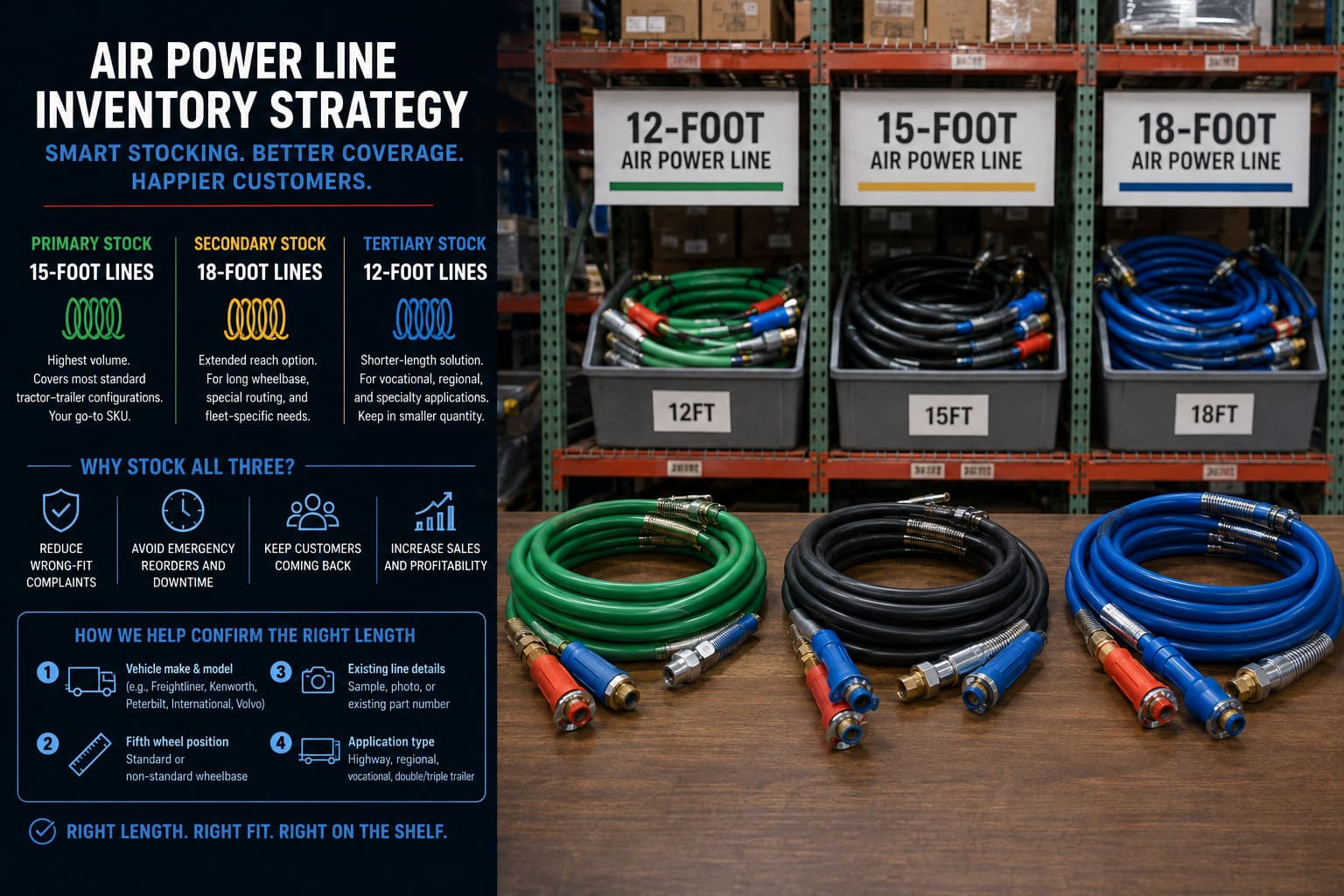
Primary stock: 15-foot lines Stock these in the highest volume. They cover the broadest range of standard tractor-trailer configurations and move consistently.
Secondary stock: 18-foot lines Stock these as your extended-reach option for customers with specific vehicle types, fleet standards, or routing requirements that the 15-foot line does not satisfy.
Tertiary stock: 12-foot lines Keep these in smaller quantities for vocational, regional, or specialty applications where a shorter line is genuinely the right fit.
This approach does not eliminate all specification mismatches — nothing does. But it reduces the frequency of zero-coverage situations and gives your customers a basis for asking the right specification question when they come to you.
How we help customers confirm the right length
When a customer contacts us unsure of which length to order, we typically ask for:
- Vehicle make and model — Freightliner, Kenworth, Peterbilt, International, Volvo, Mack, or South American equivalents
- Fifth wheel position — standard or non-standard wheelbase
- Existing line details — a sample, a photo, or the part number of the line being replaced
- Application type — highway, regional, vocational, double/triple trailer
If drawings or detailed specifications are available, we can work from those. This process is not vehicle engineering — it is basic specification confirmation that helps reduce wrong-length orders before they become returns or complaints.
Frequently Asked Questions
Can I use an 18-foot air power line instead of a 15-foot line on a standard tractor-trailer?
You can, but overlength lines may sag, rub against chassis components, or create a difficult hookup experience. A line that is too long for the connection distance can increase the risk of abrasion wear over time. If your application genuinely needs more reach, an 18-foot line is appropriate — but length should be determined by the vehicle geometry, not by a "longer is safer" assumption.
Why do some fleets standardize on a single air power line length?
Fleet maintenance managers sometimes standardize on one length to simplify purchasing, inventory, and technician training. When this works well, it is because the fleet operates a consistent set of vehicle configurations where one length genuinely fits most applications. When it creates problems, it is usually because the fleet added vehicle types that do not fit the standardized length, leading to tension, rubbing, or premature wear on one end and excess sag on the other.
How do I confirm the correct air power line length for a specific truck?
The most reliable starting points are the vehicle manufacturer's specification or the part number on the existing line.9 If neither is available, a sample of the old line, a clear photo showing the routing and connection points, or the detailed vehicle model and fifth wheel position can help a supplier assist with specification confirmation. When in doubt, consult a qualified truck technician or the vehicle OEM's maintenance documentation.
What is the difference between a coiled and a straight air power line?
A coiled air power line stores length in a spiral coil that extends and retracts as the trailer articulates. The stated length is typically the extended measurement. A straight air power line is a fixed-length hose without the coil. The two styles are not interchangeable for the same application — confirm which style your vehicle requires before ordering based on length alone.
Do 12-foot, 15-foot, and 18-foot air power lines cost significantly different amounts?
Length is one factor in pricing, but material specification, end fitting type, brand, and order volume typically have a larger influence on unit cost than the length difference between 12-foot, 15-foot, and 18-foot lines. Procurement decisions should be driven primarily by fit and application suitability rather than by small per-unit price differences across lengths.
Conclusion
The best air power line length is the one that fits the tractor-trailer connection geometry, supports the required working slack, routes cleanly without excess sag or tension, and matches what your customers actually need. For most standard North American tractor-trailer configurations, a 15-foot line is a practical starting point — but 12-foot and 18-foot lines exist because real applications require them, not because they are compromises or upgrades. For distributors, wholesalers, and repair shops, the smarter question is not "which single length should I stock?" but "what mixed-length strategy reduces my mismatch and return risk across the fleet types I serve?"
At ROADSPOWER, we work with distributors and shops across North America and South America to confirm air power line specifications, support mixed-SKU inventory planning, and help customers avoid wrong-length orders before they become complaints. If you are evaluating your air power line range — or working through a specific application question — reach out to our team with your vehicle details, and we will work through the specification with you.
"5.1.1 Brake Systems (Part 393 Subpart C) - CSA", https://csa.fmcsa.dot.gov/safetyplanner/MyFiles/SubSections.aspx?ch=22&sec=64&sub=130. Federal Motor Carrier Safety Administration materials on combination-vehicle air brakes describe service and emergency air lines, connected through glad hands, as the pneumatic link between a tractor and trailer braking system. Evidence role: definition; source type: government. Supports: Air lines and glad-hand couplers connect the tractor air-brake system to the trailer pneumatic braking system.. ↩
"5.1.1 Brake Systems (Part 393 Subpart C) - CSA", https://csa.fmcsa.dot.gov/safetyplanner/MyFiles/SubSections.aspx?ch=22&sec=64&sub=130. Commercial-vehicle inspection guidance from U.S. and North American enforcement bodies identifies chafed, kinked, rubbing, damaged, or improperly routed brake hoses and tubing as conditions relevant to brake-system safety. Evidence role: general_support; source type: government. Supports: Commercial-vehicle inspection guidance treats damaged, rubbing, chafed, kinked, or improperly routed brake hoses and tubing as safety concerns.. Scope note: Such sources usually address hose condition and routing generally; they may not quantify the exact effect of 12-, 15-, or 18-foot tractor-to-trailer line lengths. ↩
"Interpretation ID: nht76-3.44", https://www.nhtsa.gov/interpretations/nht76-344. Federal motor-vehicle safety and driver-training materials describe trailer air brakes as pneumatic systems in which service and supply lines transmit compressed air needed for trailer brake operation. Evidence role: mechanism; source type: government. Supports: Trailer air-brake systems rely on pressurized air supplied through service and supply/emergency lines from the tractor.. ↩
"49 CFR 571.106 -- Standard No. 106; Brake hoses.", https://www.ecfr.gov/current/title-49/subtitle-B/chapter-V/part-571/subpart-B/section-571.106. Federal Motor Vehicle Safety Standard No. 106 and related brake-hose standards distinguish brake hoses, hose assemblies, end fittings, and tubing, supporting the article’s distinction between tractor-to-trailer air lines and other air-brake plumbing components. Evidence role: definition; source type: government. Supports: Regulatory and standards documents distinguish brake hoses, hose assemblies, end fittings, and tubing used in air-brake systems.. Scope note: The source may not use the commercial term “3-in-1 kit,” so it supports the component distinction rather than every aftermarket product label. ↩
"5.1.1 Brake Systems (Part 393 Subpart C) - CSA", https://csa.fmcsa.dot.gov/safetyplanner/MyFiles/SubSections.aspx?ch=22&sec=64&sub=130. Government commercial-vehicle inspection and training guidance instructs operators to check that air and brake lines are not dragging, rubbing, tangled, or otherwise improperly routed, providing support for the risk described when excess line length is present. Evidence role: mechanism; source type: government. Supports: Brake and air lines should be routed to avoid dragging, rubbing, or contact with vehicle components.. Scope note: The source supports the routing hazard generally rather than proving that every overlength installation will sag or drag. ↩
"5.1.1 Brake Systems (Part 393 Subpart C) - CSA", https://csa.fmcsa.dot.gov/safetyplanner/MyFiles/SubSections.aspx?ch=22&sec=64&sub=130. North American commercial-vehicle inspection criteria identify chafing, kinking, abrasion, and physical damage to brake hoses or tubing as conditions relevant to brake-system integrity. Evidence role: general_support; source type: institution. Supports: Chafed, kinked, abraded, or physically damaged air-brake hoses are recognized inspection and maintenance concerns.. Scope note: These criteria establish the seriousness of the damage modes but do not isolate line length as the sole cause. ↩
"Technology & Maintenance Council - American Trucking Associations", https://tmc.trucking.org/. Industry maintenance guidance or OEM service documentation identifies 15-foot tractor-to-trailer air-line assemblies as a common length for standard combination-vehicle routing, supporting the article’s treatment of 15 feet as a mid-range fitment option. Evidence role: general_support; source type: institution. Supports: Industry or OEM references should show that 15-foot tractor-to-trailer air-line assemblies are commonly used for standard configurations or fall within standard routing recommendations.. Scope note: This would support common practice, not prove that a 15-foot line fits every standard tractor-trailer configuration. ↩
"Motion Primitives Planning For Center-Articulated Vehicles - arXiv", https://arxiv.org/html/2405.17127v1. Research on articulated vehicle kinematics shows that the tractor and trailer rotate relative to one another during turning, which provides the mechanical basis for requiring slack in air and electrical connections between the units. Evidence role: mechanism; source type: paper. Supports: Articulated tractor-trailer combinations change relative angle at the fifth wheel during turning, requiring connected lines to tolerate movement.. Scope note: Vehicle-dynamics papers support the articulation mechanism; they may not discuss commercial air-line length selection directly. ↩
"5.1.1 Brake Systems (Part 393 Subpart C) - CSA", https://csa.fmcsa.dot.gov/safetyplanner/MyFiles/SubSections.aspx?ch=22&sec=64&sub=130. Industry maintenance guidance for commercial vehicles emphasizes matching replacement brake-system components to manufacturer specifications or approved part identifiers, supporting the use of OEM documentation and existing part numbers as primary references. Evidence role: expert_consensus; source type: institution. Supports: Maintenance guidance generally favors using OEM specifications, approved replacement parts, or identifiable part numbers when selecting replacement brake-system components.. Scope note: This supports the general replacement-parts practice; final suitability may still require inspection of the specific vehicle routing and configuration. ↩