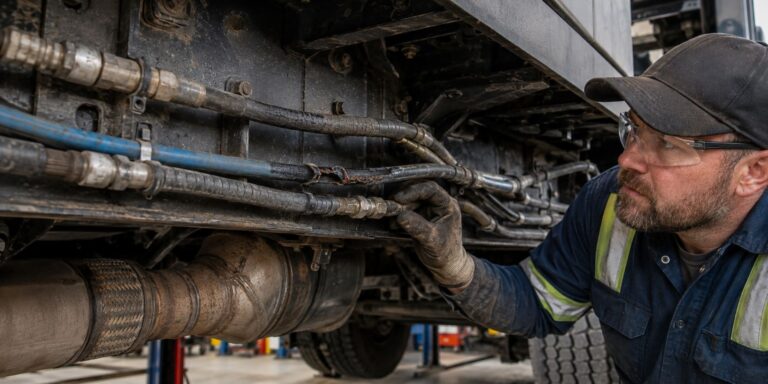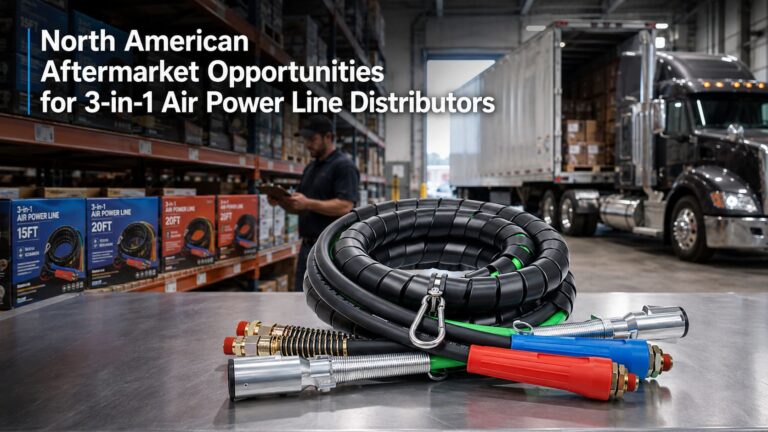
Every fleet manager dreads air leaks. They eat fuel, kill brake performance, and drain your wallet1. But are push-to-connect fittings really the weak link?
No, push-to-connect fittings do not leak when you choose the right type, install them properly, and buy from a manufacturer who tests every single unit. At ROADSPOWER, our DOT-certified fittings pass brutal air-tightness checks and hold pressure after years of vibration and weather abuse.
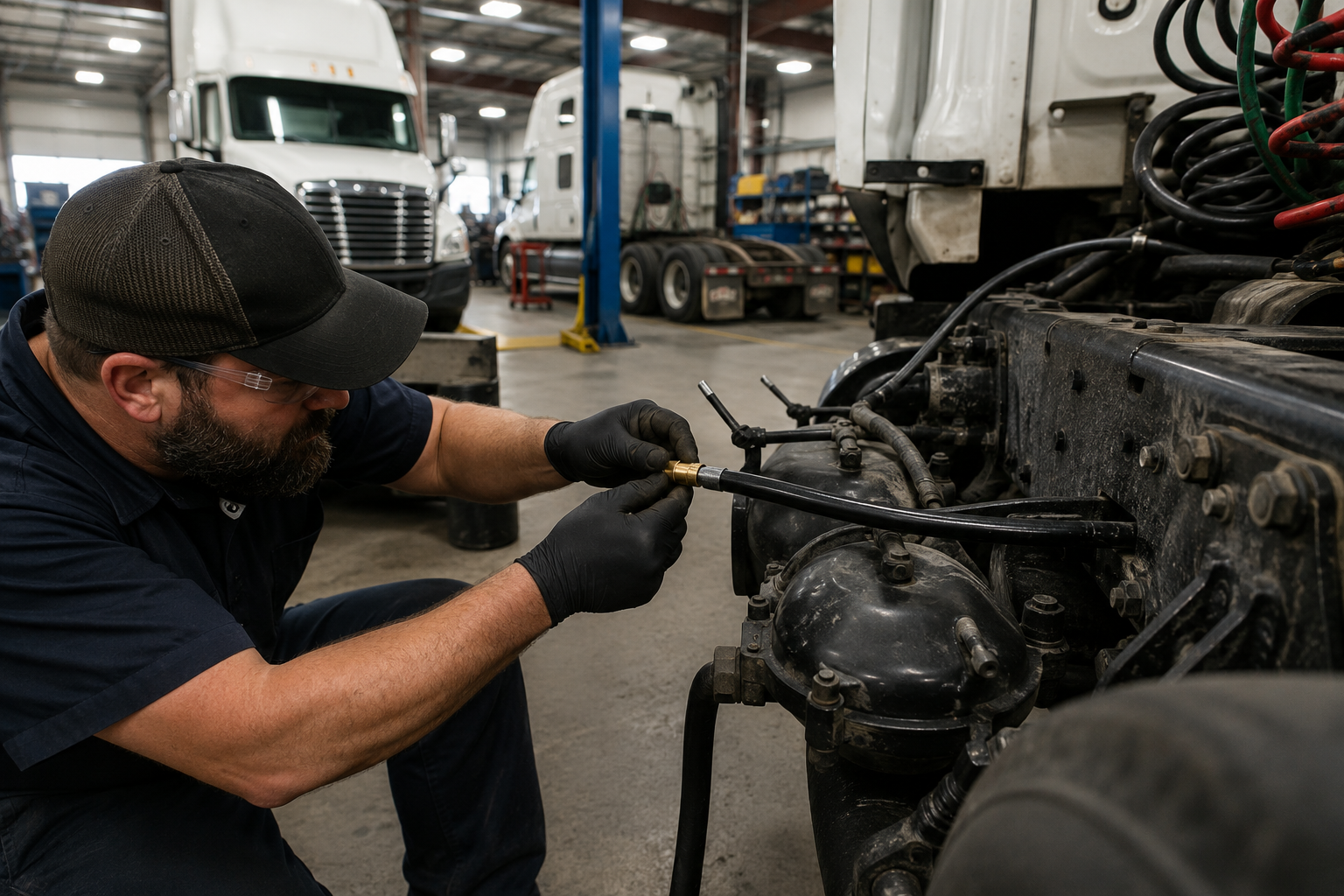
I still hear the doubt in my customers’ voices. A shop owner called me last Tuesday and said, “Every push-to-connect I’ve tried ends up hissing after six months.” That fear is real. So let’s dig into the real reasons leaks happen and how you can make them a problem of the past.
Why do some push-to-connect fittings leak on trucks?
You torque a brand‑new fitting by hand, air it up, and hear the faint whisper of lost pressure. You feel frustration punch you right in the gut.
Most leaks are not the fitting’s fault. They come from a tube that was cut at an angle, debris on the O‑ring, or a half‑inserted pipe. I have watched mechanics blame the connector when a dirty tube end was the only guilty part.
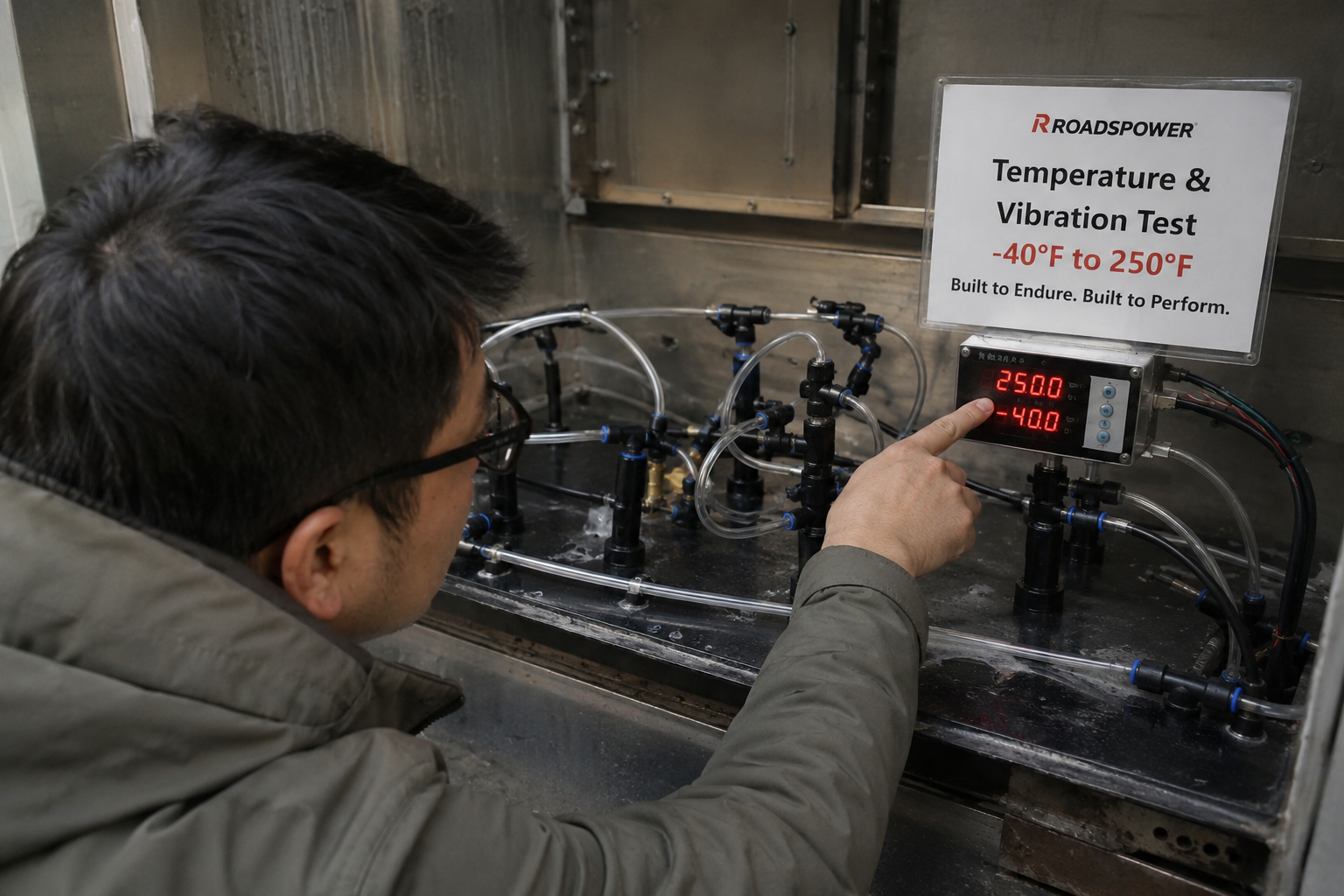
Every push‑to‑connect fitting uses a stainless‑steel grab ring and a rubber O‑ring. The ring bites the tube, and the O‑ring forms the seal.2 If the tube is not cut square, the O‑ring cannot sit flat. A tiny gap lets air escape. Also, many truck shops use nylon air line. Nylon is stiff3. If you push the tube in only halfway, the ring grabs it, but the O‑ring never seals. I train our distributor partners to check every tube end with a simple “push‑and‑twist” test. First, cut the tube with a proper tube cutter, not a hacksaw4. Second, deburr the outside and inside edge. Third, mark the insertion depth with a pencil. Fourth, push the tube steadily until the line reaches the fitting body. You must feel a solid stop. When our team does this, the leak rate drops to zero. Our fittings also use double O‑ring designs on key truck sizes. This gives a backup seal even if the first O‑ring gets a tiny scratch. So before you blame the fitting, look at your tube prep.
Can temperature and vibration cause push‑to‑connect fittings to leak?
A frozen brake line at 5 a.m. or a trailer that shakes over 500 miles of bad road can break a cheap seal wide open. That thought keeps fleet managers awake at night.
Yes, extreme heat, cold, and non‑stop vibration destroy low‑quality materials fast. Our push‑to‑connect fittings survive from ‑40°F to 250°F5 and shrug off chassis vibration because we use EPDM seals and heat‑treated grab rings that never relax.
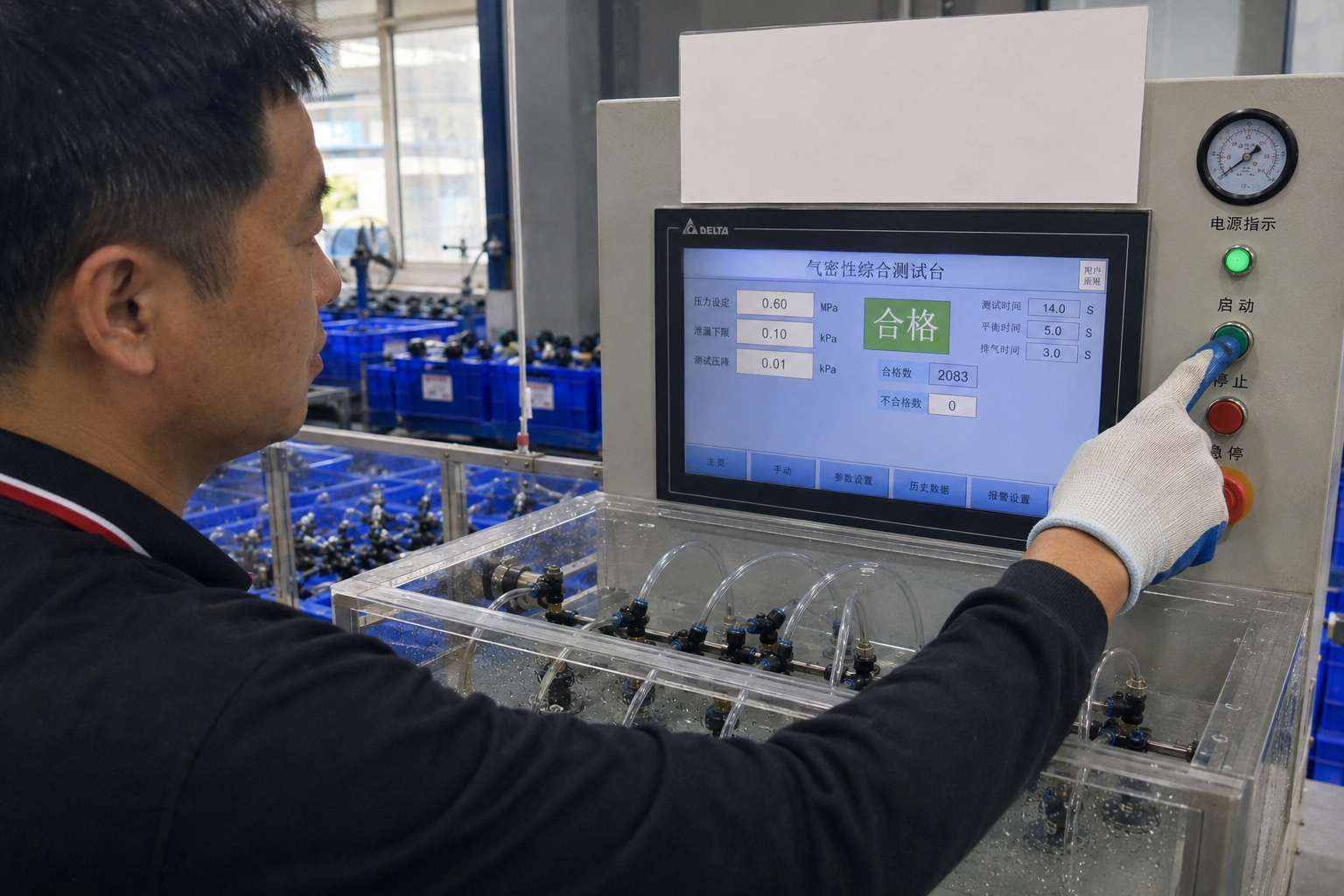
I remember a call from a fleet in Minnesota. They swapped in a budget push‑to‑connect line on a Freightliner cascadia. By January, the O‑rings turned hard as plastic and cracked. Air leaked from six connection points. We sent samples of our DOT‑compliant fittings. The same truck ran through February without a single pressure drop. The secret is material science. Cheap fittings use nitrile O‑rings. Nitrile gets brittle below ‑10°F6. We use EPDM rubber that stays elastic in deep cold and does not swell in hot compressor discharge air7. Vibration is another killer. A standard grab ring can loosen its grip after 200,000 cycles8. We put every batch on a vibration table that mimics 500,000 miles of highway pounding9. The ring teeth hold 100% of their original bite force. Also, our brass body has thicker walls than import copies. It does not crack at the threads when the truck frame twists. So temperature and road shock are not enemies of a properly built fitting. They only expose the weak ones.
How do I know if a push‑to‑connect fitting is truly leak‑proof before buying?
You open a parts catalog and see a hundred choices. Every supplier says “leak‑free.” But the first one you install on a live air line tells the truth the hard way.
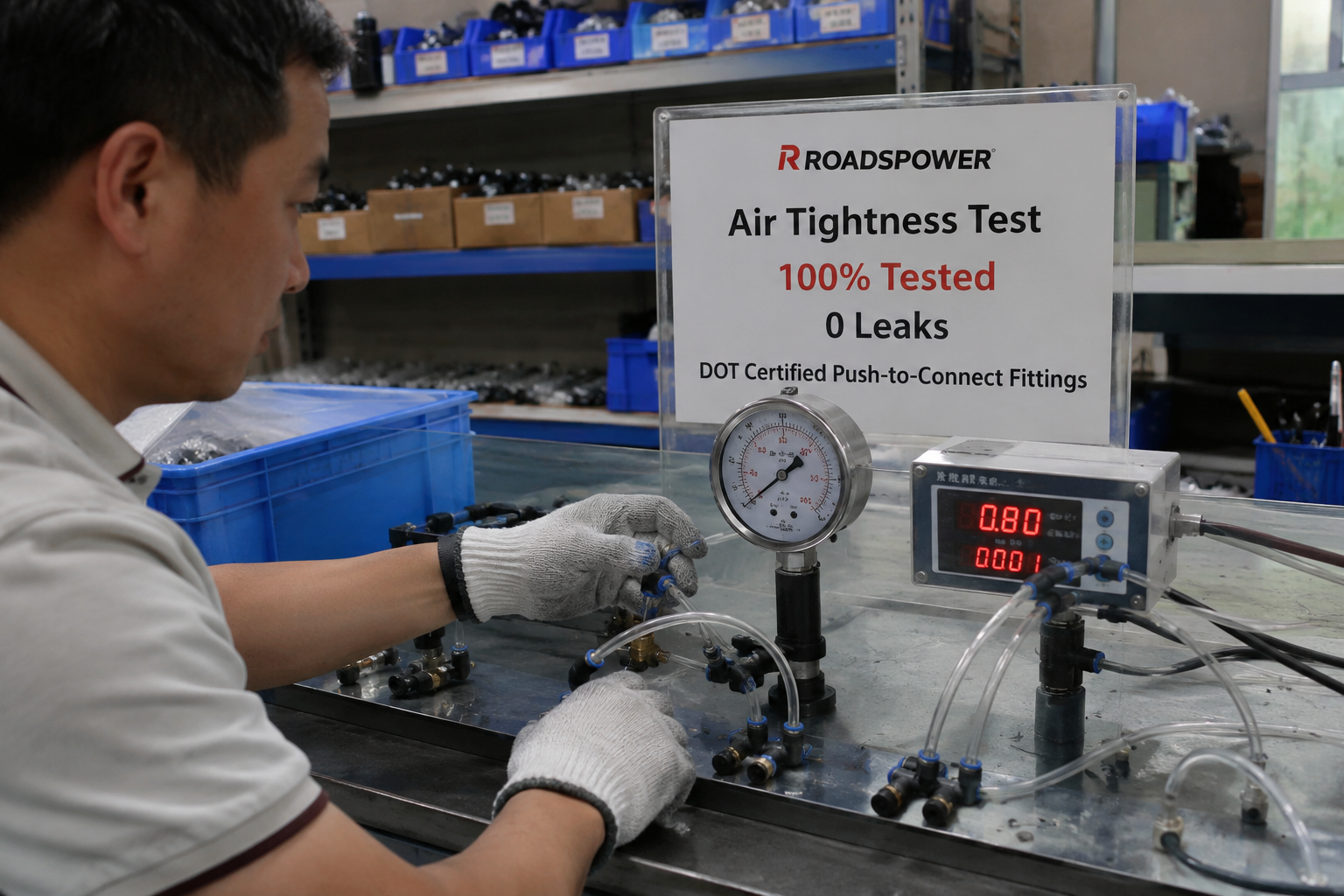
You need three things from your supplier: DOT certification10, a public test report, and a 100% factory air‑tightness check. At ROADSPOWER, we put each fitting through a multi‑point pressure decay test and ship only units that hold zero leakage at 150 psi.
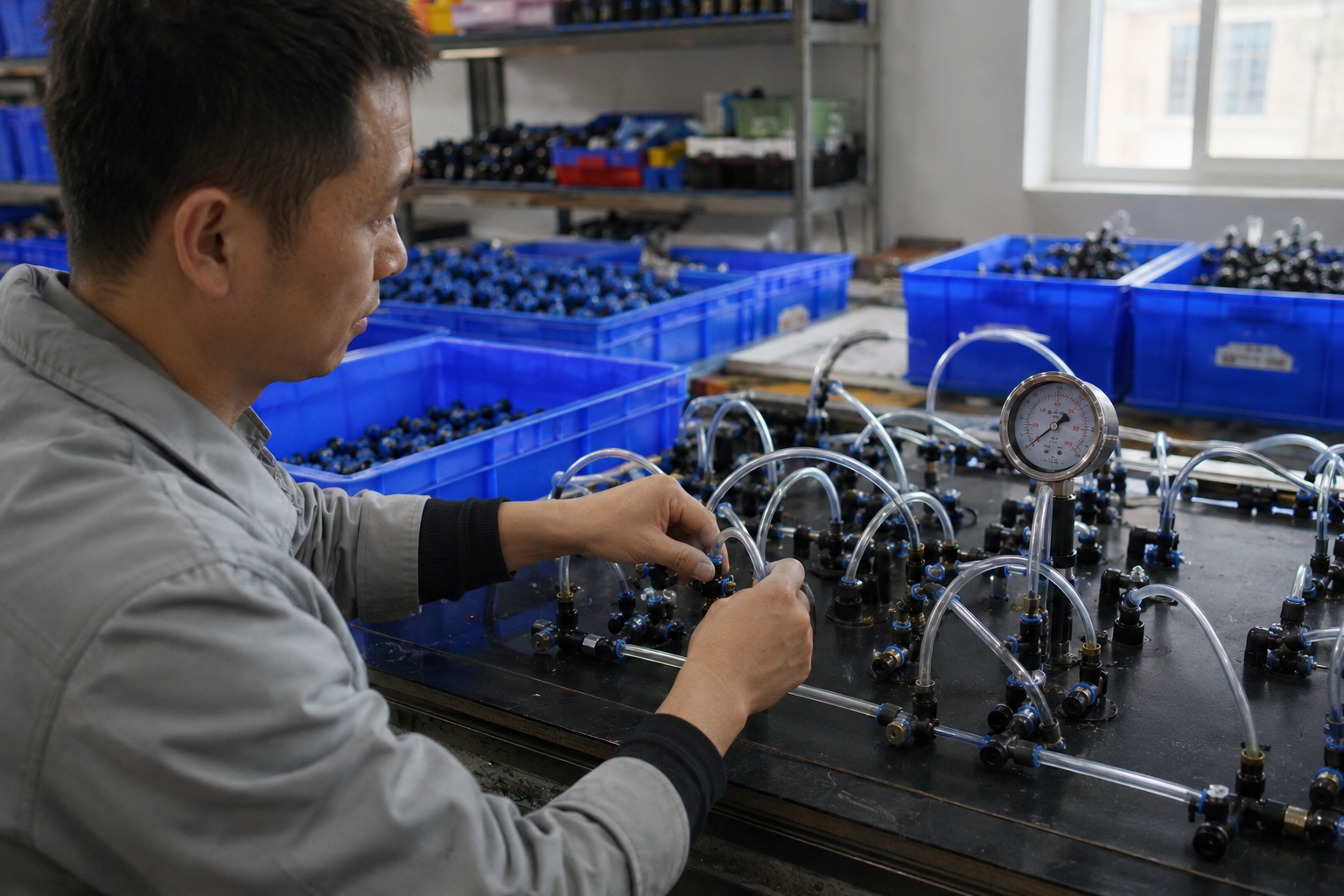
A good leak test is not a quick dunk in a water tank. I invite customers to watch our process live on video calls. First, we test raw materials. Every batch of EPDM O‑rings gets a hardness check and a compression set test. Copper tube stock is checked for pores under a microscope. Then, during assembly, automated machines press rings and seals. At station four, a robot fills the fitting with 150 psi of compressed air. The system watches the pressure for 15 seconds. If it drops more than 0.01 psi, the fitting is rejected and scrapped. This is called pressure decay testing11. It catches leaks a water bubble test misses. We also take AQL samples from each production lot12 and run them through 50,000 pressure cycles while shaking the assembly. After that, we cut the fitting open and measure O‑ring wear. If wear exceeds 0.1 mm, the whole batch is held. Only then do we stamp the fitting with the DOT code and pack it. This is the only way you get a fitting that won’t hiss on your shop floor.
What should I do if a push‑to‑connect fitting leaks during operation?
The pressure gauge needle crawls downward while the truck sits in the bay. Your first instinct is to rip out the fitting and toss it. Hold that thought.
Stop and inspect the tube first. Look at the cut face, check if it’s fully bottomed, and wipe the O‑ring. In nine out of ten roadside leaks I’ve debugged, the fix was cleaning or re‑cutting the tube—not changing the fitting.
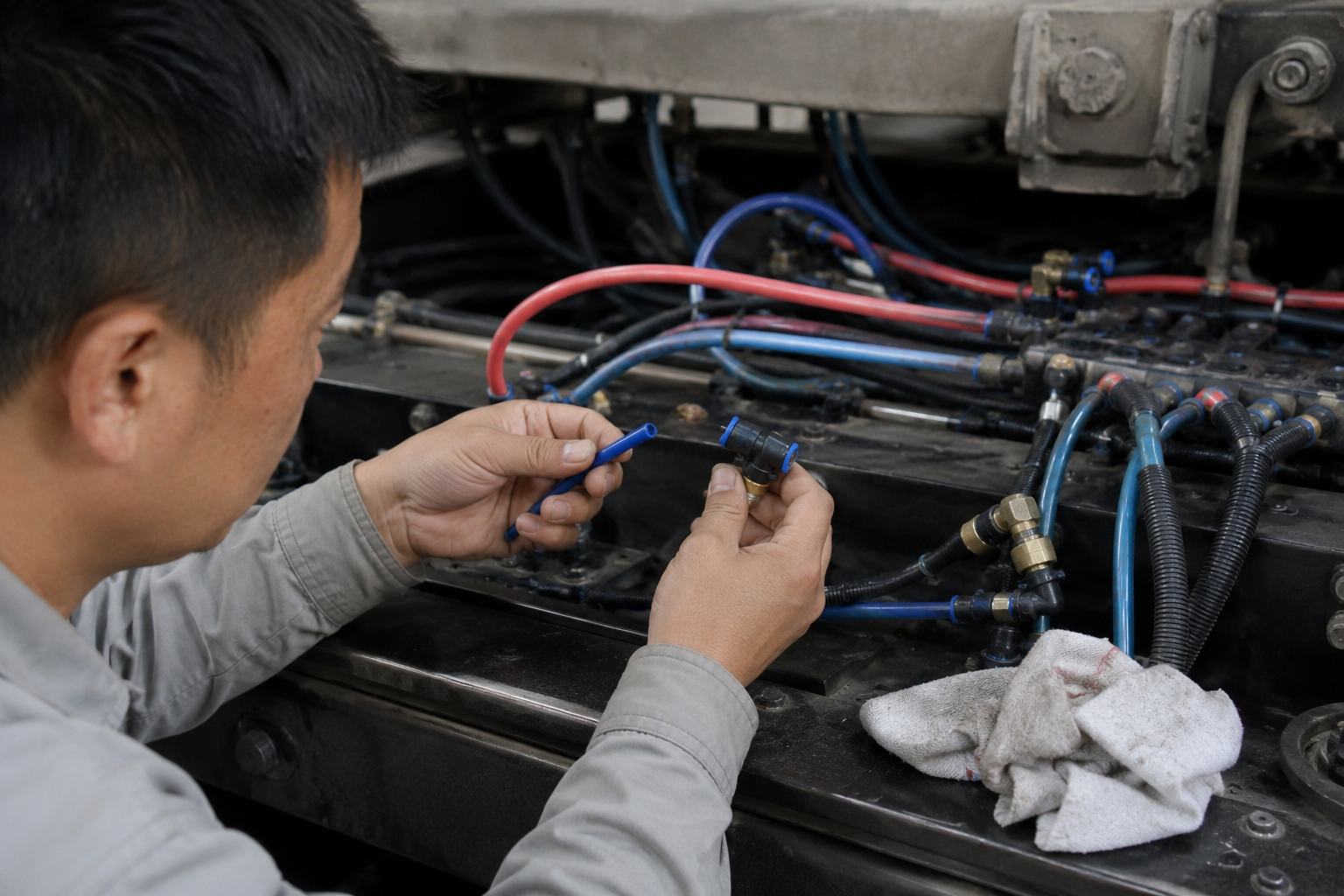
Here is a simple checklist I share with every repair shop. First, relieve all air pressure. Second, pull the tube straight out. A clean release means the grab ring was holding. If the tube end looks jagged or has a lip, cut off the last half inch with a sharp tube cutter. Do not use side cutters. Third, look inside the fitting with a flashlight. See any dirt, grease, or a shredded O‑ring? If the O‑ring is intact, wipe it gently with a dry cloth. Do not use oil—oil makes the O‑ring swell and crack later. Fourth, push the fresh tube end in until you hear and feel the click. Many fittings have a visual witness mark; when the mark disappears, the tube is home. Fifth, charge the system to 120 psi. Spray a soap‑water mix on the connection. No bubbles means no leak. If you still see bubbles, then the fitting itself may be damaged. In that case, replace it. But I’ve saved fleets thousands of dollars with these five steps alone. Our ROADSPOWER fittings come with a small installation card in the box so your mechanic never skips these basics.
Conclusion
Push‑to‑connect fittings do not leak by nature. Bad tube prep, weak materials, and skipped testing cause leaks. Choose a DOT‑tested fitting, install it right, and your air system will stay tight mile after mile.
"Safety Measurement System - Complete SMS Profile (U.S. DOT ...", https://ai.fmcsa.dot.gov/SMS/Carrier/2068827/CompleteProfile.aspx. FMCSA inspection data and commercial vehicle safety research indicate that air brake system defects, including leaks, are among the most frequently cited out-of-service violations and are associated with degraded braking performance; compressor cycling caused by leaks also contributes to increased fuel consumption. Evidence role: general_support; source type: government. Supports: The operational consequences of air leaks in commercial vehicle pneumatic brake systems, including effects on braking performance and vehicle efficiency. Scope note: Quantified fuel economy penalties attributable specifically to push-to-connect fitting leaks are not separately reported in publicly available government data. ↩
"Push-to-pull compression fittings - Wikipedia", https://en.wikipedia.org/wiki/Push-to-pull_compression_fittings. Push-to-connect pneumatic fittings achieve their seal through a collet or grab ring that grips the outer tube wall and an elastomeric O-ring that forms the pressure boundary; this dual-element design is described in pneumatic component engineering literature and standards such as ISO 14743. Evidence role: mechanism; source type: encyclopedia. Supports: The internal sealing mechanism of push-to-connect pneumatic fittings, including the role of the collet/grab ring and elastomeric O-ring. Scope note: General engineering references may describe the mechanism in the context of industrial pneumatics rather than heavy-truck air brake systems specifically. ↩
"Federal Motor Vehicle Safety Standards; Brake Hoses", https://www.federalregister.gov/documents/2007/10/09/E7-19467/federal-motor-vehicle-safety-standards-brake-hoses. SAE J844 and related standards recognize nylon (polyamide) as a primary material for nonmetallic air brake tubing in commercial vehicles; nylon's relatively high flexural modulus compared to polyurethane tubing is documented in material property literature and can require greater insertion force to achieve full depth in push-to-connect fittings. Evidence role: general_support; source type: institution. Supports: The use of nylon (polyamide) tubing in commercial vehicle air brake systems and its relevant mechanical properties. Scope note: The article's causal link between nylon stiffness and incomplete insertion is a practical observation; controlled studies quantifying this effect are not widely available in open literature. ↩
"[PDF] Introduction to Hydraulic Hose and Fittings", https://dlnr.hawaii.gov/mk/files/2017/01/Freitas-S-18-a.pdf. Installation guidelines published by pneumatic fitting standards bodies and manufacturers consistently specify that tubing must be cut perpendicular to its axis using a rotary tube cutter and deburred prior to insertion, as an angled or burred cut prevents full O-ring contact and is a primary cause of installation-induced leakage. Evidence role: expert_consensus; source type: institution. Supports: The requirement for a square, burr-free tube cut as a prerequisite for reliable sealing in push-to-connect pneumatic fittings. Scope note: This guidance is widely stated in manufacturer installation instructions but is not always codified in a single publicly accessible standard document. ↩
"5.1.1 Brake Systems (Part 393 Subpart C) - CSA", https://csa.fmcsa.dot.gov/safetyplanner/MyFiles/SubSections.aspx?ch=22&sec=64&sub=130. SAE Standard J844, which governs nonmetallic air brake tubing for automotive and truck applications, specifies temperature performance requirements for tubing and associated fittings; the -40°F lower bound aligns with cold-temperature test conditions referenced in that standard. Evidence role: expert_consensus; source type: institution. Supports: The accepted operating temperature range for pneumatic fittings and tubing used in commercial vehicle air brake systems. Scope note: The 250°F upper bound cited in the article should be verified against the specific SAE J844 revision and fitting material grade, as maximum temperature ratings vary by compound. ↩
"The low temperature crystallization of hydrogenated nitrile ... - HERO", https://hero.epa.gov/reference/4725694/. Nitrile (NBR) rubber exhibits reduced elasticity and increased brittleness at low temperatures, with published material data sheets and polymer science literature indicating significant stiffening beginning around -20°C to -30°C (-4°F to -22°F), depending on compound formulation. Evidence role: mechanism; source type: research. Supports: The low-temperature performance limits of nitrile (NBR) rubber, including the temperature range at which it loses elasticity and becomes brittle. Scope note: The exact brittleness threshold varies by NBR compound grade; the article's stated -10°F figure may not apply uniformly to all nitrile formulations. ↩
"Temperature Chart - Rubber Fab", https://rubberfab.com/resources/technical-articles-documents/temperature-chart/. EPDM (ethylene propylene diene monomer) rubber is documented in polymer engineering literature to maintain flexibility at temperatures as low as -50°C and to exhibit good resistance to heat and oxidation, making it suitable for pneumatic sealing applications across wide temperature ranges. Evidence role: mechanism; source type: research. Supports: EPDM rubber's thermal performance range, including retention of elasticity at low temperatures and resistance to degradation in hot air service. Scope note: EPDM's performance in compressed air containing oil mist or hydrocarbons may be inferior to nitrile; the comparison is context-dependent. ↩
"Pneumatic Fittings Push To Connect: Leak Prevention Guide", https://chillelec.com/pneumatic-fittings-push-to-connect-guide/. Endurance testing of pneumatic push-to-connect fittings, including collet retention force after repeated pressure cycling, is addressed in standards such as ISO 14743 and SAE J844, which specify minimum performance thresholds; the 200,000-cycle figure cited in the article is not directly traceable to a published standard in the open literature. Evidence role: statistic; source type: institution. Supports: The fatigue life or cycle endurance of grab rings in push-to-connect pneumatic fittings under repeated pressure or vibration loading. Scope note: The specific 200,000-cycle threshold appears to be a proprietary or anecdotal claim; published standards define test conditions but may not state the same cycle count. ↩
"A driving feel oriented dynamic model for commercial vehicles - PMC", https://pmc.ncbi.nlm.nih.gov/articles/PMC12006518/. Accelerated vibration testing standards such as SAE J1211 and MIL-STD-810 provide frameworks for correlating laboratory vibration profiles to real-world service exposure; the equivalence between test cycles and road miles is derived from power spectral density measurements of road surface inputs and component transfer functions. Evidence role: mechanism; source type: institution. Supports: The methodology for correlating laboratory vibration test cycles to equivalent road distance for automotive and truck components. Scope note: The specific claim of '500,000 miles equivalent' requires disclosure of the test profile, frequency range, and acceleration levels used; without this, the equivalence figure cannot be independently verified. ↩
"5.1.1 Brake Systems (Part 393 Subpart C) - CSA", https://csa.fmcsa.dot.gov/safetyplanner/MyFiles/SubSections.aspx?ch=22&sec=64&sub=130. The Federal Motor Carrier Safety Administration (FMCSA) regulations under 49 CFR Part 393 establish performance requirements for air brake systems on commercial motor vehicles, and components including tubing and fittings must conform to applicable standards such as SAE J844 to be considered compliant. Evidence role: historical_context; source type: government. Supports: The regulatory basis for DOT certification requirements on air brake system components used in commercial motor vehicles. Scope note: DOT certification for fittings is often self-declared conformance to SAE standards rather than a formal government-issued certificate; the article's use of 'DOT-certified' may overstate the nature of the approval process. ↩
"[PDF] NASA TECHNICAL STANDARD LEAK TEST REQUIREMENTS", https://ntrs.nasa.gov/api/citations/20220018697/downloads/2022-12-07%20NASA-STD-7012A%20post%20Export%20Ctl%20rvw.docx.pdf. Pressure decay leak testing, in which a sealed component is pressurized and monitored for pressure loss over a defined interval, is recognized in quality engineering literature as capable of detecting smaller leaks than bubble immersion methods, owing to its quantitative measurement of volumetric flow rather than visual observation of bubbles. Evidence role: mechanism; source type: paper. Supports: Pressure decay testing as a leak detection method and its sensitivity relative to bubble or immersion tests. Scope note: Detection sensitivity depends on test volume, pressure level, and dwell time; direct comparative data between the two methods in pneumatic fitting applications is not widely published in open-access literature. ↩
"[PDF] ISO 2859-1 - UNT Chemistry", https://chemistry.unt.edu/~tgolden/courses/iso2859-1.pdf. Acceptable Quality Level (AQL) sampling is defined in ISO 2859-1 (and its predecessor MIL-STD-1916) as a statistical method for lot acceptance inspection, in which a sample of defined size is drawn from a production lot and inspected against a threshold defect rate to determine whether the lot meets quality requirements. Evidence role: definition; source type: institution. Supports: The definition and application of Acceptable Quality Level (AQL) sampling in manufacturing quality control. Scope note: The article does not specify which AQL level is applied; the rigor of AQL-based inspection depends heavily on the chosen AQL value and inspection level, which are not disclosed. ↩