In procurement and pre-sales conversations with heavy-duty truck aftermarket customers, we often see engine braking asked about the wrong way. The question "why can't trucks use engine brakes?" assumes a universal restriction — but the real answer is more precise, and more useful for distributors, repair shops, and fleet managers who need to explain it clearly.
Most modern heavy-duty trucks can use engine braking if the system is installed and operating correctly.1 The real restrictions are situational: local noise ordinances, slippery road conditions, improper gear selection, or missing/disabled equipment. Understanding when and why engine braking is limited — not whether trucks "can" use it at all — is what helps you give better answers and avoid unnecessary troubleshooting errors.
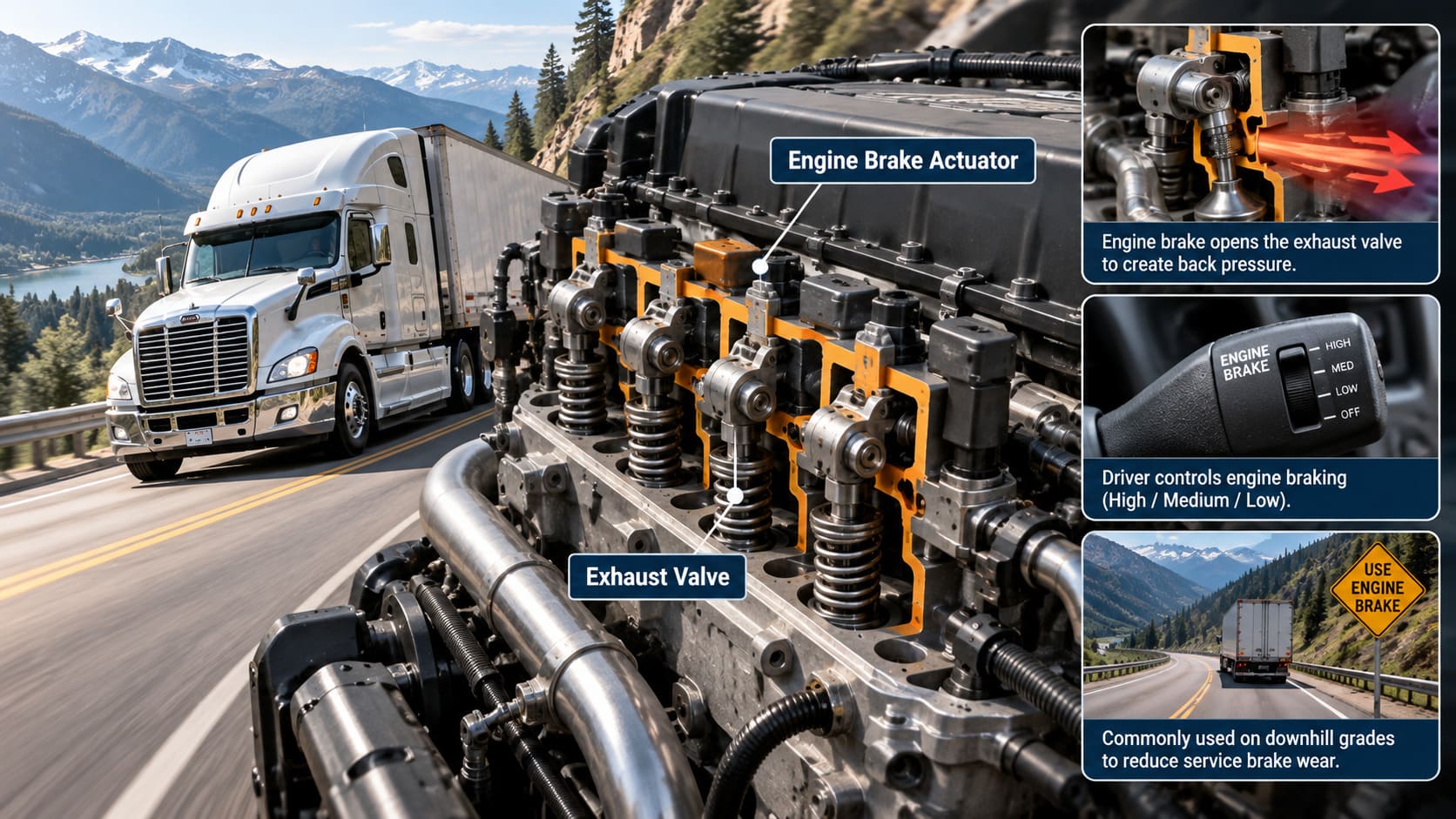
That distinction matters more than it seems. For distributors and repair shops, a vague answer to this question can lead to wrong parts conversations, frustrated customers, and avoidable after-sales friction. Let's break down exactly what's happening — and why.
Are Engine Brakes and Other Braking Systems the Same Thing?
Many customers use "brakes" as one catch-all word. That creates confusion fast, especially when someone is troubleshooting a problem or ordering replacement parts.
Engine brakes, exhaust brakes, service brakes, and trailer air brakes are four separate systems.2 They work differently, fail differently, and require different parts conversations. Treating them as one system is one of the most common sources of miscommunication in heavy truck aftermarket support.
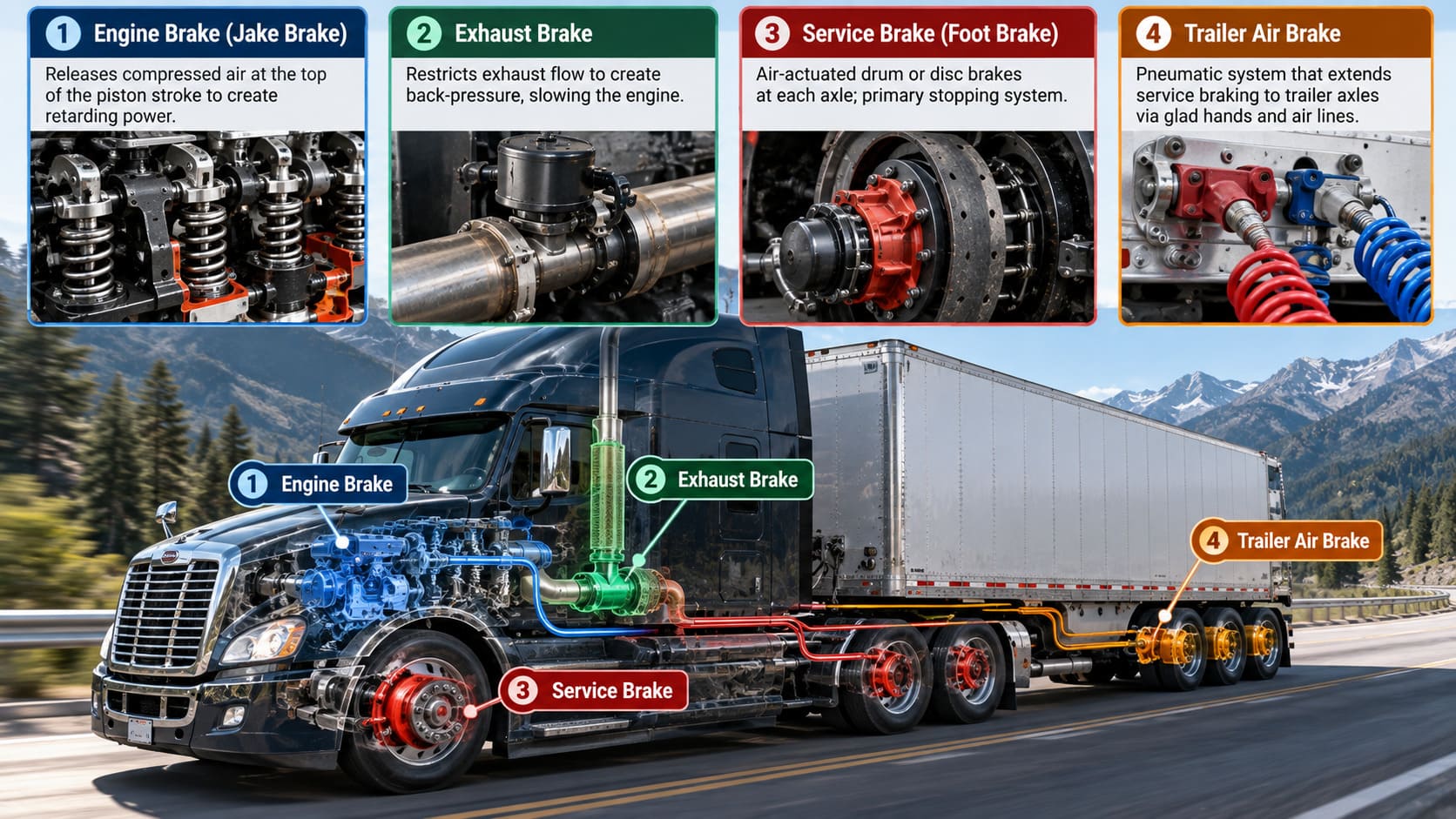
Understanding the difference protects you from sending a customer down the wrong diagnostic path — or quoting the wrong component entirely.
The Four Braking Systems Explained
Here is a clear breakdown of how each system works:
| Braking System | How It Works | Primary Use Case |
|---|---|---|
| Engine Brake (Jake Brake) | Converts the engine into a compression-release retarder; releases compressed air at top of piston stroke to slow the drivetrain3 | Long descents, highway deceleration |
| Exhaust Brake | Restricts exhaust flow to create back-pressure, slowing the engine4 | Lighter retardation; common on smaller diesels |
| Service Brake (Foot Brake) | Air-actuated drum or disc brakes at each axle; primary stopping system | All normal braking situations |
| Trailer Air Brake | Pneumatic system that extends service braking to trailer axles via glad hands and air lines | Coupled trailer control and emergency brake function |
These systems can work together, but they are not interchangeable. A complaint about "engine braking not working" could mean the Jake Brake solenoid is faulty, the selector switch is off, or the driver simply isn't in the right gear. It does not automatically mean the air brake lines or service brake components need attention.
Why This Matters for Aftermarket Parts Professionals
I've seen this play out in customer conversations more than once. A repair shop calls asking about brake components because "the truck isn't braking well on downhills." That description could point to half a dozen systems. Before any parts conversation moves forward, the right questions are:
- Is the driver using the engine brake, or relying on the service brake for descent control?
- Is the engine brake switch enabled in the cab?
- Is the truck spec'd with a Jake Brake or only an exhaust brake?
- Is the trailer air system maintaining pressure through the descent?
Getting clear on the system type first prevents wasted quotes, incorrect returns, and the kind of after-sales friction that damages supplier relationships.
What Actually Restricts Engine Brake Use?
Engine braking is a legitimate and legal braking strategy in most operating environments. The restrictions that exist are specific — not universal.
Understanding the actual reasons trucks are told not to use engine brakes gives you a more accurate picture to share with drivers, fleet managers, and technicians asking the question.
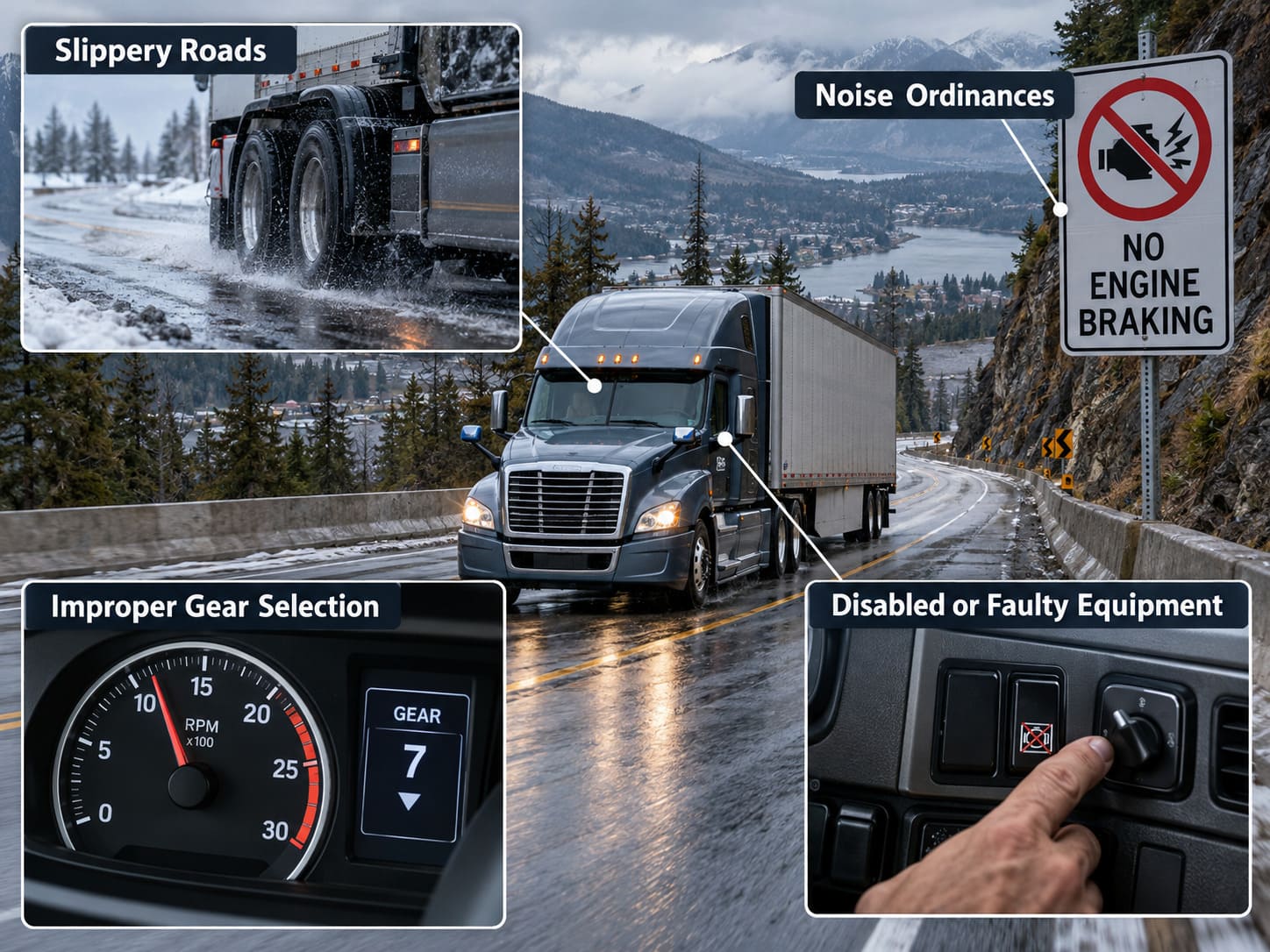
The most common restriction is noise, not mechanical limitation. But several other conditions also apply, and conflating them causes confusion.
Noise Ordinances: The Most Visible Restriction
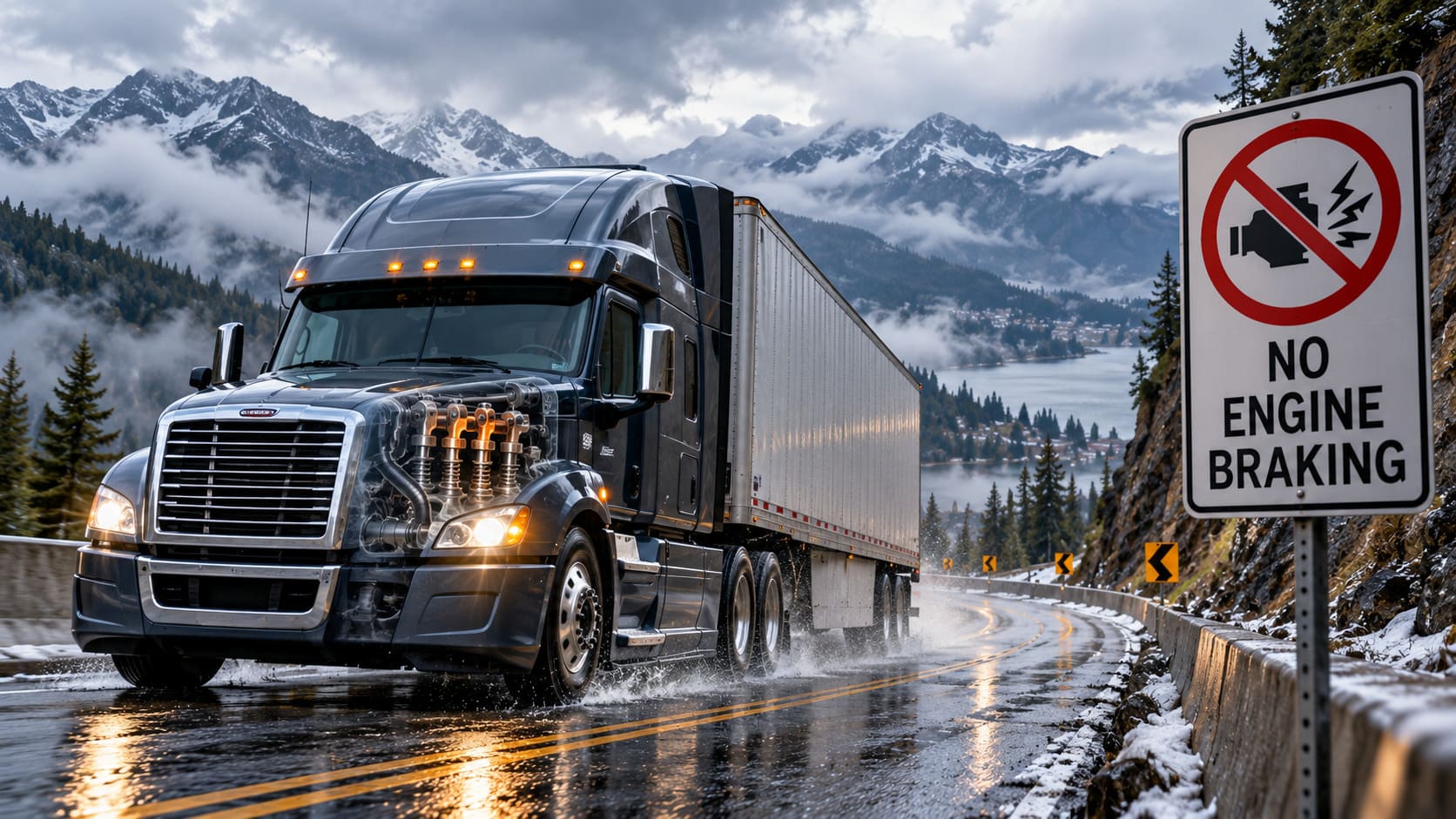
Compression-release engine brakes — commonly called Jake Brakes after the Jacobs brand — produce a distinctive, loud staccato sound when engaged.5 In residential areas, near schools, or in dense urban corridors, this noise is disruptive enough that many municipalities have posted ordinances restricting their use.
You've likely seen the signs: "No Engine Braking" or "Compression Braking Prohibited." These are local traffic regulations. They are not federal prohibitions, and they vary widely by jurisdiction.
Key points to communicate to customers:
- Restrictions are local, not universal. There is no single federal law banning engine brake use in the U.S. or Canada.6 Rules depend on the specific road and municipality.
- Signs are the practical guide. Drivers should follow posted signage. Recommending that fleet managers or drivers check local ordinances for the routes they operate is always the right call.
- Violations are traffic infractions, not mechanical failures. The truck's braking system is not "broken" because it can't be used in a restricted zone.
Important: We do not provide legal interpretations of specific municipal or state/provincial noise codes. Drivers and fleet operators should verify local regulations for their operating routes.
Slippery Roads and Loss of Traction
Engine braking transfers significant retarding force to the drive axles.7 On wet, icy, or loose-surface roads, this can cause the rear axles to lock or slip — especially on unladen trucks or during partial-load conditions.8
This is a real safety concern, not a myth:
- Drive axle lock-up can occur when the engine brake is applied aggressively on low-traction surfaces.
- Jackknifing risk increases when engine braking is applied to a tractor with a connected trailer that still has forward momentum.
- Many modern trucks include traction control integration that automatically disables or modulates the engine brake when wheel slip is detected — but not all trucks have this feature, and it must be properly calibrated.
For fleet managers, this is a driver training issue as much as a mechanical one. Understanding when not to use the engine brake is part of professional driving practice.
Improper Gear Selection
Engine braking is most effective — and safest — when the driver is in the correct gear for the grade being descended. The engine brake works within the engine's RPM range.9 If a driver is in too high a gear, the RPM stays too low and the retarding force is insufficient. If they're in too low a gear, over-revving can cause mechanical stress.
This is a training and operational issue, not an equipment failure. But it frequently generates service calls or complaints that get incorrectly routed to parts suppliers.
Disabled, Missing, or Faulty Equipment
Some trucks are simply not spec'd with a compression-release engine brake. Smaller vocational trucks, some regional haulers, and older fleet units may only have exhaust brakes — or no auxiliary retardation at all beyond the service brakes.
In other cases, the engine brake is present but disabled:
- Switch turned off in the cab — the most common overlooked cause
- Faulty solenoid valve not activating the brake
- ECM settings limiting engagement under certain conditions
- Air system pressure issues affecting brake actuation
For aftermarket parts professionals, the distinction between "not spec'd" and "installed but not functioning" is important. It determines whether the customer needs a parts solution or a diagnostic conversation with a technician.
How Does This Affect Aftermarket Parts Conversations?
Engine brake confusion creates downstream problems for distributors, repair shops, and fleet managers. Knowing where the confusion comes from lets you get ahead of it.
Poor understanding of engine braking restrictions often surfaces as misattributed complaints — customers report brake performance problems that aren't actually component failures.
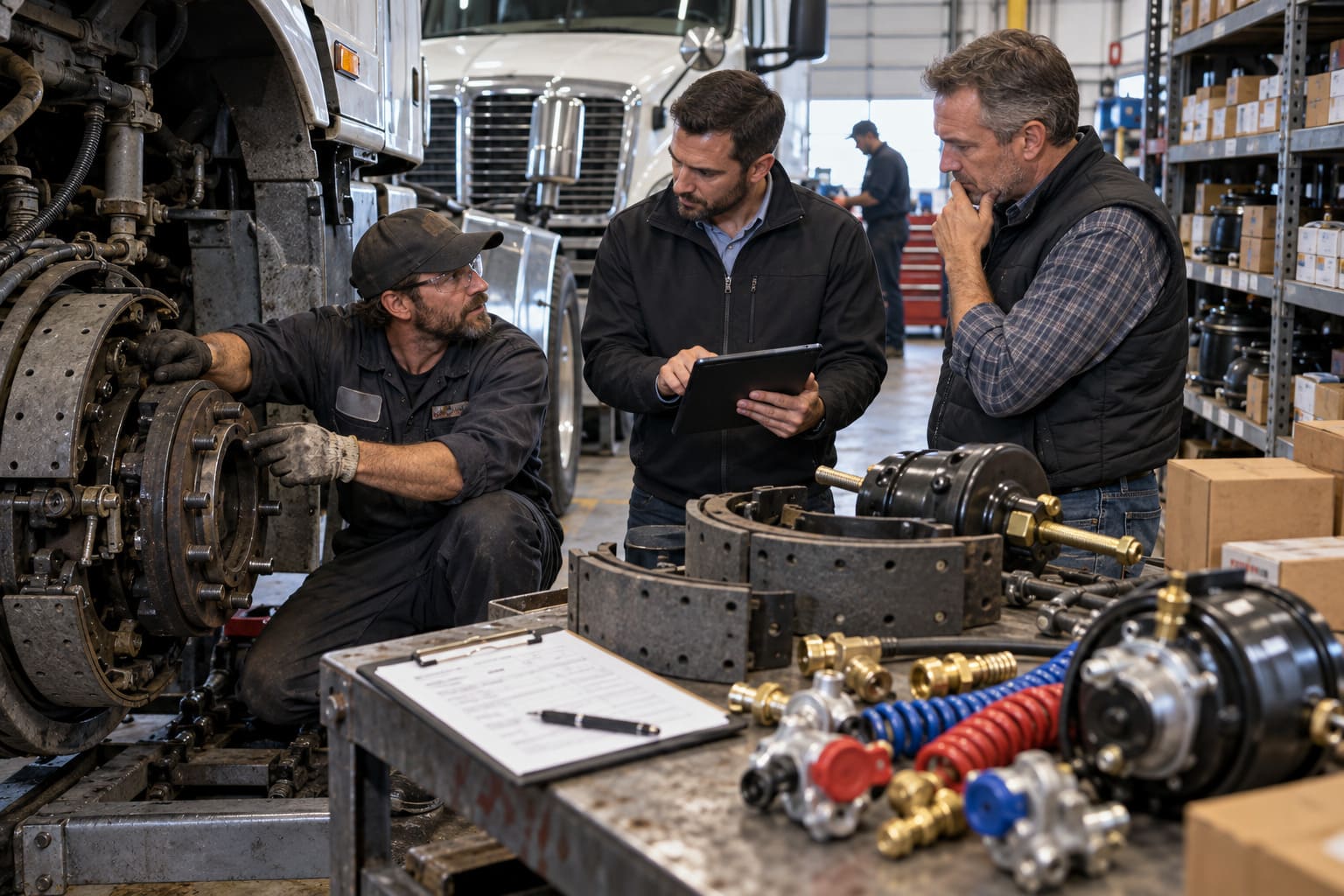
This affects real business outcomes in procurement and service contexts.
Common Misattribution Patterns
Here are the patterns I hear most often in pre-sales conversations:
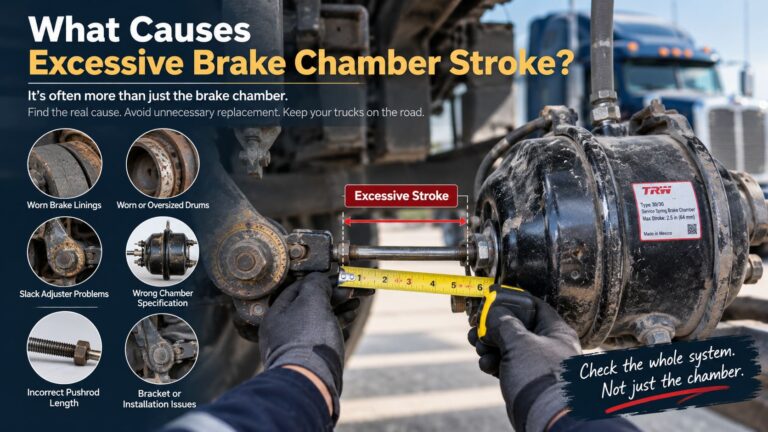
"The brakes aren't holding on downhills." This may be an engine brake that's switched off, not a service brake component failure. Before recommending brake chamber replacement or gladhand inspection, the first step is confirming whether engine retardation is functioning.
"The trailer brakes seem weak." Trailer brake performance depends heavily on air supply integrity across the entire pneumatic system — from the tractor air tanks through the air lines and glad hands to the trailer brake chambers. If the driver has been compensating with service brakes instead of engine braking, heat fade and premature wear become real issues.
"The truck is using brakes too hard." If engine braking isn't available or isn't being used correctly, the service brakes carry the full retardation load on long descents.10 This accelerates brake lining wear, generates heat, and increases the frequency of service brake replacements — which directly affects parts demand and purchasing patterns.
Implications for Parts Inventory and Supplier Conversations
Understanding the full picture helps fleet managers and distributors make smarter procurement decisions:
- Fleets that operate on hilly routes without functioning engine brakes will see higher service brake wear rates. Stocking adequate brake chamber, lining, and air line components becomes more critical.
- Repair shops near mountainous corridors should be prepared for increased brake-related service calls that may span multiple systems.
- Distributors serving mixed fleets need to ask the right qualifying questions — not just "what part number?" but "what braking systems are on this vehicle and how is it being operated?"
At ROADSPOWER, the brake-related inquiries we receive most often involve air line assemblies, brass fittings, and trailer air system components. Customers who understand the full braking picture tend to order more accurately, return parts less frequently, and have more productive supplier conversations.
Frequently Asked Questions
Is it illegal for trucks to use engine brakes?
Engine braking is not universally illegal. Restrictions are local — posted by specific municipalities or counties where noise from compression brakes is considered a nuisance. Drivers should follow posted signage on their operating routes. There is no single federal law in the U.S. or Canada prohibiting engine brake use across all roads.
What is the difference between a Jake Brake and an exhaust brake?
A Jake Brake is a compression-release engine brake that vents compressed air during the compression stroke to create strong retarding force. An exhaust brake restricts exhaust flow to build back-pressure. Jake Brakes are louder and more powerful. Exhaust brakes are quieter and produce less retardation — common on lighter-duty or vocational diesels.
Can engine braking damage a truck's engine?
Proper engine brake use within the manufacturer's recommended RPM range does not damage the engine. Over-revving caused by incorrect gear selection during descent can cause stress, but this is an operational error rather than a mechanical flaw with engine braking itself. A qualified diesel technician can verify correct operating parameters for a specific engine.
Why does engine braking cause jackknifing?
Jackknifing risk increases when the tractor's drive axles decelerate faster than the trailer — which can happen if the engine brake is applied aggressively while the trailer's brakes are not responding proportionally. This is most common on slippery roads. Proper use of the trailer air brake system alongside the engine brake is part of safe descent control.
How do I know if a truck's engine brake is installed but not working?
Start with the simplest checks: confirm the cab switch is enabled, verify no fault codes are present on the ECM, and check that air supply to the system is adequate. If those are clear, a faulty solenoid valve or wiring issue is a common next step. Diagnosis should be performed by a qualified diesel technician, as fault conditions vary by engine manufacturer.
Conclusion
The real answer to "why can't trucks use engine brakes?" is that most trucks can — with the right equipment, the right road conditions, and the right gear. Restrictions come from local noise ordinances, slippery surfaces, improper operation, or missing and faulty equipment — not from a universal rule. For heavy-duty truck parts distributors, repair shops, and fleet managers, understanding this distinction sharpens the quality of every customer conversation involving engine braking. It reduces misattributed complaints, improves parts sourcing accuracy, and builds the kind of technical credibility that earns long-term customer trust. If you're sourcing air system components, brake-related accessories, or pneumatic fittings for North or South American heavy truck fleets, contact ROADSPOWER to discuss your inventory requirements.
"(PDF) Vehicle Retarder Systems", https://www.academia.edu/86576807/Vehicle_Retarder_Systems. A neutral technical source should support that compression-release engine brakes are commonly used auxiliary retarders on heavy-duty diesel vehicles and operate when the relevant engine-control and hardware systems are installed and serviceable. Evidence role: general_support; source type: education. Supports: Engine brakes are established auxiliary retarders used on heavy-duty diesel trucks when installed and maintained.. Scope note: The source may establish common use and function rather than quantify the exact share of modern trucks equipped with engine brakes. ↩
"5.1.1 Brake Systems (Part 393 Subpart C) - CSA", https://csa.fmcsa.dot.gov/safetyplanner/MyFiles/SubSections.aspx?ch=22&sec=64&sub=130. Government commercial-driver or air-brake training materials distinguish service and trailer air-brake systems from auxiliary engine retarders, supporting the article's separation of these systems into different functional categories. Evidence role: definition; source type: government. Supports: Commercial vehicle manuals distinguish service brakes and trailer air brakes from auxiliary retarders such as engine brakes and exhaust brakes.. Scope note: Such manuals may not use the exact four-part taxonomy used in the article, but they provide the underlying distinctions. ↩
"Compression release engine brake", https://en.wikipedia.org/wiki/Compression_release_engine_brake. A technical paper or engineering reference should support that compression-release engine brakes dissipate vehicle kinetic energy by releasing compressed cylinder gas near the end of the compression stroke, thereby producing retarding torque at the drivetrain. Evidence role: mechanism; source type: paper. Supports: Compression-release braking converts a diesel engine into a retarding device by releasing compressed cylinder gas near the end of the compression stroke.. ↩
"(PDF) Vehicle Retarder Systems", https://www.academia.edu/86576807/Vehicle_Retarder_Systems. A diesel-engine training or engineering source should support that exhaust brakes operate by restricting exhaust flow, increasing back pressure, and thereby producing a retarding effect on the engine. Evidence role: mechanism; source type: education. Supports: Exhaust brakes generate retarding force by restricting exhaust flow and increasing exhaust back pressure.. ↩
"Compression release engine brake", https://en.wikipedia.org/wiki/Compression_release_engine_brake. An encyclopedic or public-agency source should support that 'Jake Brake' is a common name for a compression-release engine brake and that such brakes can generate a distinctive loud noise when engaged. Evidence role: definition; source type: encyclopedia. Supports: The term Jake Brake is commonly associated with compression-release engine brakes, which are known for loud operating noise when unmuffled.. Scope note: Noise level depends on engine configuration, muffling, and vehicle condition, so the support is contextual rather than a measurement for every truck. ↩
"Engine Brake Restrictions | Ohio Department of Transportation", https://www.transportation.ohio.gov/travel/driving/traffic-regulations/engine-brake-restrictions. Government or municipal code sources should support that posted engine-brake restrictions are commonly local noise-control measures, not evidence of a single federal prohibition applying across all U.S. and Canadian roads. Evidence role: historical_context; source type: government. Supports: Engine-brake restrictions are typically implemented through local or municipal noise ordinances rather than a single nationwide prohibition.. Scope note: Because traffic and noise regulations vary by jurisdiction, the source should be used to contextualize the regulatory pattern rather than as legal advice for every route. ↩
"What Is Engine Braking and How Does It Work?", https://www.uti.edu/blog/automotive/what-is-engine-braking. A vehicle-dynamics or heavy-vehicle braking source should support that engine braking produces retarding torque through the drivetrain and therefore acts primarily at the driven axles. Evidence role: mechanism; source type: research. Supports: Engine braking creates retarding torque through the drivetrain at the driven wheels or axles.. ↩
"Section 2.19 - 2.20 | Georgia Department of Driver Services", https://dds.georgia.gov/section-219-220. Commercial-driver safety guidance should support that auxiliary retarders, including engine brakes, require caution on slippery surfaces because retarding force at the drive wheels can contribute to wheel slip or skidding. Evidence role: general_support; source type: government. Supports: Commercial-driver guidance warns that engine brakes or retarders can contribute to skidding on slippery roads if used improperly.. Scope note: The exact risk depends on vehicle loading, tire-road friction, retarder setting, and driver inputs. ↩
"How Do Diesel Exhaust Brake Systems Work?", https://www.uti.edu/blog/diesel/how-diesel-exhaust-brake-systems-work. Commercial-driver training materials should support that engine brakes are used with appropriate gear selection and engine-speed control during descents to maintain effective retardation within safe operating limits. Evidence role: mechanism; source type: government. Supports: Proper gear selection and engine-speed control are necessary for safe and effective engine brake use on grades.. Scope note: Recommended RPM limits are engine-specific and should be verified in the vehicle or engine manufacturer's documentation. ↩
"Section 5.4 - Georgia Department of Driver Services", https://dds.georgia.gov/section-54. Heavy-vehicle braking research should support that auxiliary retarders such as engine brakes reduce the braking energy absorbed by service brakes on long downgrades, thereby helping limit heat buildup, fade, and wear. Evidence role: mechanism; source type: paper. Supports: Auxiliary retarders reduce reliance on service brakes during long descents, helping limit service-brake heat buildup and fade risk.. Scope note: The magnitude of wear reduction depends on grade, vehicle mass, speed, driver technique, and brake-system condition. ↩