Excessive brake chamber stroke is a common warning sign in heavy-duty air brake systems, but it can be easy to misread. A buyer may see long pushrod travel, assume the chamber is defective, and order replacements too quickly. The better solution is to identify what is increasing the travel distance before choosing parts.
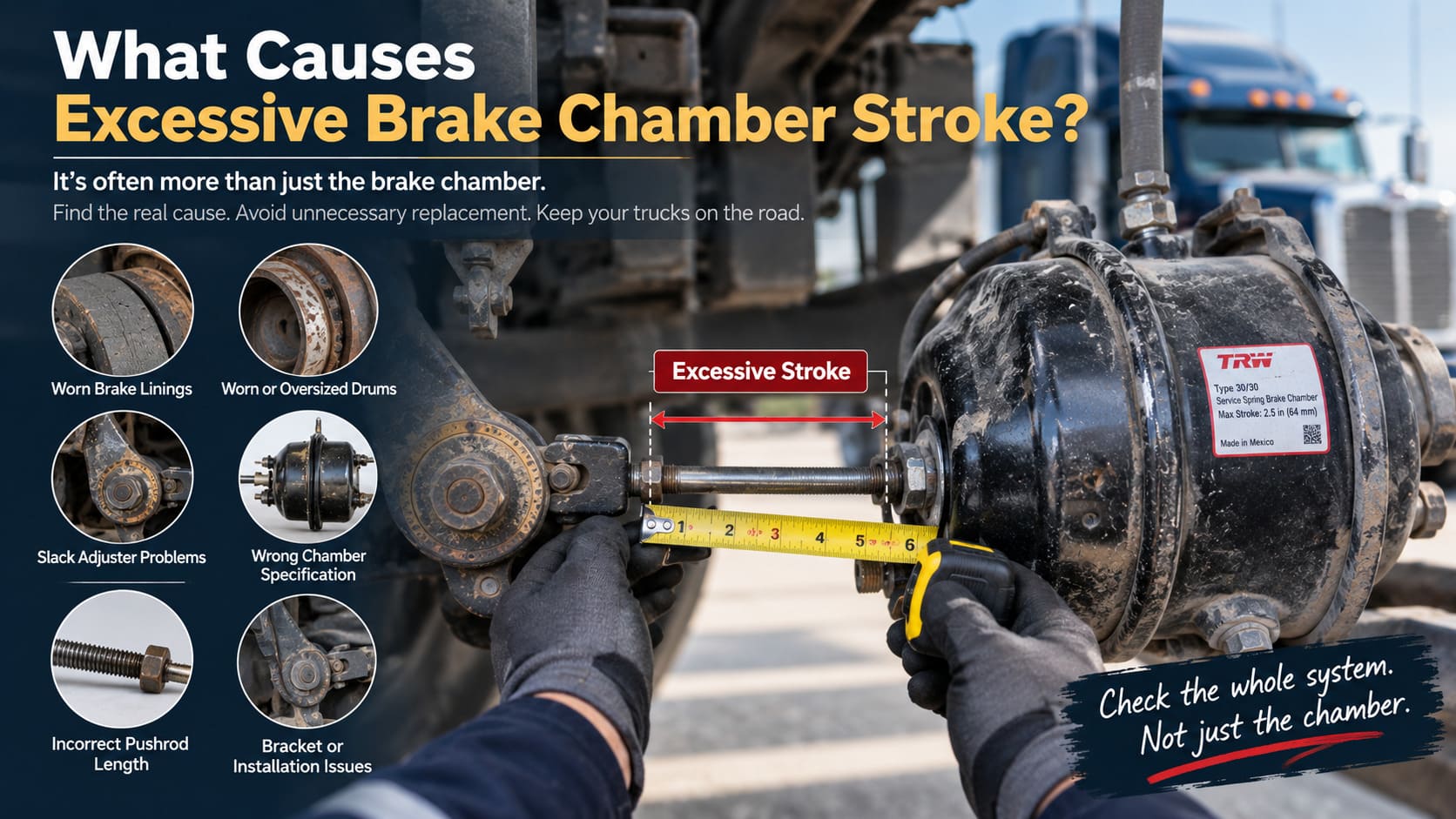
Excessive brake chamber stroke is usually caused by increased foundation brake clearance, worn brake linings or drums, incorrect or failed slack adjuster operation, wrong chamber specification, incorrect pushrod length, or installation geometry problems.1 The brake chamber may be involved, but the root cause often sits elsewhere in the brake system2 and should be verified by a qualified technician.
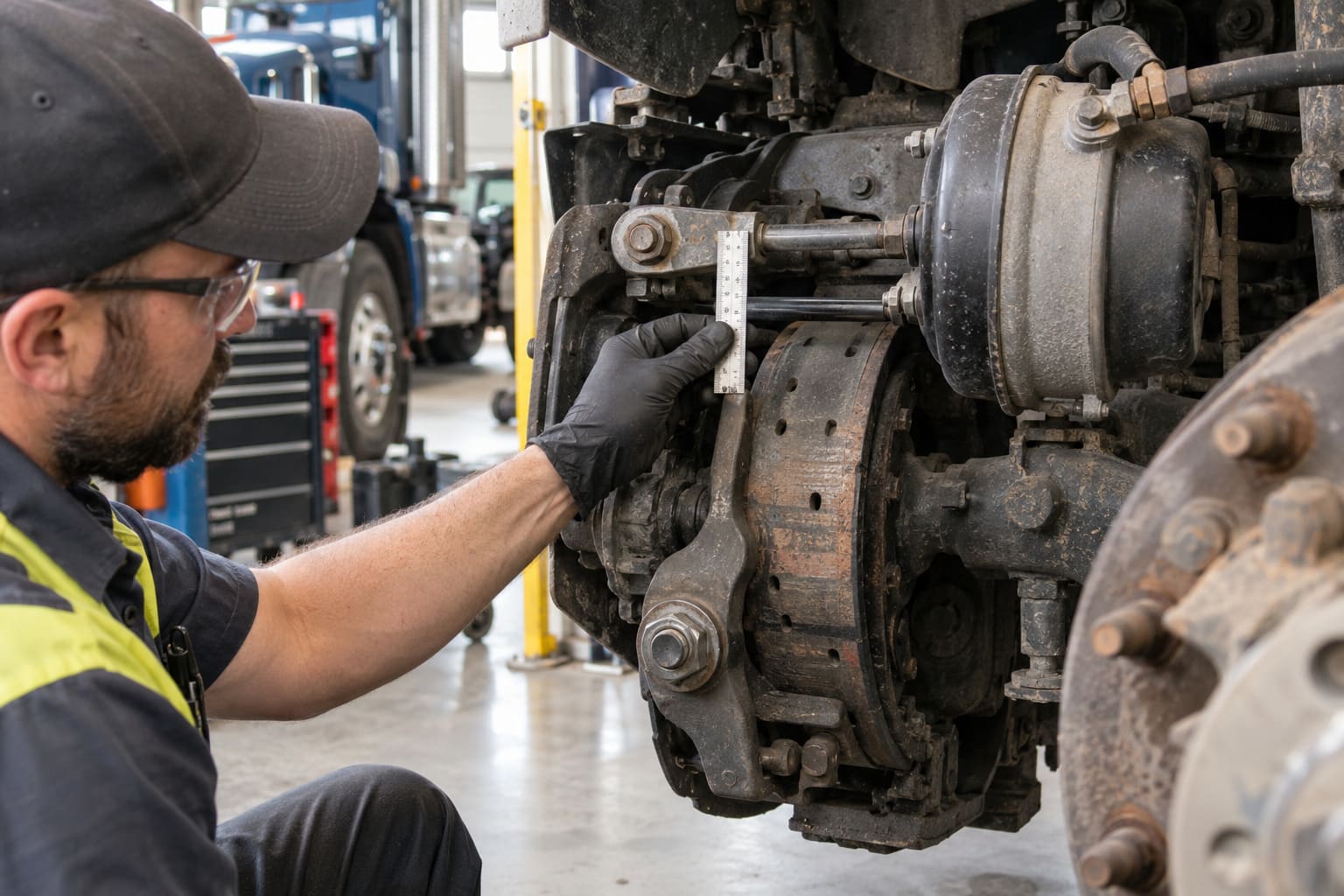
In parts-selection discussions, I often see buyers ask, “Which brake chamber should I replace?” That question is understandable, especially when downtime is expensive. However, the more useful question is, “What is making the chamber travel farther than it should?”
What Causes Excessive Brake Chamber Stroke in a Heavy-Duty Truck?
Excessive brake chamber stroke can feel like a simple parts failure, but the system is usually more complex. If a fleet or repair shop replaces the chamber without checking brake wear, adjustment, and fitment, the same issue may return and create extra downtime.
Excessive brake chamber stroke is most often caused by too much clearance in the foundation brake system3. Common contributors include worn brake linings, worn or oversized drums, slack adjuster problems, incorrect chamber type, wrong pushrod length, bracket misalignment, or recent repairs that changed the brake geometry.
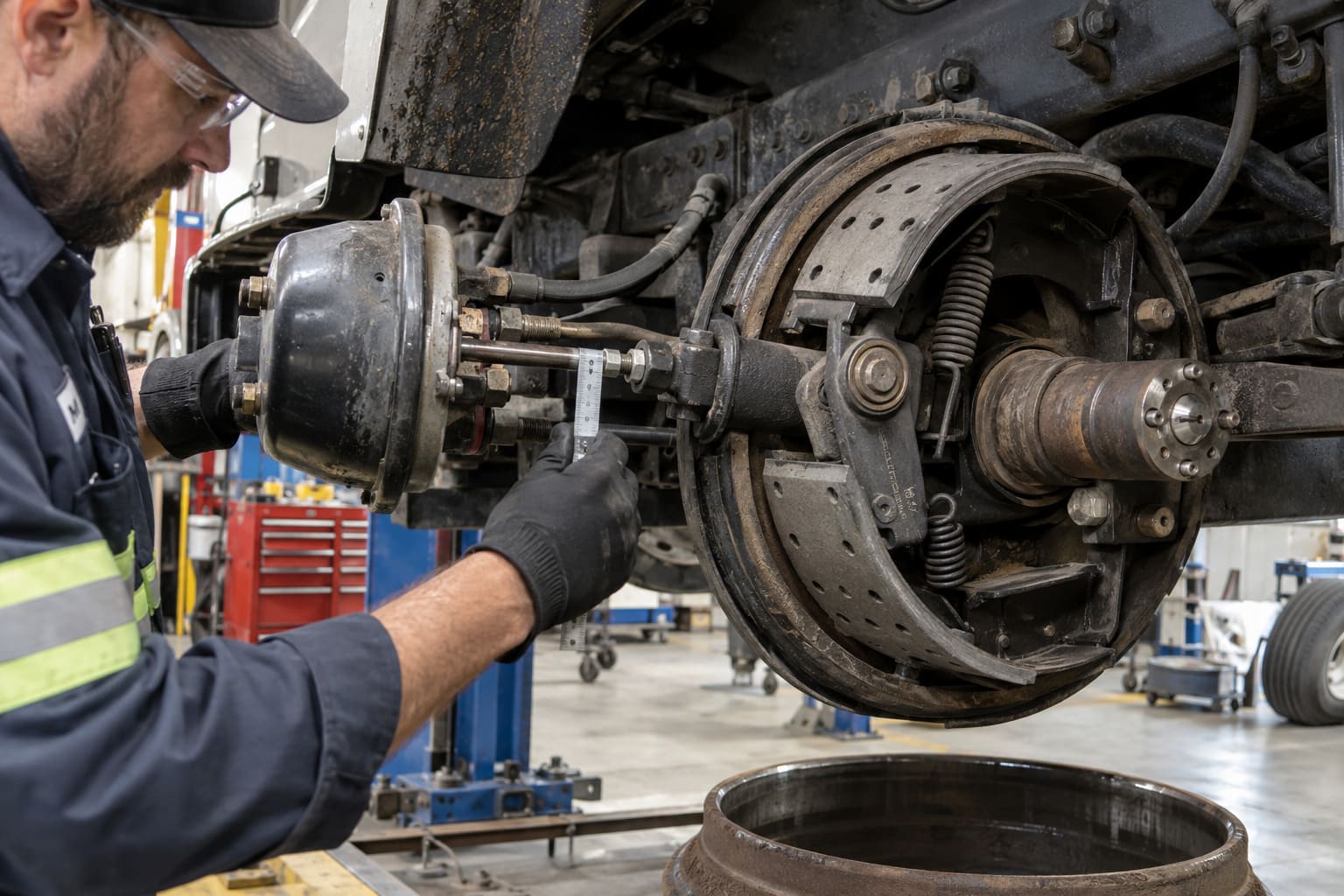
The core issue is travel distance
A brake chamber converts air pressure into mechanical force.4 When air enters the service chamber, the diaphragm moves and pushes the pushrod. The pushrod moves the slack adjuster, which rotates the camshaft, which applies the brake shoes against the drum.5
That means the chamber stroke is not only about the chamber. It is about the distance required to bring the brake shoes into contact and generate braking force.
In simple terms:
Long chamber stroke means the system needs more movement before the brake applies correctly.
That extra movement can come from several places.
Common causes buyers should consider
| Possible cause | How it affects stroke | Buyer evaluation point |
|---|---|---|
| Worn brake lining | Increases shoe-to-drum clearance | Confirm lining condition before ordering chambers |
| Drum wear or incorrect drum condition | Increases effective clearance | Inspect drum condition and compatibility |
| Slack adjuster issue | Fails to maintain correct running clearance | Check adjuster type, installation, and condition |
| Wrong chamber type or stroke rating | Changes expected movement range | Match original specification and application |
| Incorrect pushrod length | Alters brake geometry | Verify against original part and axle position |
| Bracket or mounting angle problem | Changes pushrod alignment | Check mounting position and chamber angle |
| Recent repair mismatch | Introduces incorrect parts or setup | Review repair history before purchasing |
Why worn linings and drums matter so much
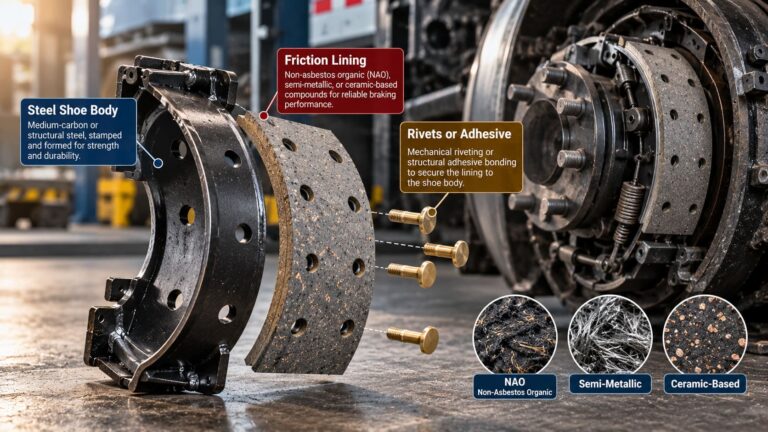
Brake linings and drums are wear components. As lining material wears down, the brake shoes must move farther before they contact the drum.6 If the drum is worn, out of specification, or mismatched, that required movement can increase even more.
This is why excessive brake chamber stroke often points to a foundation brake clearance problem instead of a chamber-only problem.
For procurement teams, this matters because replacing only the chamber may not solve the issue. I have seen buyers request urgent chamber replacements, then later discover that the repair shop also needed lining kits, drums, slack adjusters, or hardware. That creates two separate orders, two rounds of freight, and more vehicle downtime.
Pneumatic issues are different from mechanical stroke issues
Air leaks, low pressure, damaged hoses, or valve problems can affect brake performance.7 However, they do not always explain long mechanical pushrod travel. A pneumatic fault and a mechanical clearance fault should not be treated as the same problem.8
A practical evaluation should separate:
- Air supply and leakage concerns
- Brake chamber condition
- Mechanical clearance and wear
- Slack adjuster operation
- Installation and part compatibility
For safety-related judgment, I always recommend inspection by a qualified brake technician. Procurement can support that process by asking for clear measurements, original part references, and photos before ordering replacement components.
How Do Slack Adjusters Create Excessive Brake Chamber Stroke?
Slack adjusters are often overlooked because they sit between the brake chamber and the foundation brake. If a buyer focuses only on the chamber, a slack adjuster problem can be missed. That mistake can cause repeat complaints after the new chamber is installed.
Slack adjusters can create excessive brake chamber stroke when they are incorrectly adjusted, worn, seized, damaged, mismatched, or installed incorrectly. Automatic slack adjusters are designed to maintain running clearance9, but they cannot compensate for every mechanical defect, installation error, or foundation brake problem.
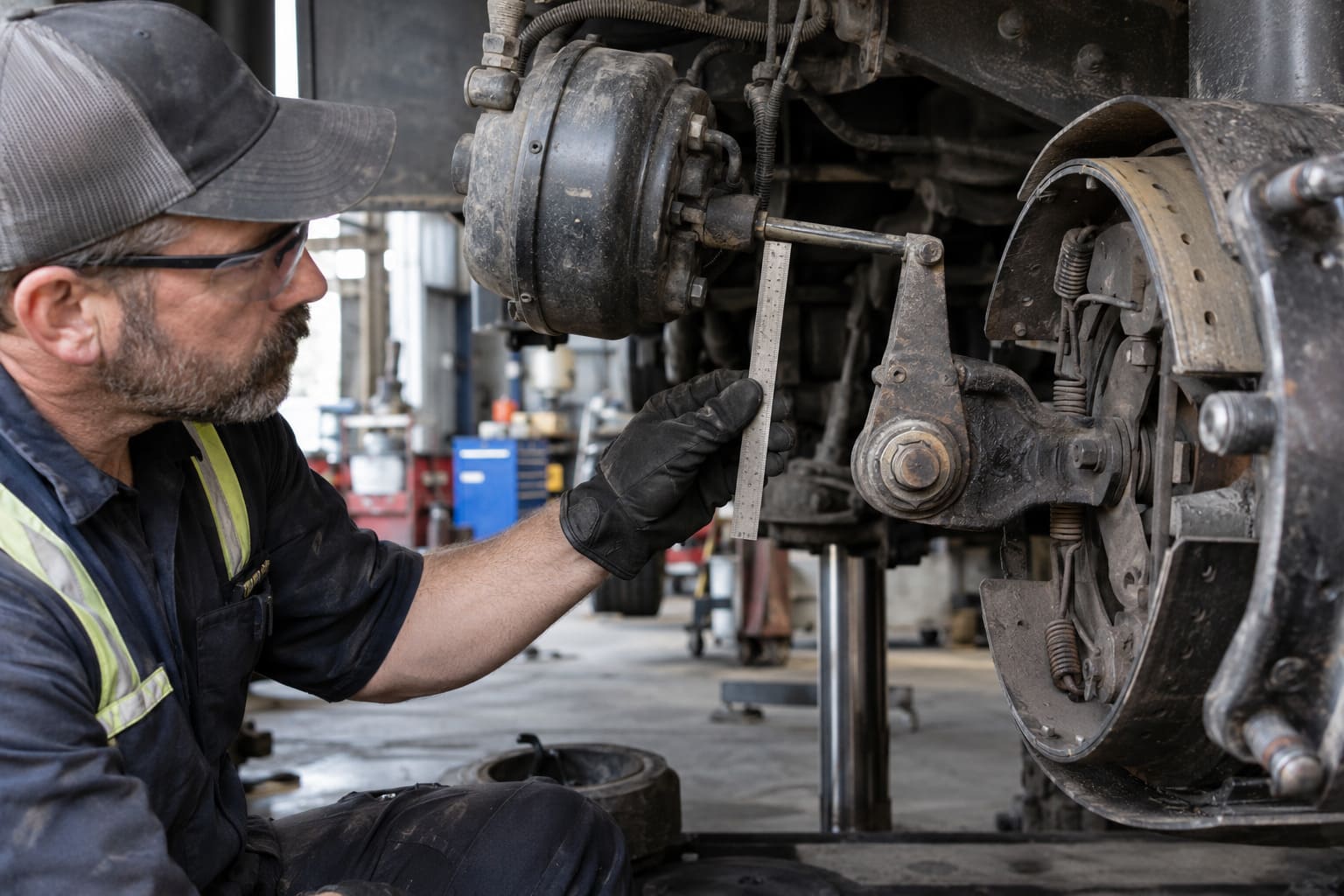
The slack adjuster controls mechanical leverage
The slack adjuster connects the chamber pushrod to the camshaft. Its job is to transfer pushrod movement into camshaft rotation. That rotation moves the brake shoes outward.
If the slack adjuster does not maintain proper clearance, the chamber must travel farther. That longer movement can show up as excessive brake chamber stroke.
There are two broad types:
- Manual slack adjusters
- Automatic slack adjusters
Manual adjusters require correct periodic adjustment by trained personnel.10 Automatic slack adjusters are designed to maintain adjustment during normal operation, but they are not magic parts. They still depend on correct installation, compatible components, and a foundation brake system in good condition.
Common slack adjuster-related issues
| Slack adjuster issue | Possible result | Procurement risk |
|---|---|---|
| Incorrect adjustment | Long stroke or uneven braking | Unnecessary chamber purchase |
| Internal wear | Adjustment may not hold | Repeat warranty complaint |
| Seized mechanism | Poor movement or no compensation | Vehicle downtime |
| Wrong arm length11 | Incorrect stroke relationship | Wrong part selection |
| Incorrect installation angle | Poor geometry | Abnormal pushrod travel |
| Mixing incompatible components | Unstable performance | Higher return rate |
Automatic does not mean maintenance-free
In customer conversations, I often hear a version of this statement: “It has automatic slack adjusters, so the stroke should be fine.” I understand the logic, but it is not always true.
Automatic slack adjusters may fail to maintain correct clearance if:
- The brake components are worn beyond normal service condition.
- The adjuster was installed with the wrong geometry.
- The clevis position was changed incorrectly.
- The camshaft or bushings have excessive wear.
- The brake is not cycling properly.
- The replacement part does not match the original specification.
This is why long stroke should be treated as a system warning. A chamber replacement may be necessary in some cases, but the slack adjuster and foundation brake should be inspected before the purchase decision is finalized.
Why this matters for distributors and fleets
For a distributor, a wrong diagnosis can become a return. For a fleet, it can become downtime. For a repair shop, it can become a customer complaint.
A more controlled approach helps everyone:
- Ask whether the truck uses manual or automatic slack adjusters.
- Confirm whether the issue appears on one wheel end or multiple positions.
- Check whether recent brake work was performed.
- Compare left and right side components for mismatch.
- Request photos of the chamber, bracket, clevis, and slack adjuster.
This information helps a parts supplier recommend compatible products. It also helps avoid the assumption that excessive brake chamber stroke always means “bad chamber.”
Can the Wrong Replacement Part Cause Excessive Brake Chamber Stroke?
A replacement part can solve a problem, but it can also create one when the specification is wrong. If the chamber type, stroke rating, pushrod setup, or mounting position does not match the application, the truck may show abnormal stroke after repair.
Yes, the wrong replacement brake chamber can contribute to excessive brake chamber stroke. The risk is higher when the chamber type, rated stroke, pushrod length, clevis setup, mounting bracket, or axle application does not match the original system design.
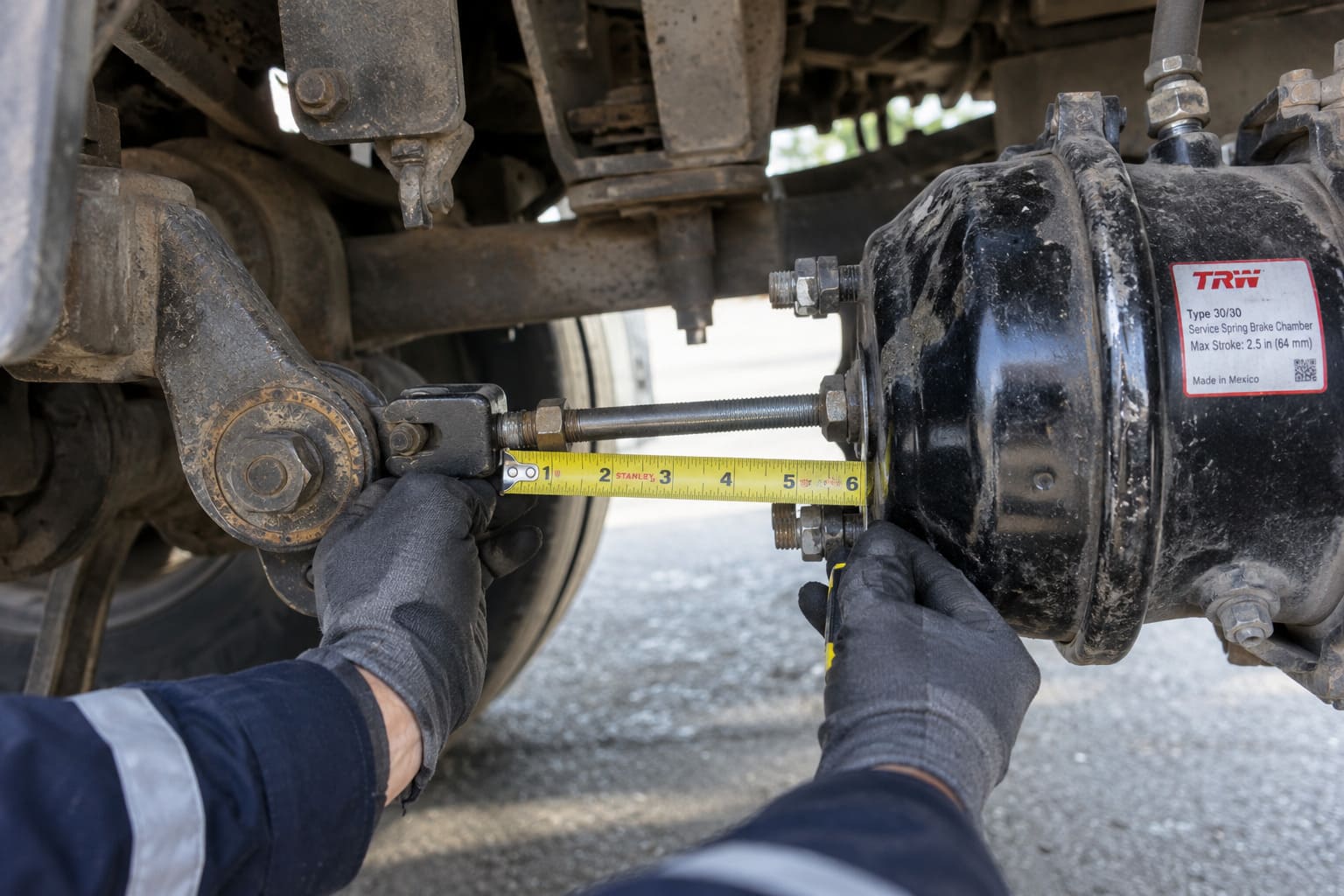
Fitment is not only bolt pattern
Many buyers compare replacement chambers by appearance. They may look at the clamp style, port position, mounting studs, and chamber size. Those details matter, but they are not enough.
A correct brake chamber selection may also require:
- Chamber type
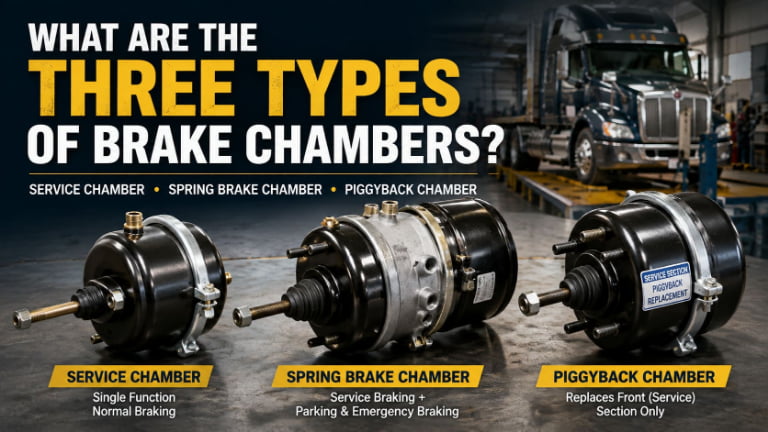
- Service chamber or spring brake chamber configuration
- Stroke rating
- Pushrod length
- Thread size
- Clevis type
- Port size and orientation
- Mounting stud spacing
- Bracket position
- Axle and wheel-end application
- OEM or original aftermarket reference
A chamber that “fits” physically may still be wrong for the brake geometry.12
Why pushrod length is a major risk
Pushrod length is one of the most common replacement risks. If the pushrod is too long, too short, or cut incorrectly, the slack adjuster geometry can change. That may lead to abnormal stroke readings, poor brake response, or difficulty achieving correct setup.
This is also where procurement and repair communication must be clear. If a distributor orders chambers in bulk for several truck models, one small mismatch can affect many units.
A safer purchasing conversation includes:
- Original chamber model or part number
- Photos of the removed unit
- Measured pushrod length
- Application details
- Axle position
- Brake size and system type
- Whether the truck had recent brake work
At ROADSPOWER, we often ask for these details before confirming a replacement option. That is not because the chamber is unusually complicated. It is because the cost of a wrong-spec chamber is much higher than the cost of checking the data first.
Bigger is not automatically safer
One mistake I try to avoid is assuming that a “larger” or “higher-spec” chamber is automatically better. Brake systems are designed around specific force, travel, and geometry requirements. A chamber must match the application. It should not be upgraded casually without qualified evaluation.
For procurement teams, this is an important rule:
Do not select a brake chamber only by size or perceived strength. Select it by verified application and specification.
Replacement compatibility checklist
| Item to verify | Why it matters |
|---|---|
| Chamber size and type | Confirms basic application fit |
| Stroke rating | Prevents wrong travel expectation |
| Pushrod length | Maintains correct geometry |
| Clevis setup | Connects correctly to slack adjuster |
| Port orientation | Avoids hose routing stress |
| Bracket condition | Prevents alignment issues |
| Original reference | Reduces cross-reference errors |
| Certification documents | Supports market access verification |
For North American and South American heavy-duty truck parts buyers, documentation also matters. Buyers should verify applicable DOT, SAE, FMVSS, or other market documents with current official or customer-required standards. A supplier can provide documents, but the buyer should confirm that they match the intended application and market.
What Should Buyers Check Before Ordering Parts for Excessive Brake Chamber Stroke?
When excessive brake chamber stroke appears, the purchasing team may face pressure to act fast. That pressure can lead to incomplete information, wrong parts, and avoidable returns. A short verification process usually saves time.
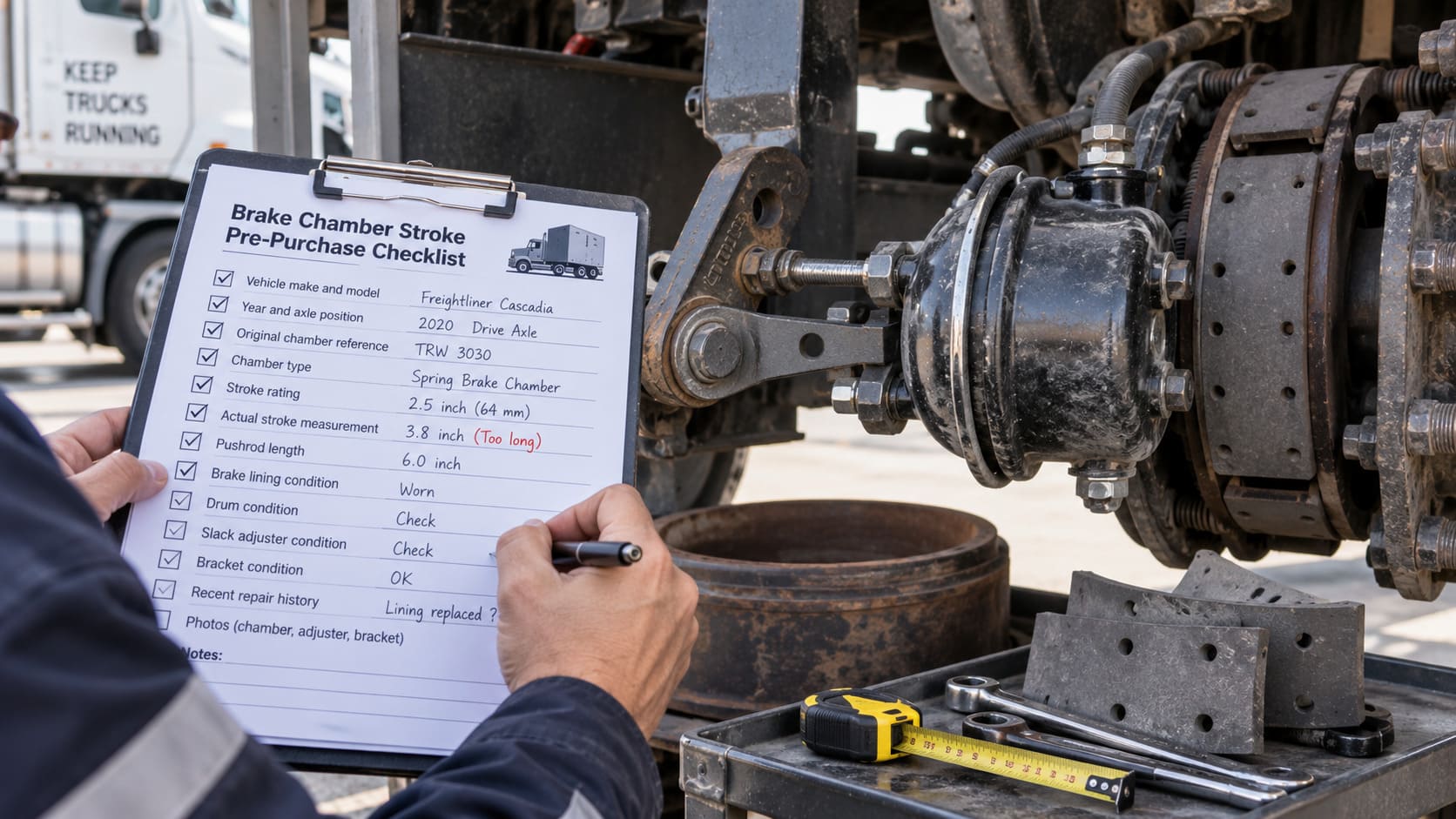
Before ordering parts for excessive brake chamber stroke, buyers should confirm the vehicle application, axle position, original chamber model, chamber type, stroke rating, actual stroke measurement, lining and drum condition, slack adjuster condition, bracket condition, and recent repair history.
Procurement needs technical context
A procurement manager does not need to diagnose the brake system personally. However, procurement does need enough technical context to avoid ordering the wrong part.
I recommend treating long stroke as a parts-selection investigation, not just a purchase request. The goal is to collect the facts that help the repair technician and supplier align on the correct replacement.
Key information to collect
Here is a practical checklist I use in parts-selection discussions:
| Information needed | Example detail |
|---|---|
| Vehicle make and model | Freightliner, Kenworth, Peterbilt, International, Volvo, Mack |
| Year and axle position | Drive axle, steer axle, trailer axle |
| Original chamber reference | OEM number or aftermarket number |
| Chamber type | Service chamber or spring brake chamber |
| Stroke rating | Must match application requirements |
| Pushrod measurement | Based on removed part and repair data |
| Brake lining condition | Worn, replaced, unknown |
"49 CFR 393.47 -- Brake actuators, slack adjusters, linings ...", https://www.ecfr.gov/current/title-49/subtitle-B/chapter-III/subchapter-B/part-393/subpart-C/section-393.47. A government air-brake inspection manual or North American inspection standard identifies excessive brake chamber pushrod travel as a condition linked to brake adjustment and foundation-brake component condition, supporting the article’s causal framing; however, such sources may not list every installation-geometry scenario described here. Evidence role: general_support; source type: government. Supports: A government or inspection-standard source should support that excessive pushrod or chamber stroke is associated with brake adjustment, component wear, and related foundation-brake conditions.. Scope note: Contextual support for the grouped causes rather than direct proof of every cause in the sentence. ↩
"Air Brake Chamber Pushrod Stroke - CVSA", https://www.cvsa.org/programs/operation-airbrake/air-brake-chamber-pushrod-stroke. Air-brake training materials explain that pushrod travel is a measure of the movement required to apply the foundation brake, so excessive travel can indicate adjustment or wear conditions beyond the chamber itself. Evidence role: mechanism; source type: government. Supports: A source should explain that measured pushrod stroke reflects the movement needed to apply the foundation brake, not only the condition of the chamber.. ↩
"Air Brake Pushrod Stroke", https://cvsa.org/wp-content/uploads/Airbrake-Pushrod-Stroke-Brochure.pdf. Government air-brake guidance describes excessive pushrod travel as an indication that the brake shoes must move too far before contacting the drum, which is consistent with excessive foundation-brake clearance. Evidence role: expert_consensus; source type: government. Supports: A neutral air-brake manual should support the connection between excessive pushrod travel and excessive shoe-to-drum clearance or brake maladjustment.. Scope note: Supports the mechanism and common diagnostic interpretation, but may not quantify that it is the single most frequent cause. ↩
"Air brake chamber components for commercial vehicles ...", https://www.facebook.com/groups/990134582093278/posts/1036746510765418/. Air-brake instructional materials describe the brake chamber as using air pressure on a diaphragm to move a pushrod, thereby converting pneumatic pressure into mechanical force. Evidence role: mechanism; source type: education. Supports: A technical education source should define the brake chamber’s function as converting air pressure into pushrod force.. ↩
"S-cam Air Brakes",
. Air-brake training references describe S-cam drum brakes as applying force from the chamber pushrod through the slack adjuster to rotate the camshaft and press the brake shoes against the drum. Evidence role: mechanism; source type: government. Supports: A government or training manual should support the described sequence from chamber pushrod to slack adjuster, camshaft, and brake-shoe application.. ↩"Why does a slack adjuster back off brake shoes completely ...", https://www.facebook.com/groups/483964356970950/posts/1345813120786065/. Commercial-vehicle brake inspection guidance links brake lining wear and excessive shoe-to-drum clearance with increased pushrod travel, supporting the article’s explanation of why worn linings can contribute to long stroke. Evidence role: mechanism; source type: government. Supports: A brake maintenance or inspection source should support that lining wear increases shoe-to-drum clearance and can increase pushrod travel.. ↩
"Air Brake Systems", https://www.fmcsa.dot.gov/sites/fmcsa.dot.gov/files/docs/brake_safety_systems_02-14.pdf. Government air-brake manuals identify adequate air pressure, leak-free lines, and functioning valves as essential to air-brake operation, supporting the statement that pneumatic faults can impair brake performance. Evidence role: general_support; source type: government. Supports: A government air-brake manual should support that air pressure supply, leaks, hoses, and valve condition are safety-critical to brake performance.. ↩
"Air Brake Systems", https://www.fmcsa.dot.gov/sites/fmcsa.dot.gov/files/docs/brake_safety_systems_02-14.pdf. Air-brake inspection guidance treats air-pressure and leak checks separately from pushrod-stroke or brake-adjustment checks, supporting the distinction between pneumatic faults and mechanical clearance faults. Evidence role: expert_consensus; source type: government. Supports: An inspection or CDL air-brake source should show that air-pressure leak checks and pushrod stroke or adjustment checks are separate inspection items.. ↩
"5.1.1 Brake Systems (Part 393 Subpart C) - CSA", https://csa.fmcsa.dot.gov/safetyplanner/MyFiles/SubSections.aspx?ch=22&sec=64&sub=130. Regulatory and training sources describe automatic slack adjusters as devices intended to maintain proper brake adjustment during normal operation, supporting the article’s functional definition. Evidence role: definition; source type: government. Supports: A government or technical source should define automatic slack adjusters as devices intended to maintain brake adjustment or running clearance.. ↩
"National Transportation Safety Board", https://www.ntsb.gov/safety/safety-recs/recletters/H01_04.pdf. Commercial-vehicle air-brake guidance states that manual slack adjusters require periodic adjustment and that brake adjustment should be performed according to approved procedures, supporting the article’s caution about trained personnel. Evidence role: expert_consensus; source type: government. Supports: A government or safety source should support that manual slack adjusters need periodic correct adjustment and that improper adjustment is a safety concern.. Scope note: May not use the exact phrase “trained personnel,” but supports the underlying maintenance-safety requirement. ↩
"Air Brake Pushrod Stroke", https://cvsa.org/wp-content/uploads/Airbrake-Pushrod-Stroke-Brochure.pdf. Technical descriptions of S-cam brake geometry show that the slack adjuster acts as a lever between the pushrod and camshaft, so arm length affects the mechanical relationship between pushrod travel and camshaft rotation. Evidence role: mechanism; source type: research. Supports: A technical source should support that slack-adjuster arm length affects mechanical leverage and the relationship between pushrod movement and camshaft rotation.. Scope note: Contextual mechanical support; a general source may not specifically evaluate every commercial replacement scenario. ↩
"Air Brake Pushrod Stroke", https://cvsa.org/wp-content/uploads/Airbrake-Pushrod-Stroke-Brochure.pdf. Brake service guidance emphasizes matching replacement chamber specifications, including stroke rating and pushrod or clevis setup, to the application, supporting the article’s point that physical fit alone is not sufficient. Evidence role: general_support; source type: institution. Supports: A technical standard, training source, or maintenance manual should support that replacement brake chambers must match application specifications such as stroke rating, pushrod length, and mounting geometry.. Scope note: Supports the selection principle rather than proving a specific failure case. ↩